News · 21 September 2026 · 5 min read
Fined for parking outside her own front door: what the street should have told her
Families on the Mornington Peninsula are being fined again and again for parking on the nature strip outside their own homes, on streets too narrow to park on the road. The shire's own chief executive concedes the outcomes are not always fair. The real lesson for buyers and investors is that street width and parking capacity are physical facts of a street that never show up in a suburb median - and that street-level data, not headlines, is what tells you whether an address works.
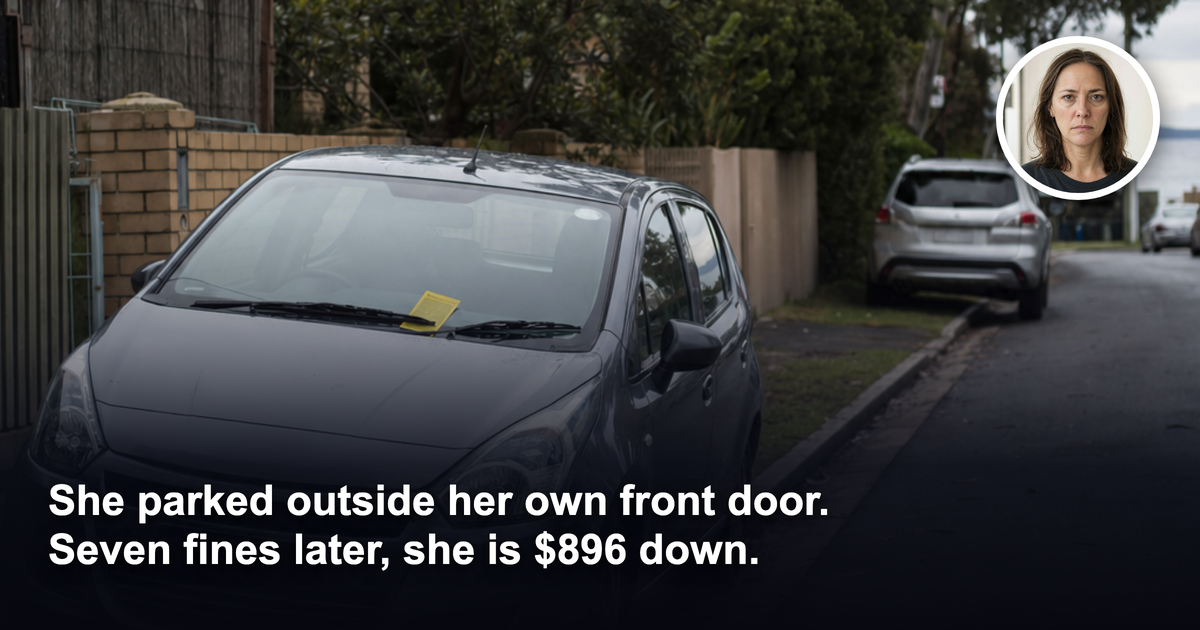
The fine lands in the letterbox of a house you own, for a car parked on the grass outside your own front door — the same patch of grass you've used for years. On the Mornington Peninsula right now, that letter is arriving again and again: $125 and $128 at a time, to people who say the alternative is blocking the only lane an ambulance has. Nothing about these streets changed. The enforcement did.
A composite resident, and why we built her
To make sense of what this does to a household, picture a woman of about 44. She is a composite — an illustration assembled from the pattern in the reporting, and expressly not Rebecca Kappe, Jordan, Michael Hellwig, Tony Martin or any other person named in it. She owns and lives in a modest home on one of these narrow streets. There's no usable off-street parking: a single short driveway sits blocked by a carport she inherited from the previous owner, and the street is too tight to take a second car. Since the day she bought, she has parked half on the grass outside her own front door. Then, over two months, seven fines at $128 each. That's $896 — illustrative figures for a composite, not any real person's record. She did nothing different. The rules around her were applied differently.
The real residents tell the same story. Tyabb's Rebecca Kappe parked on her nature strip for 16 years without issue before being fined two months ago. "It's infuriating because it's never been a problem before," she said. Her neighbour Jordan copped two fines in three days: "There was never a problem, now there's a problem." She added: "We tried parking on the road. It did not work." Rosebud's Michael Hellwig has been fined nine times — more than $1,100 out of pocket. "It's just now blatant revenue raising," he said. New arrival Tony Martin: "Just moved in six week ago and our first two weeks, two $128 fines and a week later, another." Some residents report being fined nearly ten times in two months.
In early September, residents protested by parking kerbside exactly as the council requires, and watched the result: police vehicles forced to mount the kerb, delivery drivers weaving between parked cars, one saying it added 15 to 20 minutes to his route. Kappe put the stakes plainly: "If we can't get through, the rubbish truck won't get through, an ambulance won't get through." Jordan said some locals had allegedly started taping over or removing number plates.
To be fair to the shire: it is enforcing the law as written. Mornington Peninsula Shire maintains that parking on nature strips is an offence under Victorian law, that officers are required to enforce it, and that anyone fined can apply for a review. But its own chief executive, Mark Stoermer, has conceded the outcomes are not always fair: "While our contractors are enforcing Victorian road rules, the way those rules are being applied is not always producing fair or sensible outcomes." Former mayor and now Liberal Member for Nepean Anthony Marsh went further: "It's pretty tone deaf, in a cost of living crisis, to be fining people for parking on their own nature strip." Of the shire's 2024 decision to contract a private company to manage parking infringements, he said: "They are being paid a clip of the ticket every time a fine is being issued. That may explain the behaviour but I think that's a question that needs to be asked." Those are reported claims, not our conclusions.
The question nobody asks before settlement
Strip the outrage away and one question is left standing: what actually decides whether a street can absorb the cars of the people who live on it — and why does nobody check that before they buy? Our composite owner paid stamp duty, legal fees and a building inspection. Nobody measured whether her street could physically hold her household's vehicles legally. That's not a paperwork gap. It's a data gap.
What the street-level data actually shows
This is where Ripehouse Advisory's methodology earns its keep, because street width and on-street parking capacity are physical facts of a street — and they are invisible in a suburb-level median. Two streets in the same suburb, same median, same headline growth figure, can behave like different markets. Our R-Score exists to rank the street, not the postcode. Street-level heatmaps make the divide visible: the tight, contested streets versus the ones with room to breathe. Achieved rent versus advertised rent tells you whether tenants actually pay what landlords ask on that street — a parking-starved address quietly leaks that gap. Street-level vacancy and days on market for that exact stock type reveal how long a compromised property really sits, in a way a suburb average launders away. Approved-but-unbuilt competing supply flags whether the parking squeeze is about to get worse as infill lands on the same narrow carriageway. And buyer depth on exit measures how many genuine purchasers exist for that property when you sell — because a house where the second car has nowhere legal to live sells to a thinner crowd. None of this requires a forecast. It's measurement of things that already exist, at the resolution where they operate: the street.
What it means for you
Before you buy — to live in or to let — run the checks the Peninsula's residents wish someone had run. Read the specific council's verge and nature-strip parking rules; they differ by council and by state, and enforcement can change without the street changing. Confirm the driveway and crossover actually work: length, width, and whether an inherited structure like a carport kills the space on paper you thought you had. Stand on the street and measure it — can two cars pass with cars parked kerbside? Then visit at school pick-up, when the true capacity of a street shows itself. Ask what the tenants' cars will do, not just yours.
The case for buying the street, not the suburb
None of this is an argument against property. It's the argument for buying the right street with data, rather than buying a suburb from a headline. The Peninsula's fined families aren't victims of property; they're victims of an unmeasured street meeting a changed enforcement regime. Measurement is available. Use it before the contract, not after the fines. More street-level research is in our resources library.
This article is general information only, not personal advice. Parking, verge and enforcement rules differ by council and state — verify the rules that apply to any specific property before acting.
The Peninsula’s fined families aren’t victims of property; they’re victims of an unmeasured street meeting a changed enforcement regime. A Ripehouse Advisory webinar could show how to test street width, parking capacity and buyer depth before settlement, so a narrow street doesn’t become an expensive surprise.
Frequently asked questions
Can you be fined for parking on the nature strip outside your own home in Victoria?
Yes. The article says Mornington Peninsula Shire treats parking on nature strips as an offence under Victorian law, even when residents have been doing it for years. Enforcement can change without the street itself changing.
Why did these Mornington Peninsula residents start getting parking fines all of a sudden?
According to the article, nothing about the streets changed — the enforcement did. Residents say they had parked the same way for years, but after the shire contracted parking infringement management, fines began arriving repeatedly.
What should buyers check about a street before purchasing a house with limited parking?
Check the street width, whether two cars can pass with cars parked kerbside, and whether the driveway or crossover actually works for your household. The article says these physical facts do not show up in suburb medians but can determine whether the address functions.
Why does street-level data matter more than suburb averages for parking-heavy streets?
Street-level data can show the real parking capacity, vacancy, days on market, and buyer depth for that exact street. The article says suburb medians can hide the fact that two streets in the same suburb may behave very differently.
What is the main risk for a property on a narrow street with poor parking capacity?
The risk is that the property may be hard to live in, harder to let, and harder to sell because the second car has nowhere legal to go. The article also says changing enforcement rules can turn an existing parking habit into a fine problem.
General information only. It does not take your objectives, financial situation or needs into account, and nothing here is legal, financial, taxation or investment advice specific to your circumstances.