News · 19 August 2026 · 5 min read
'I was in hospital for three weeks. I came home to an empty house and a stranger's furniture'
She paid her rent for four years without a late payment. Then a burst appendix put her in hospital for three weeks — and by the time she was discharged her tenancy had been terminated and her furniture sold. She was not evicted. She was recorded as having abandoned the property, and almost none of it was unlawful.
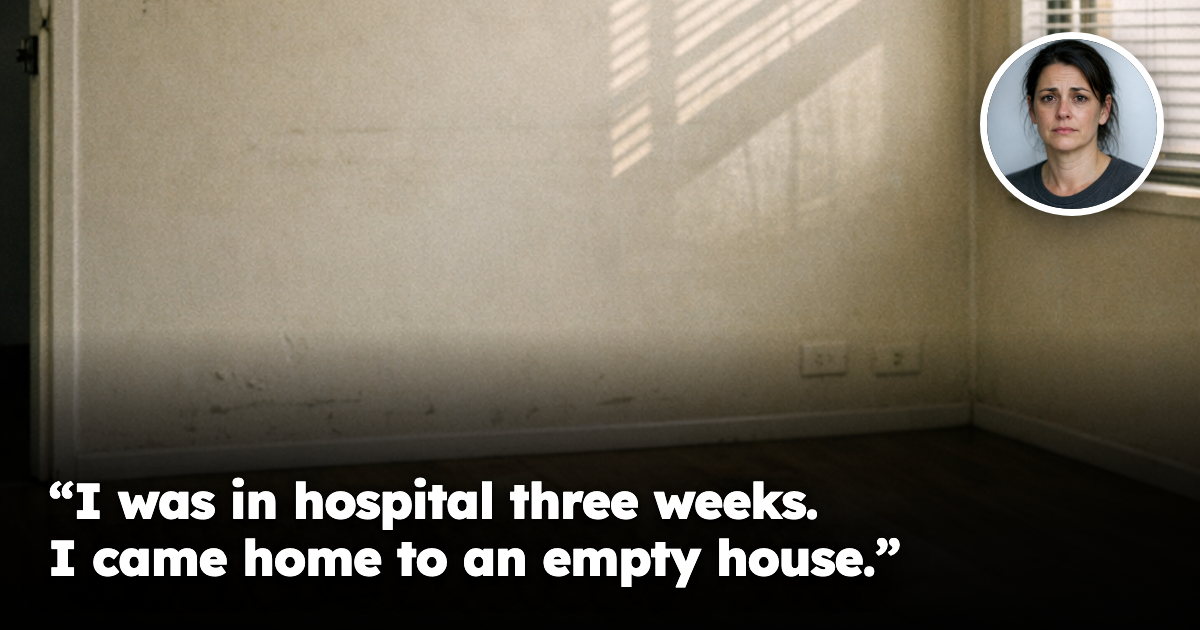
She is 41, a hospitality supervisor, and she had rented the same two-bedroom unit for four years without a late payment.
Then a burst appendix turned into sepsis, and three weeks disappeared. No phone. No mail. Nobody outside a ward.
The rent went unpaid for a fortnight. The mail built up downstairs. The power lapsed while she was unconscious. A neighbour, asked at the door, said she hadn't seen her in weeks.
By the time she was discharged, her tenancy had been terminated and her furniture sold. She wasn't evicted. Nobody took her to a tribunal. She was recorded as having abandoned the place.
"How can I have abandoned a home I was paying for, when I never left it on purpose?"
The uncomfortable answer: abandonment is rarely about intention. It is about appearance, silence, and a very short clock.
The instrument: a notice, not a hearing
Most people assume losing a rental requires a court. Abandonment is the exception.
Where a landlord believes on reasonable grounds that a tenant has abandoned the premises, the landlord may simply give the tenant a notice terminating the agreement. No tribunal, no hearing, no evidence tested by anybody. Then comes the clause that decided her case:
If the tenant does not take action about the notice within 7 days of receiving it, the tenant is taken to have abandoned the premises.
Read that again. Not taken to have agreed. Not asked and declined. Silence itself is the operative act — seven days of not responding does the legal work that would otherwise require proof.
She was in a hospital bed for five of those seven days.
The six grounds — and what they share
The statute isn't vague about "reasonable grounds". It lists them: failure to pay rent; uncollected mail; reports from neighbours suggesting the tenant has gone; absence of household goods; disconnection of services; failure to respond to an entry notice.
Now notice what almost nobody notices. Not one of those six limbs requires the tenant to have intended to leave. Every one happens to a person who has stopped being physically present — for any reason. Hospital. A funeral interstate. A domestic violence escape.
She ticked four of the six without deciding anything.
That isn't malice. Abandoned properties are a real problem, and the list is a set of practical signals for a landlord acting in good faith. But a signal built to detect a departure cannot tell the difference between someone who left and someone who couldn't come back.
The deadline that isn't the deadline
A tenant disputing an abandonment notice has 28 days to apply to the tribunal. That's the number on the paperwork. But the orders available change with how fast you move:
- Apply within 7 days → the tribunal may make an order setting the notice aside. The termination is undone. You keep the home.
- Apply day 8 through day 28 → the tribunal may only order that the agreement is terminated, plus compensation.
Both applications are "on time". Only one can give back the place you live. From day eight, the home is off the table and the argument is only ever about money. The 28-day figure is real — it's just a compensation window wearing a tenancy window's clothing.
What happened to her furniture
She lost the tenancy on timing. She lost her possessions to different rules.
When a tenancy ends and goods are left behind, the former landlord may sell or dispose of them immediately — no storage, no waiting — if they believe on reasonable grounds that the market value is under a prescribed threshold, that storage would be unsafe, or that the cost of removing, storing and selling would exceed the proceeds. That last limb is broad: a flat of second-hand furniture often costs more to move than it will ever fetch.
Otherwise the goods must be stored safely for a prescribed period, then sold at auction if unclaimed. The landlord keeps the costs of removal, storage and sale; the balance goes to the public trustee as unclaimed money — which the landlord can then claim against for anything owed.
The furniture is subject to the clause that ends the story:
A person who acquires the goods acquires good title, and the interest of anyone else in the goods ends — unless that buyer did not act honestly.
Her sofa, her bed, her mother's dining table: cleanly someone else's, the moment they were bought. A landlord acting without negligence incurs no liability. If the process was mishandled she can sue for money — she cannot get the table back. It's the same shape as a mortgagee sale, where the buyer need not inquire whether the process was done properly, applied to chattels not land.
One protection is worth knowing: if the owner claims the goods in writing before disposal, the landlord must release them on payment of reasonable removal and storage costs. Sent early, that's the highest-value action available — verbal doesn't count.
What this has to do with buying well
Read that sequence from the owner's side. A tenant of four years, one medical emergency — and a property manager working from six statutory signals can lawfully end a good tenancy and dispose of a stranger's belongings. The exposure isn't legal, it's operational: an unwanted vacancy, a compensation claim, a good long-term tenant lost. The landlords who avoid it treat "no contact" as a question, not a conclusion.
And tenancy risk is not evenly spread across a suburb. Two blocks apart, same postcode, same headline yield, you can be buying two different tenant profiles: one street of four-year stayers who renew without negotiation, the next carrying transient tenancies where turnover and arrears are an operating cost.
That doesn't show up in a median rent figure. It shows up in achieved rents, real vacancy duration and true days-on-market at street level — and in our data the effective yield spread between the best and worst streets inside one suburb routinely runs 20–30%.
A suburb average has never once had to answer an abandonment notice.
Which is the point, and why this ends pro-investment rather than fearful. None of these rules are secret. The grounds, the seven-day fuse, the two-speed remedy, the sale sequence — all published and knowable long before they are urgent. Nothing here happens by ambush; it happens by silence.
The same is true of assets. Water-charge recovery rules that decide whether an outgoing is yours or the tenant's, and what happens when rate notices go unopened for three years, sit in the same category: risk that looks like bad luck from outside and like an input from inside. Risk you can read is risk you can price — and priced risk is an edge over every buyer who never looked.
She got a compensation hearing. She did not get the unit, and she did not get the table.
She hadn't left. She just hadn't answered.
If there's a specific street you're weighing up right now, check its Street Score first — it's free, takes ten seconds, and tells you whether that street is pulling the suburb average up or riding on it.
Frequently asked questions
Can a landlord in Australia end a tenancy for abandonment without going to a tribunal?
Yes, if the landlord believes on reasonable grounds that the tenant has abandoned the premises, they can give a notice terminating the agreement. In the article’s example, no tribunal hearing was needed before the tenancy was ended.
What kinds of things can make a rental look abandoned?
The article says the statutory grounds include unpaid rent, uncollected mail, neighbours reporting the tenant has gone, absence of household goods, disconnected services, and failure to respond to an entry notice. None of those grounds require proof that the tenant intended to leave.
How quickly does a tenant have to respond to an abandonment notice?
The article says the tenant must take action within 7 days of receiving the notice. If they do not respond in time, they are taken to have abandoned the premises.
What happens if a tenant applies to the tribunal after an abandonment notice?
If they apply within 7 days, the tribunal may set the notice aside and the tenancy can continue. If they apply between day 8 and day 28, the tribunal may only terminate the agreement and award compensation.
What happens to belongings left in a rental after the tenancy ends?
The article says a landlord may sell or dispose of some goods immediately if they reasonably believe the value is low or storage and sale would cost more than the goods are worth. Otherwise, the goods must be stored safely for a prescribed period and then sold if unclaimed.
General information only. It does not take your objectives, financial situation or needs into account, and nothing here is legal, financial, taxation or investment advice specific to your circumstances.