News · 25 August 2026 · 5 min read
'I complained twice. He stopped twice. And stopping is what finished him' — the tenancy rule that rewards compliance
Her landlord kept letting himself in. She did everything by the book — two formal breach notices, two remedies — and discovered his compliance was quietly building her way out.
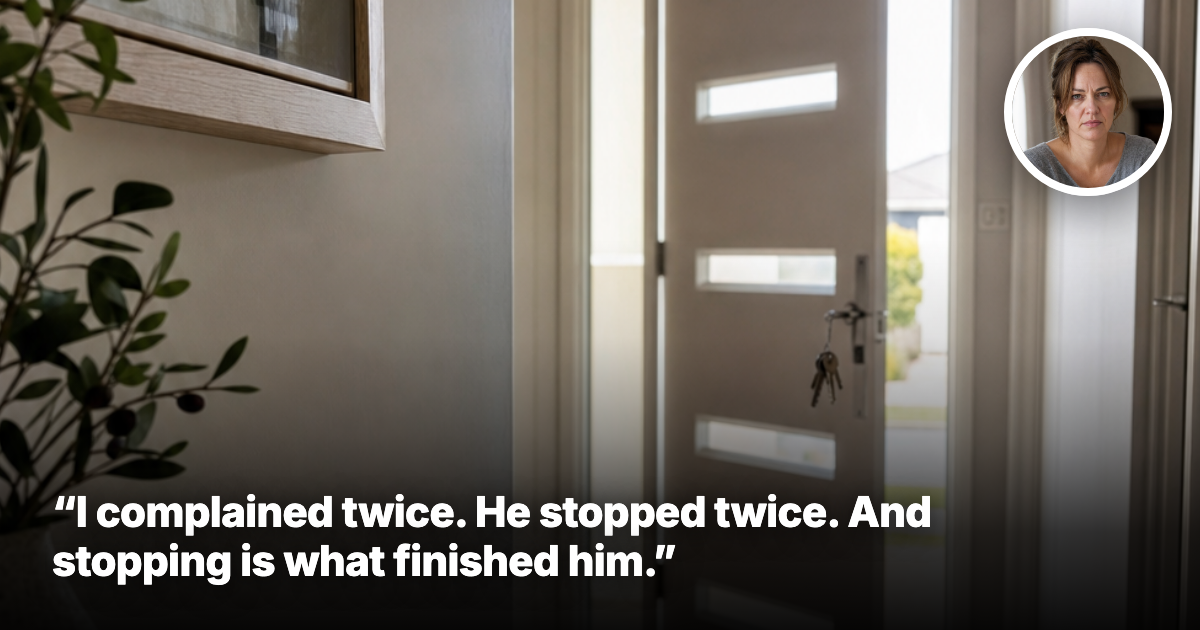
She had been in the house seven years. Same street, same landlord, rent paid on the same day every month, and for the first five of those years she would have called the arrangement easy.
She works from home, which is how she knows. The first time, she came back from a walk and a door she had locked was unlocked. Nothing taken. The second time, a neighbour mentioned her landlord had been "around checking the gutters" on a Tuesday. The third time, she heard a key in the front door mid-morning and watched him walk in holding a smoke alarm and a screwdriver.
He was not furtive about it. He waved, said he had been meaning to get to it for weeks, and left after ten minutes.
She asked us a question we hear more often than you would think.
"He can't just come in, can he? And what am I actually supposed to do — twice I complained, twice he stopped, and somehow I'm the one who feels like I'm being difficult?"
The answer starts with a list most tenants have never seen
A landlord's right to enter a tenanted home is not a general permission that applies unless something is specifically banned. It is the reverse. There is a closed list of grounds — an inspection, routine repairs, checking completed repairs within a set window, smoke-alarm and safety-switch compliance, showing the property to a buyer or a new tenant, a valuation, a genuine emergency — and if the reason for the entry is not on the list, the entry is not permitted. Full stop.
Even when the reason is on the list, there is a second gate: written notice, in the approved form, given a minimum period ahead — for most grounds, at least 48 hours. A smoke alarm is on the list. Turning up unannounced with one is not.
Entering in contravention of those rules is an offence in its own right. It has a name. It carries a penalty. It is not a grey area.
So she was right to complain, and she did it properly. Not a text message — a formal breach notice, the document the system is built around, which names the obligation breached and gives the other party a defined period to remedy it. He stopped. Months later it happened again — a "quick look at the fence" while she was out. Second notice. He stopped again, and apologised.
Then, some months on, she came home early and found him in the backyard measuring for a shed slab he had decided the property needed. No notice. No emergency. This time her question had changed.
"Do I have to go through the whole complaint process again? Because I don't actually want to leave — I like the house. I just want him to stop."
The rule nobody tells you: his compliance was building your exit
Buried in the tenancy law is a provision that reads like a trap.
If a tenant gives two formal breach notices for separate breaches of the same obligation — and the other party remedies each breach within the allowed period — and then breaches the same obligation a third time, all inside a defined window, the tenant may apply for a termination order. Not another breach notice. An application to end the agreement.
Read the mechanism again, because it is backwards from instinct. The right does not build while he keeps offending. It builds because he kept fixing it. Each remedied breach is a counted strike. The apology tours were not resetting the clock — they were loading it. Because he complied, twice, the third entry completed a pattern the law had already named.
Two details matter. The application can be made without the usual notice of intention to leave — it goes straight to the tribunal. And the tribunal does not rubber-stamp it: it must weigh the seriousness of each breach, the length of the tenancy, how compressed the breaches were, and what was left on the lease. Seven clean years and three documented entries is not a marginal case.
Here is the symmetry that should make every landlord sit up: the identical provision runs the other way. Two breach notices to a tenant for breaches of the same obligation — late rent, misuse of the premises — each remedied in time, then a third breach, and the landlord holds the same fast route. This is not a tenant's weapon or a landlord's trap. It is a standing rule of the asset class, and it cuts both ways.
What it means for you
If you own a rental property, the lesson is not "never enter." It is that entry is a procedure, and procedures are what professional management exists to absorb. Every ground on the list is legitimate. Every one has a notice requirement attached, and the notice costs nothing. The landlords caught by this rule are almost never malicious — they are helpful, hands-on, and treating a tenanted asset like a house they happen to own. The law prices the difference. We have covered what happens when a tenant's remedy expires before she knows she needs it, and what the rules look like when the entry is for a sale and needs written consent — this is the third shape: the rule that rewards compliance.
And this is the part nobody connects to tenancy law. Whether a property attracts a seven-year tenant who pays on the same day every month — or a churn of eleven-month tenancies with a vacancy gap between each — is not luck, and it is not suburb-level data. Two streets in the same suburb, sharing a postcode, a median rent, a school catchment and a council, routinely show a 20–30% spread in effective yield once you measure achieved rents rather than asking rents, real vacancy duration, and true days-on-market. One street lets in four days to a queue of applicants with histories like hers. The street behind sits for five weeks and lets at a discount to a tenant gone within the year. The suburb median averages those two streets into a number that describes neither — the same failure of resolution we see when an obligation attaches to the property instead of the person.
A tenant like her — long tenure, fastidious, invested in the home — is an income characteristic as real as the rent figure, and the odds of attracting and keeping her are set street by street, property by property. Which is the entire point of measuring at that resolution before you buy, not after the tenancy unravels.
She did apply, in the end — not because she wanted to leave, but because the third entry told her the pattern was never going to stop. The house she liked is back on the rental market. It has been listed for six weeks.
The mistake was never being a landlord. It was being one without ever learning that the rules he kept half-following were keeping score.
If there's a specific street you're weighing up right now, check its Street Score first — it's free, takes ten seconds, and tells you whether that street is pulling the suburb average up or riding on it.
Frequently asked questions
Can a landlord in Australia just walk into a rented house whenever they want?
No. A landlord can only enter for specific legal reasons, such as an inspection, repairs, a valuation, a genuine emergency, or showing the property, and they must usually give written notice first. Turning up without a valid reason or proper notice is not permitted.
What should a tenant do if a landlord keeps entering without notice?
The article says the tenant should use a formal breach notice, not just a text message. That creates a documented complaint and gives the landlord a set period to fix the problem.
How can repeated illegal entry by a landlord lead to ending the tenancy?
If a tenant gives two formal breach notices for separate breaches of the same obligation, and each one is remedied, a third breach within the defined window can let the tenant apply to the tribunal for a termination order. The tenant may be able to do this without first giving a notice of intention to leave.
Does this rule only protect tenants, or can landlords use it too?
It works both ways. The article says the same fast-track rule can apply if a tenant breaches the same obligation twice, fixes both breaches, and then breaches it a third time within the relevant window.
What does a tribunal look at before ending the tenancy after repeated breaches?
The tribunal does not automatically end the agreement. It considers the seriousness of each breach, how long the tenancy has lasted, how close together the breaches were, and what time is left on the lease.
General information only. It does not take your objectives, financial situation or needs into account, and nothing here is legal, financial, taxation or investment advice specific to your circumstances.