News · 29 August 2026 · 4 min read
She paid $35,360 a year in rent. Then the landlord sold the home
A tenant raising her grandchildren is told the rental home is being sold. The sale, the tenancy agreement and the exact street all matter more than the listing headline.
The question arrived after the listing went live
When a rental property goes up for sale, the tenant often feels as if the decision has already been made. The photos appear online, inspections are proposed and suddenly a home that felt settled becomes a moving deadline.
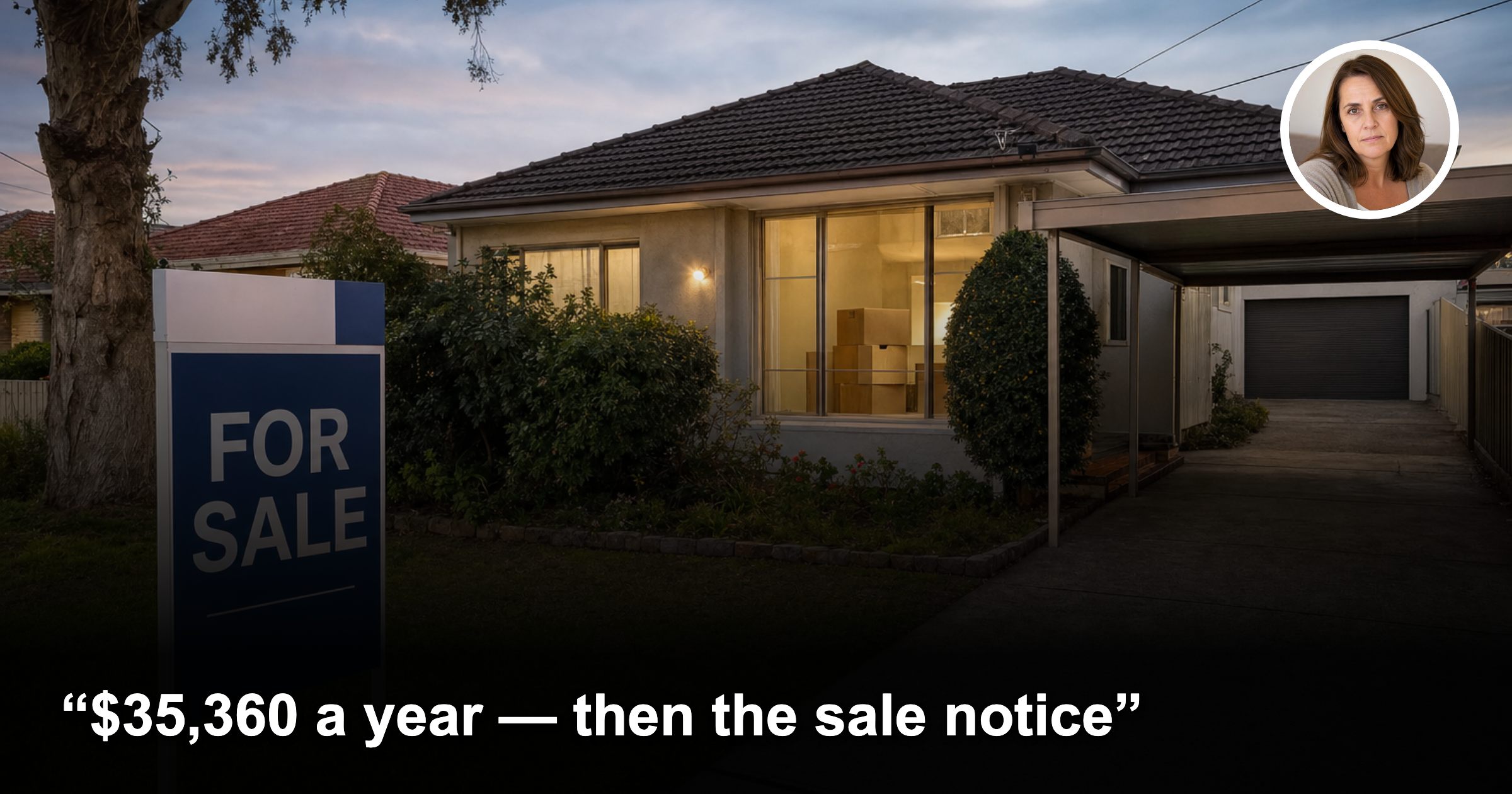
A 48-year-old woman raising her grandchildren recently faced that shock. Her rent was $680 a week — $35,360 across a full year — and the house worked because the children had routines, the school run was manageable and the family had finally stopped searching for somewhere affordable.
Then the owner decided to sell.
Her question was simple: “Can the sale force us out, and what happens if the buyer wants the house empty?”
A sale is not automatically a termination
The first distinction is between selling the property and ending the tenancy. They are not the same event.
In Australia, the practical answer depends on the state or territory, the type of agreement and whether the tenancy is fixed-term or periodic. A property can generally be marketed while occupied, subject to the applicable notice and entry rules. A buyer may take the property with the tenancy attached, or the owner may seek vacant possession under a lawful process. The sale itself does not magically cancel every existing promise.
That is why a tenant should not rely on a hurried verbal instruction. Check the agreement, ask for the proposed inspection schedule in writing and obtain any termination notice formally. The dates matter. So does the reason given. Rules for notice, open homes, photography, access and fixed-term agreements are not identical across the country.
For the owner, the same discipline prevents an avoidable dispute. A rushed sale campaign can create complaints, missed inspections and a poorer result if the property is presented as an investment but the tenant feels pushed out. The buyer also needs to know whether the advertised settlement expectation matches the tenancy position.
The hidden cost is bigger than the weekly rent
The $680 weekly figure made the situation look like a rent question. It was really a housing-stability and asset-management question.
If the family had to move, the direct costs could include a new bond, removal, connection fees, time away from normal life and potentially a higher rent. A $40 weekly increase would add $2,080 a year. A $100 weekly increase would add $5,200. Those amounts sit on top of the cost of finding a suitable home in the same school and transport catchment.
For an investor, tenant turnover has a parallel cost. A vacant period, cleaning, repairs, advertising, letting fees and a discount to attract the next applicant can absorb more than a headline rent increase earns. A tenant who has cared for the property and paid reliably is an asset-management fact, not just a line in the ledger.
The right question before deciding how to sell is therefore: what produces the strongest risk-adjusted outcome — selling with a good tenant in place, negotiating a lawful transition, or waiting for a natural vacancy?
Why the exact street changes the answer
Suburb-wide rent figures can hide the decision that matters most. Ripehouse Advisory’s street-level view tests the exact address against achieved rents, vacancy, days on market, applicant depth and nearby rental supply.
Two homes in the same suburb may both be described as “$680 a week”, yet one can attract multiple suitable applicants within days while the other needs a longer campaign and a sharper price. The difference may be the walk to the bus stop, school catchment boundary, noise exposure, parking, floor plan or the number of competing listings due to complete nearby.
That data helps both sides. A tenant deciding whether to negotiate a short extension can compare the likely cost and availability of alternatives on nearby streets. An owner deciding whether to preserve the tenancy can estimate vacancy risk instead of assuming demand is identical across the postcode.
The same principle appears in our guide to the rent-increase decision at street level and in the analysis of why a family’s annual rent can become an ownership question. The property market is local, but “local” often means a few streets rather than an entire suburb.
What should each side do next?
The tenant should keep paying rent, keep records of every communication and ask for the sale timetable, inspection arrangements and tenancy implications in writing. They should not leave solely because an agent says the buyer “probably wants vacant possession”. If a formal notice arrives, the tenant should check it promptly with the relevant state tenancy authority or a qualified tenancy adviser.
The owner should disclose the tenancy accurately to the agent and prospective buyer, plan inspections around the legal access rules and compare the value of a clean, cooperative campaign with the cost of vacancy. If a transition is negotiated, the terms should be written clearly and should not depend on pressure or confusion.
For an investor, this is not an argument that every tenant must stay or every sale must wait. It is a reminder that a rental is an operating asset. Income, tenant quality, vacancy, compliance, presentation and resale timing all sit inside the valuation.
The investment opportunity
Selling a rental can be disruptive, but it can also expose whether the asset was chosen with enough precision. The strongest property decisions are made before the emotional deadline: test the exact street, understand the tenant demand, model the vacancy risk and know what a buyer is really purchasing.
The right asset on the right street, assessed with the right data, can turn a difficult rental decision into a clearer investment opportunity. Property remains a powerful long-term wealth-building tool when the address is judged by evidence rather than by a suburb label or a rushed headline.
If there's a specific street you're weighing up right now, check its Street Score first — it's free, takes ten seconds, and tells you whether that street is pulling the suburb average up or riding on it.
Frequently asked questions
If a landlord sells a rental property in Australia, does that automatically end the tenancy?
No. The sale of a rental property is not the same as ending a tenancy, and the outcome depends on the state or territory, the agreement type and whether the lease is fixed-term or periodic.
Can a tenant be forced out just because the buyer wants the house empty?
Not just because of that request. The buyer may want vacant possession, but any move to end the tenancy has to follow the lawful notice and tenancy rules that apply in the relevant state or territory.
What should a tenant do first if their rental home is listed for sale?
Keep paying rent, keep records of all communication and ask for the inspection schedule, sale timetable and tenancy implications in writing. If any formal notice arrives, check it promptly with the relevant tenancy authority or a qualified adviser.
Why does the article say the exact street matters more than the suburb name?
Because rent demand and vacancy risk can change from one street to the next based on access to transport, school catchments, parking, noise and nearby supply. Two homes in the same suburb can attract very different levels of interest.
What is the main risk for an owner selling a rental with a tenant in place?
A rushed campaign can create complaints, missed inspections and a poorer sale result. The owner also needs to weigh the cost of vacancy and tenant turnover against the value of keeping a cooperative tenant during the sale.
General information only. It does not take your objectives, financial situation or needs into account, and nothing here is legal, financial, taxation or investment advice specific to your circumstances.