News · 28 August 2026 · 3 min read
Her family had $1,120 a week in rent. Is renting becoming the permanent Australian childhood?
A family facing $58,240 a year in rent asks whether long-term renting is becoming permanent—and what the exact address means for property investors.
The question
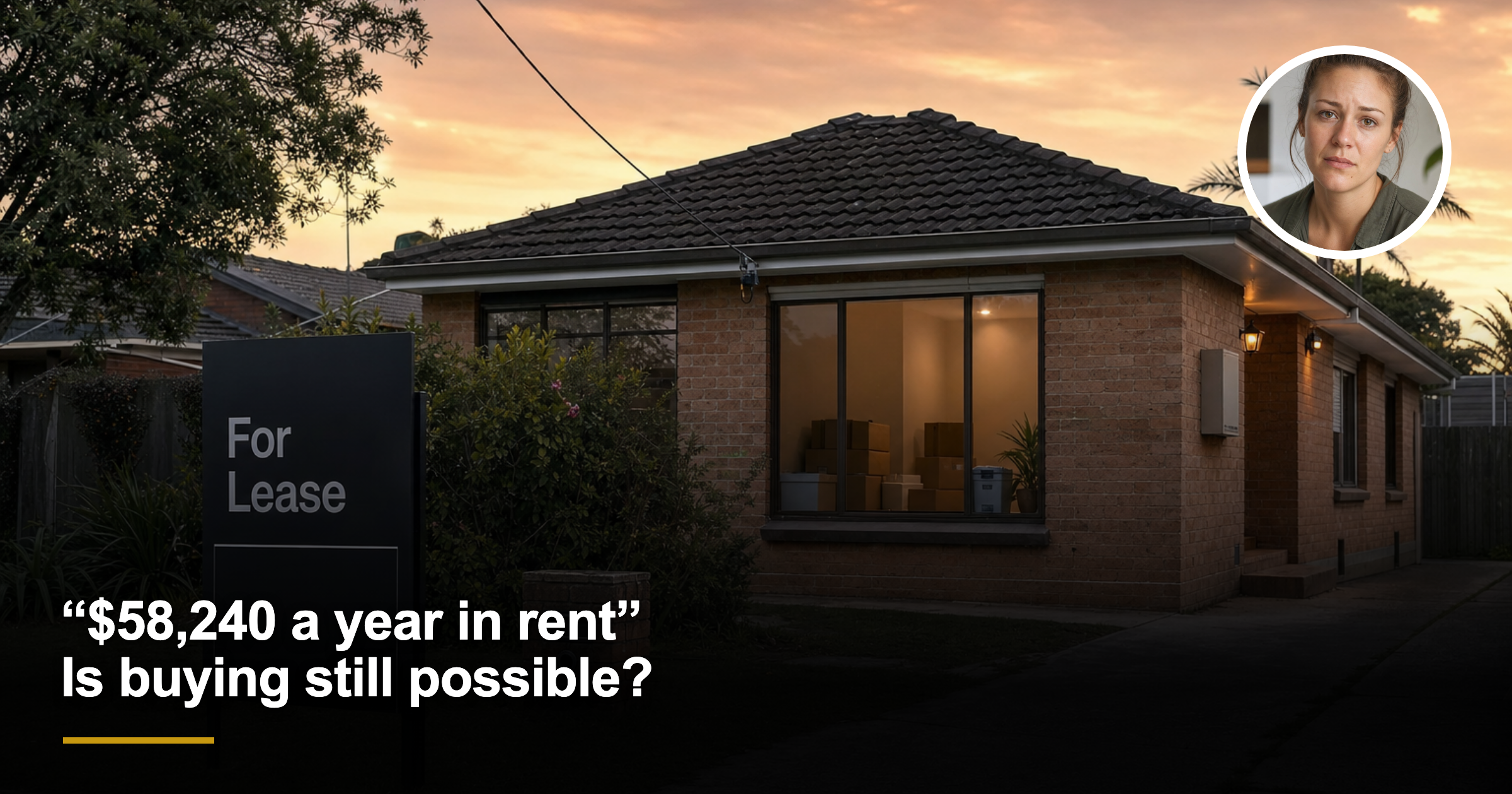
When a 31-year-old woman asked whether she should keep renting near her children's school or stretch for a property purchase, the hardest part was not choosing a suburb. It was accepting that the family could be paying more than $58,000 a year in rent while still having no asset at the end of the lease.
She had stable household income, a modest savings buffer and two children. Her lease renewal arrived with a familiar choice: accept a $1,120 weekly rent, move further out, or try to buy before prices moved again. None of those options felt like a win. It echoes the pressure explored in the $90-a-week rent increase question.
Her question was blunt: if even relatively secure households are being pushed into long-term renting, does property investment still make sense—or is the market simply closed?
The answer
The pressure is real. Recent Australian housing data shows that more children are growing up in rental homes as ownership rates fall, while rental stress is no longer limited to people on low incomes. A six-figure household can be able to pay the rent and still be unable to build a deposit quickly enough to catch the next price move.
But the conclusion should not be that property has stopped working. It is that the old shortcut—save a deposit, pick a familiar suburb and assume every address behaves like the suburb average—has become dangerously incomplete.
At $1,120 a week, annual rent is $58,240 before utilities, moving costs or the value of a disrupted school run. A move $120 a week cheaper saves $6,240 a year, but may add transport, childcare and time costs. A purchase at $850,000 with a 20 per cent deposit would require $170,000 before buying costs. The gap is not solved by slogans about cutting coffee.
For an investor, this is the important distinction: rental demand can be strongest precisely where owner-occupier entry is hardest. Families who cannot buy still need stable homes. That does not make every high-rent property a good investment, because a rent figure can be cancelled by insurance, strata, maintenance, vacancy or an over-optimistic valuation. The same address-level discipline matters when testing investment borrowing costs.
Why the exact address matters
Ripehouse Advisory’s street-level research repeatedly finds that two properties in the same suburb can have different investment profiles. The useful comparison is not only suburb median rent. It is achieved rent on comparable homes, days on market, applicant depth, vacancy, buyer depth and the future supply pipeline within the immediate catchment.
One family-friendly pocket may have a tight cluster of school access, quiet streets and three-bedroom stock. A nearby road can share the postcode but lose tenants to traffic noise, awkward parking or a longer walk. Those differences affect how quickly a property leases, what concession is needed and how resilient demand is when household budgets tighten.
That is why the woman’s decision should begin with a precise address test. If she continues renting, she can compare the full cost of staying with the full cost of moving. If she buys, she should test whether the asset has durable demand beyond the current shortage. If she invests, she should ask whether the rent is supported by real local applicants—not just a headline yield.
What renters and investors should check
First, separate an affordability problem from a location problem. A cheaper property may be cheaper because its tenant pool is thinner, its vacancy is higher or its resale audience is narrower.
Second, model the next lease, not only today’s lease. Check comparable achieved rents, renewal behaviour and the number of competing homes likely to reach the market nearby.
Third, look at the household’s options over five years. For a renter, that means school continuity, moving costs and the ability to keep saving. For an investor, it means whether the address can hold demand through a softer market.
Finally, do not confuse a national ownership decline with a national property verdict. The ownership barrier makes well-located, well-researched rental housing more important. It also makes bad selection more expensive.
The opportunity is still there, but it belongs to the buyer who can identify the right asset on the right street and price its risks honestly. In a market where more Australian families may rent for longer, property investment backed by street-level evidence can provide the durable demand that headlines miss.
If there's a specific street you're weighing up right now, check its Street Score first — it's free, takes ten seconds, and tells you whether that street is pulling the suburb average up or riding on it.
Frequently asked questions
Why are more Australian families staying in rental homes for longer?
The article says rising housing costs and falling ownership rates are pushing more children into rental homes. Even households with stable income can struggle to save a deposit fast enough to buy before prices move again.
Is long-term renting now a normal outcome for middle-income Australian families?
The article suggests it is becoming more common, but not because renting has become ideal. It reflects the gap between rent, saving a deposit and rising property prices, especially for families trying to stay near schools.
What is the main mistake people make when judging a property investment from the suburb average?
The article says it is risky to assume every address behaves like the suburb average. Two properties in the same suburb can have very different demand, vacancy and rent outcomes depending on the exact street and surrounding conditions.
What should renters compare before deciding whether to keep renting or move?
They should compare the full cost of staying with the full cost of moving, not just the weekly rent difference. The article says transport, childcare, school continuity and moving costs can change the decision significantly.
What should property investors check before relying on a high rent figure?
The article says investors should look beyond headline yield and test whether the rent is supported by real local demand. They should consider comparable achieved rents, vacancy, applicant depth, buyer depth and future supply in the immediate area.
General information only. It does not take your objectives, financial situation or needs into account, and nothing here is legal, financial, taxation or investment advice specific to your circumstances.