News · 23 August 2026 · 5 min read
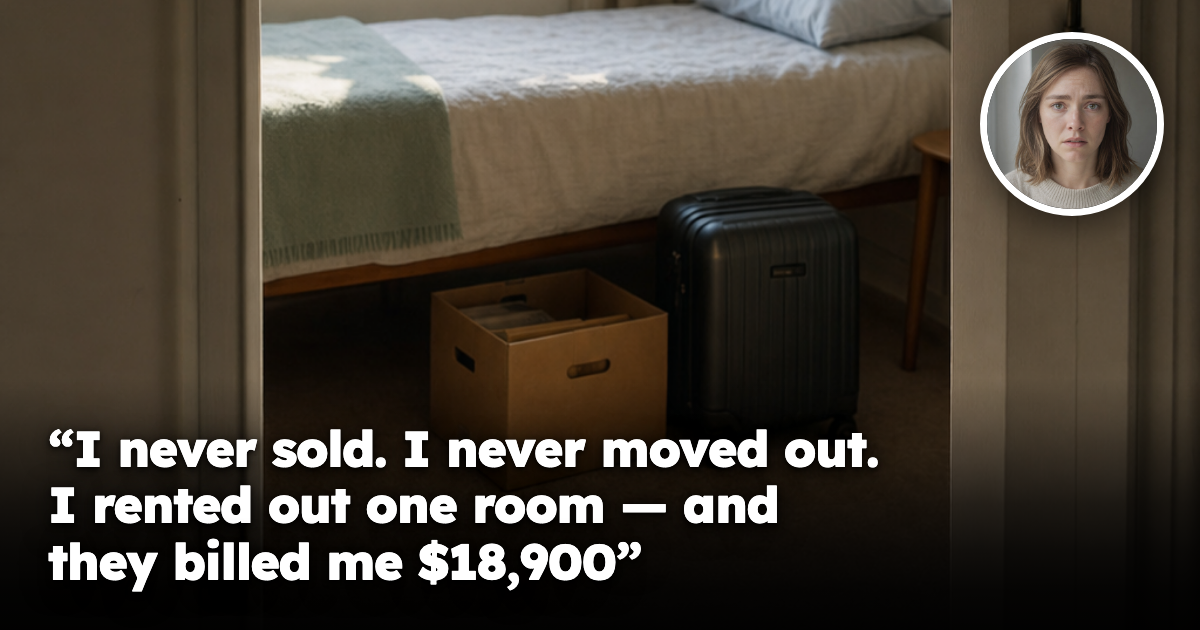
'I never sold. I never moved out. I rented out one room — and they sent me a bill for $18,900'
She never sold and never moved out. She let one bedroom to help with the repayments — and fourteen months later was assessed for a further $18,900 in duty, because the statutory word for what she did was never 'sell'.
She had done everything in the right order, which is exactly why the letter made no sense.
Twenty-eight years old. One property, bought alone, the first thing she had ever owned. She had saved six years for the deposit, and the duty concession — the one she qualified for as a first-time buyer of a home she was going to live in — was the difference between settling that year and settling three years later.
She moved in nine days after settlement.
Seven months later her hours were cut — enough that the repayment stopped being comfortable and started being the thing she thought about in the supermarket. So she did the sensible, widely-recommended thing: she advertised the smaller bedroom and let it for $230 a week. She kept living in the house.
Fourteen months later, a letter arrived assessing her for a further $18,900 in duty, plus interest.
Her question, when it reached us, was almost bewildered:
"I didn't sell it. I didn't move out. I still live in the house — I was in it when I opened the letter. How can renting out one bedroom be treated as disposing of my property?"
The answer: the word "dispose" in this context is not the word you think it is
Concessions on transfer duty for owner-occupiers are conditional discounts, and the conditions run for a defined period after you buy. Everybody who receives one is told they need to live in the property. Very few are told what the legislation counts as breaking that condition.
The statutory definition of disposing of the land does not mean "sell". It expressly includes transferring part or all of it, or leasing or otherwise granting exclusive possession of part or all of it to another person.
A room let on terms giving the occupant exclusive possession of that room is capable of being caught — while the owner is still living there, still holding title, still paying the loan.
That is the distance between what she thought the rule was and what it is. She was watching for a sale. The rule was watching for possession.
The second thing nobody tells you: there are two clawbacks, and one of them is total
Where the disposal happens within the year after the occupation date — the date the owner actually starts living there as their principal place of residence — the reassessment is pro-rata: a formula worked on the days between moving in and disposing. You lose a proportion. Painful, survivable, arguably fair.
Where the owner disposes before the occupation date, or simply fails to move in within the required window — one year after the transfer date for an established home, two years for vacant land — the reassessment is imposed as if the concession had never applied at all. Not scaled. Not apportioned. Reversed, as though you had never qualified.
Two adjacent provisions. Substantially the same conduct. One date between them, and the difference between a slice and the lot. The buyer who moves in and then stumbles loses a fraction. The buyer who never quite manages to move in loses everything.
She was on the better side of that line. It did not feel like a mercy at the time.
The escape hatch exists — and it is a closed list
There is relief, but it is exhaustively named. The relieving concept is an intervening event, and it means: a natural disaster, including fire and flood; the death or incapacity of the person; or another event prescribed by regulation.
That is the list. There is no "any other reason" limb.
Reduced hours are not an intervening event. Nor is a job transfer, a relationship ending, a redundancy, or finance falling over. The commonest real-world reasons a person cannot complete a year in a house they fully intended to live in are, as a matter of drafting, inadmissible.
And there is a final turn most never see coming. The obligation to report the trigger falls on the person who owes the money. Within 28 days of the event, they must notify the commissioner in the approved form and lodge the documents for reassessment. Failing to give that notice is an offence in its own right. Nobody is required to come and find you. You are required to go and find them — and staying quiet is not a gamble on detection, it is a second and separate wrong.
To be fair to a system that is easy to caricature: the protections are real. A buyer is not caught where the seller, or an existing tenant under a lease granted before the transfer, is still in the house and vacates promptly — within six months at the outside. Transfers to a spouse are carved out. Every one of these definitions was published and readable years before she opened her letter. Nobody misled her. No officer did anything but apply the law as written.
What this means if you own, or are about to
This is a cashflow issue dressed as a tax issue, and it belongs beside a loan term that quietly expired years before anyone mentioned it or a contract right that only starts running once you discover it. The cost is created by the gap between what an owner assumes the rule is and what the rule says — the same gap we spend our working lives closing at the asset level.
Two houses in one suburb share a median, a growth rate, a school catchment and a vacancy rate. Every number in the suburb summary is the same for both. They are not the same investment — one sits on a street with genuine depth of demand, the other four hundred metres away does not. Across a single suburb, the spread in effective yield between best street and worst routinely runs 20–30%: achieved rents rather than asking rents, real vacancy duration, true days on market, genuine street-level supply and demand. A suburb median has never once read a duty assessment, and it has never once rented a room.
Holding cost belongs in that same column — and almost nobody puts it there.
Here is the pro-investment reading, and it is not a consolation prize. Every rule that cost her $18,900 was knowable: the definition of disposal, the two clawback provisions, the closed list of relieving events, the 28-day notice duty. All readable before she advertised a room. A threat happens to you. A risk you can read in advance is a line item — and a priced line item is an edge over every buyer at that inspection who never looked. It is the same discipline that separates an owner who reads the rules early from one who meets them late.
She kept the house. She still lives in it, and the room is still let — the clawback period ran out long ago.
What she wishes someone had told her is that she was never at risk of losing the property. She was at risk of a single word — and the word was never sell.
If there's a specific street you're weighing up right now, check its Street Score first — it's free, takes ten seconds, and tells you whether that street is pulling the suburb average up or riding on it.
Frequently asked questions
Can renting out one bedroom trigger a first home buyer duty clawback in Australia even if I keep living in the house?
Yes. The article says the transfer duty definition of “dispose” can include leasing or otherwise granting exclusive possession of part of the property, not just selling it. That means letting a room can trigger a reassessment even while you still live there.
Why was the owner assessed for an extra $18,900 in duty if she never sold the property?
Because the concession she received was conditional on living in the home, and the law treats certain leasing arrangements as disposing of part of the land. The reassessment then adds duty plus interest.
What is the difference between a partial clawback and losing the full duty concession?
If the disposal happens within one year after the occupation date, the reassessment is pro-rata based on the days involved. If the owner never moves in within the required window, or disposes before the occupation date, the concession can be reversed as if it never applied.
What counts as an intervening event for duty relief under the article?
The article says the relief list is closed. It includes a natural disaster such as fire or flood, the death or incapacity of the person, or another event prescribed by regulation.
Do you have to tell the revenue office if a clawback trigger happens?
Yes. The article says the person who owes the money must notify the commissioner within 28 days of the event and lodge the documents for reassessment. Failing to give that notice is an offence in its own right.
General information only. It does not take your objectives, financial situation or needs into account, and nothing here is legal, financial, taxation or investment advice specific to your circumstances.