News · 30 August 2026 · 4 min read
Her $760 weekly lease became a two-year question nobody could answer
A proposed two-year lease rule has renters and owners asking whether security will help families or make available homes more expensive.
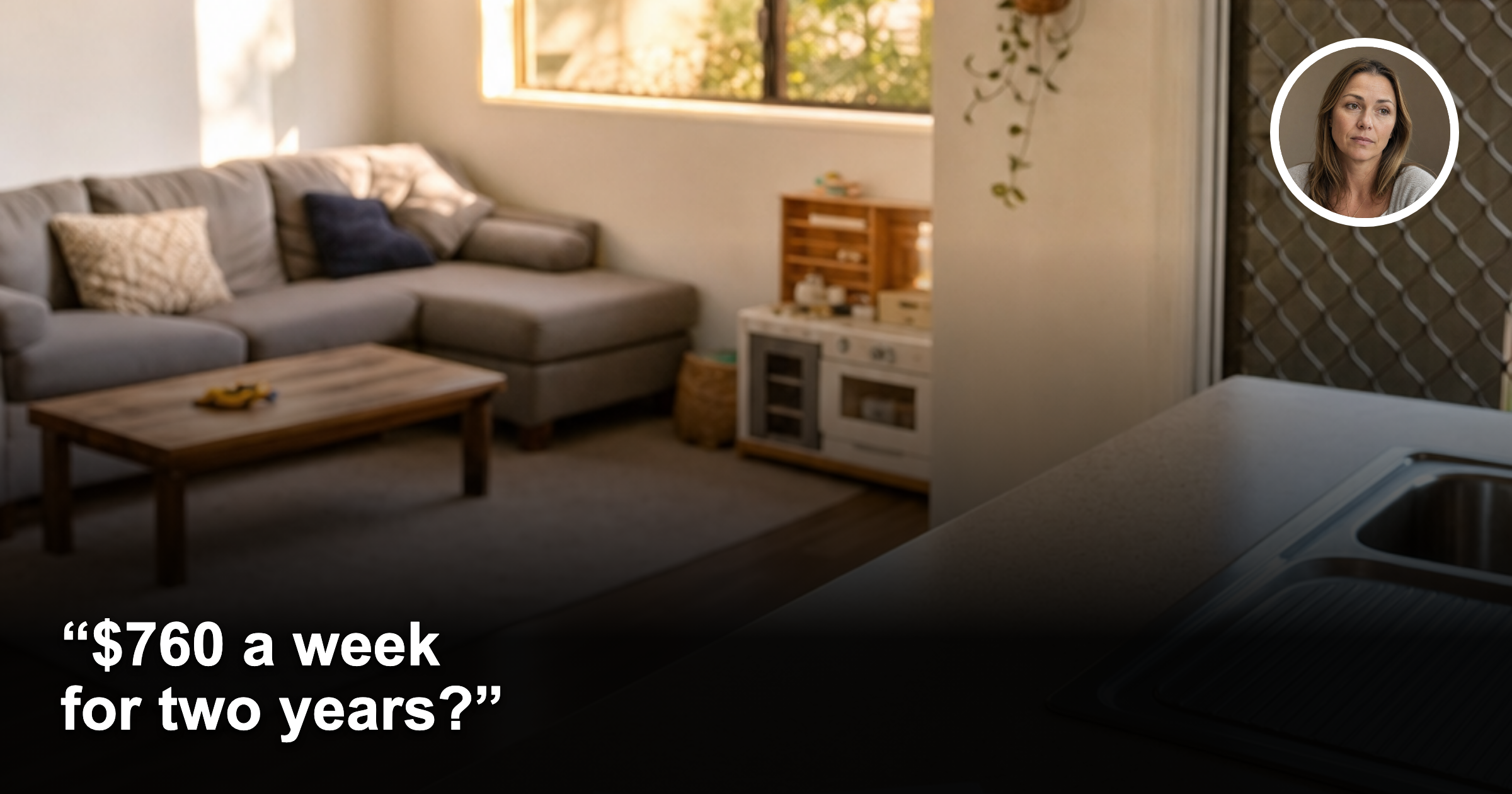
A 42-year-old mother was paying $760 a week for a home she had finally made feel stable. Then a proposal to make two-year rental agreements the default turned a private relief into a national argument: would longer leases protect families, or simply make the remaining homes more expensive and harder to secure?
The question
She had renewed short leases before. Each time, the same questions arrived with the paperwork: could the rent rise, could the owner sell, and would the next agreement last long enough for her children to settle into school?
At $760 a week, the home represented $39,520 in annual rent. A move would not just mean another application. It could mean removal costs, missed work, a new school route, an overlap between two leases and the risk of accepting a less suitable home because the clock was running out. That is the same practical pressure explored in the rental-sale question that disrupted another family.
The proposed two-year minimum has attracted support from renter advocates who say a household should not have to live as though its home is permanently temporary. Critics say a compulsory longer commitment could discourage some owners from offering properties, reduce flexibility when circumstances change and push risk back into the weekly price.
So which side is right?
The answer is more local than the headline
A longer lease can be valuable. It gives a household time to plan and gives an owner a clearer period of occupancy. But the policy cannot create a suitable home where there are too few of them. If the supply of available rentals tightens, a rule designed to provide security may produce a sharper contest for every listing that remains.
The important point for an owner or investor is that “the rental market” is not one market. The address matters. Two homes in the same suburb can have different achievable rents, vacancy patterns, days on market and applicant depth because one is on a quiet family street near a school route while the other is exposed to traffic, has difficult parking or sits beside a weaker transport connection. A recent street-side value gap shows why the same address-level discipline matters beyond the lease itself.
Ripehouse Advisory’s street-level screens are built around that difference. They compare the exact property with nearby achieved rents, recent leasing speed, competing supply and the depth of likely applicants. A suburb median may suggest that $760 is normal; the streets immediately around a particular home may show whether that rent is resilient, stretched or dependent on a temporary shortage.
That distinction matters under either policy outcome. If two-year agreements become more common, an owner needs to know whether the property attracts stable demand before locking in a longer term. If the proposal fails, a renter needs to understand whether moving one or two streets could change the price, competition and security available to them.
What longer security would and would not fix
For the mother in this case, two years would remove one major uncertainty. It would not freeze every cost. The agreement would still need clear terms around rent reviews, repairs, access, break fees and what happens if the owner genuinely needs to sell or occupy the property.
It also would not turn a weak investment into a strong one. An owner who bought on a suburb-wide assumption could still face a property with high turnover, expensive maintenance or a small pool of suitable applicants. A longer lease may reduce vacancy, but it can also reduce the ability to respond quickly when the property, the owner or the market changes.
The sensible test is not “are two-year leases good or bad?” It is “what does this exact home need in order to hold a tenant and an owner through two years?” That means checking the property's condition, realistic rent, likely tenant profile, nearby competing listings and the street’s rental history—not just reading the strongest political claim.
For renters, the same discipline helps. Calculate the full cost of staying, including likely increases and utilities, then compare it with the cost and risk of moving. Ask what protections are actually written into the agreement. A longer term is useful only when the home remains affordable and workable for the household.
What it means for property investors
The debate is a reminder that rental security and investment performance are not opposites. A well-selected property can provide a household with continuity while giving its owner dependable demand. The mistake is treating a policy announcement as a substitute for property-level research.
Before buying, test achieved rents rather than advertised hopes. Check vacancy and days on market at the street or pocket level. Review the pipeline of competing rentals and the depth of buyers who may eventually need to exit. Then stress-test the holding costs against a period when the property is vacant or the lease terms limit flexibility.
For existing owners, the decision to offer a longer agreement should follow the same evidence. A stable tenant, sound property and strong local demand can make certainty commercially attractive. A poorly maintained home in a pocket with rising competing supply may need work before a longer commitment is sensible.
The best outcome is not a louder argument between renters and owners. It is better housing decisions made with better information. The right property, on the right street, measured with the right data, can support rental stability and remain a durable investment—even when the rules and headlines keep changing.
If there's a specific street you're weighing up right now, check its Street Score first — it's free, takes ten seconds, and tells you whether that street is pulling the suburb average up or riding on it.
Frequently asked questions
What is the proposed two-year rental rule meant to change for renters in Australia?
It would make two-year rental agreements the default, giving renters more certainty and time to settle into a home. The article says this could help families plan, but it would not stop rent reviews, repairs or every other lease condition.
Why do some people think longer leases could make renting harder to secure?
Critics argue that if compulsory longer commitments discourage some owners from renting out properties, fewer homes may be available. If supply tightens, competition for the remaining listings could increase and push risk back into the weekly price.
Does a two-year lease guarantee a renter will stay secure the whole time?
No. The article says a longer lease removes one big uncertainty, but it does not freeze all costs or override the lease terms. Rent reviews, repairs, access, break fees and situations where the owner needs to sell or occupy the home still matter.
What should property investors look at before offering a longer lease?
They should check the exact property's rental demand, nearby achieved rents, leasing speed, competing supply and the likely tenant profile. The article says suburb medians alone are not enough because street-level conditions can change how stable the tenancy will be.
How can renters and owners judge whether a longer lease makes sense for a specific home?
The article says the key is to assess the individual property, not just the policy debate. That means looking at condition, realistic rent, local competition, vacancy risk and whether the home remains affordable and workable over the longer term.
General information only. It does not take your objectives, financial situation or needs into account, and nothing here is legal, financial, taxation or investment advice specific to your circumstances.