News · 1 September 2026 · 4 min read
The $720,000 loan that crossed the line: what high-DTI means for property buyers
A family application looked affordable until a high debt-to-income ratio changed the lender’s answer.
The $720,000 loan that crossed the line: what high-DTI means for property buyers
The question
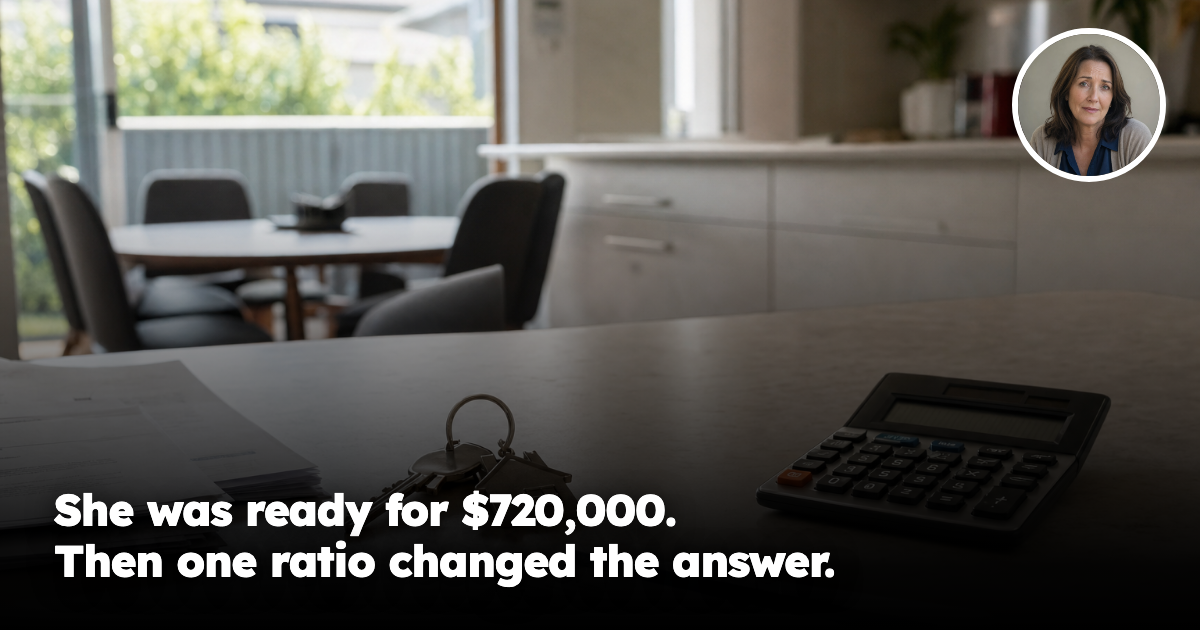
When a 57-year-old woman applied for a loan to buy a modest investment property with her ageing mother, the house was not the problem. The valuation was acceptable, the rent was supportable and the deposit was real.
The problem appeared in one number: the proposed debt compared with the applicants’ gross income.
The application sat above the high-debt-to-income line. Suddenly, a loan that looked ordinary in a spreadsheet became a scarce allocation inside the bank’s lending book. The family was told that a different lender might assess it differently, but nobody could promise that the same property would still qualify after another credit review.
Her question was blunt: “If we can afford the repayments, why can the bank still say no?”
The answer
Because approval is not based on repayments alone.
Australian lenders test several risks at once: income stability, existing debts, living expenses, interest-rate buffers, loan-to-value ratio, property type and the bank’s own concentration limits. A borrower can pass the household cash-flow test and still fall into a category the lender is trying to ration.
The high-debt-to-income guardrail is designed for precisely this situation. Loans at six or more times gross income attract extra scrutiny, and authorised deposit-taking institutions face a limit on how much new lending can sit in that high-DTI bucket. It does not mean every borrower above the line is automatically rejected. It means the application competes for limited capacity, and the answer can change with the lender, the month and the rest of the file.
That distinction matters to investors. A property may be sound while the funding path is fragile.
Take a $900,000 purchase with a $720,000 loan. At an interest rate of 6.2 per cent, the interest-only figure is about $3,720 a month before other costs. If the bank assesses the applicants’ combined gross income at $120,000, the debt is six times income exactly. Add a credit-card limit, a car loan or a conservative treatment of rental income and the ratio can move above the threshold quickly.
The family may not have become less able to make the payment overnight. The application has simply become more expensive in capital, risk and policy terms for the lender.
Why the property still matters
The wrong reaction is to focus only on finding a lender that says yes. The right question is whether the address earns its place in a constrained borrowing plan.
Two homes in the same suburb can have materially different funding resilience. Ripehouse Advisory’s street-level research looks beyond suburb medians at rent depth, days on market, vacancy, buyer volume and the spread between comparable streets. A house with a slightly lower headline yield may be easier to refinance if its street has deeper tenant demand and more active resale competition. A higher-yield property can be a poor security if its buyer pool is thin, its insurance costs are volatile or its rent relies on one narrow tenant segment.
That is why a lender’s valuation is only one checkpoint. It tells you what the bank thinks the security is worth today. It does not tell you how quickly the property can be leased, how many buyers would compete for it, or whether a future refinance will be straightforward.
For borrowers near a DTI boundary, those address-level details become more important, not less. A lender may accept a stronger rental history, a lower loan amount or a better-supported property file, but no strategy can turn a weak asset into a resilient one.
What should borrowers check?
First, calculate the full debt picture, including unused credit-card limits, personal loans, HELP repayments where relevant and every existing investment loan. The bank may use a different income treatment from the one in a household budget. RHA’s earlier breakdown of a serviceability-buffer borrowing-power gap shows why the lender’s calculation—not the borrower’s rough spreadsheet—sets the practical ceiling.
Second, ask how rental income is being shaded and whether the lender is assessing the proposed property on a conservative market rent. A property that only works at the agent’s optimistic estimate is already too close to the edge.
Third, compare the loan amount with the exact purchase price and valuation, not just the suburb’s median. A small valuation gap can force a larger deposit and push the DTI or cash-flow calculation in the wrong direction.
Fourth, stress-test the plan after settlement. Allow for vacancy, repairs, insurance, land tax and a refinance at a higher rate. The aim is not to predict every future rate move. It is to discover whether the investment survives an ordinary setback without a forced sale.
Finally, keep the application clean. New credit, unexplained transfers and rushed changes to the deposit can create questions at the worst possible moment. A strong file gives the lender fewer reasons to treat a borderline application as avoidable risk. It is also worth comparing the address-level lending test for a $680,000 loan before assuming a cheaper headline rate solves the problem.
The opportunity
Credit rules can feel like a locked door, but they also expose a useful discipline: property investors should buy for funding resilience, not just borrowing capacity. The strongest opportunity is often the address that remains attractive to tenants, valuers and future buyers when lending becomes selective.
The right property, on the right street, supported by the right data, can still build wealth through changing credit cycles. The headline may be a borrowing-power shock. The investable answer is to choose an asset that gives the next lender—and the next buyer—more reasons to say yes.
If there's a specific street you're weighing up right now, check its Street Score first — it's free, takes ten seconds, and tells you whether that street is pulling the suburb average up or riding on it.
Frequently asked questions
Why can an Australian lender refuse a loan even if the repayments look affordable?
Because approval is not based on repayments alone. Lenders also assess income stability, existing debts, living expenses, interest-rate buffers, loan-to-value ratio, property type and their own lending limits.
What does a high debt-to-income ratio mean for property buyers?
Loans at six or more times gross income attract extra scrutiny from Australian lenders. It does not mean automatic rejection, but it does mean the application uses limited lending capacity and may be harder to approve.
In the example, why did the $720,000 loan become a problem?
On a $900,000 purchase, a $720,000 loan at 6.2% interest-only was about $3,720 a month, and the applicants’ combined gross income was assessed at $120,000. That put the debt at six times income, and small changes like credit-card limits or rental income shading could push it higher.
What should borrowers check before applying if they are near a DTI limit?
They should calculate all debt, including unused credit-card limits, personal loans, HELP repayments where relevant and existing investment loans. They should also check how the lender is shading rental income and whether the purchase price and valuation match closely.
Why does the article say the property itself still matters in a high-DTI application?
A property may be acceptable as security today but still be fragile to refinance later. Street-level factors like tenant demand, resale competition, vacancy and insurance costs can affect whether the asset is resilient when lending is tight.
General information only. It does not take your objectives, financial situation or needs into account, and nothing here is legal, financial, taxation or investment advice specific to your circumstances.