News · 1 September 2026 · 5 min read
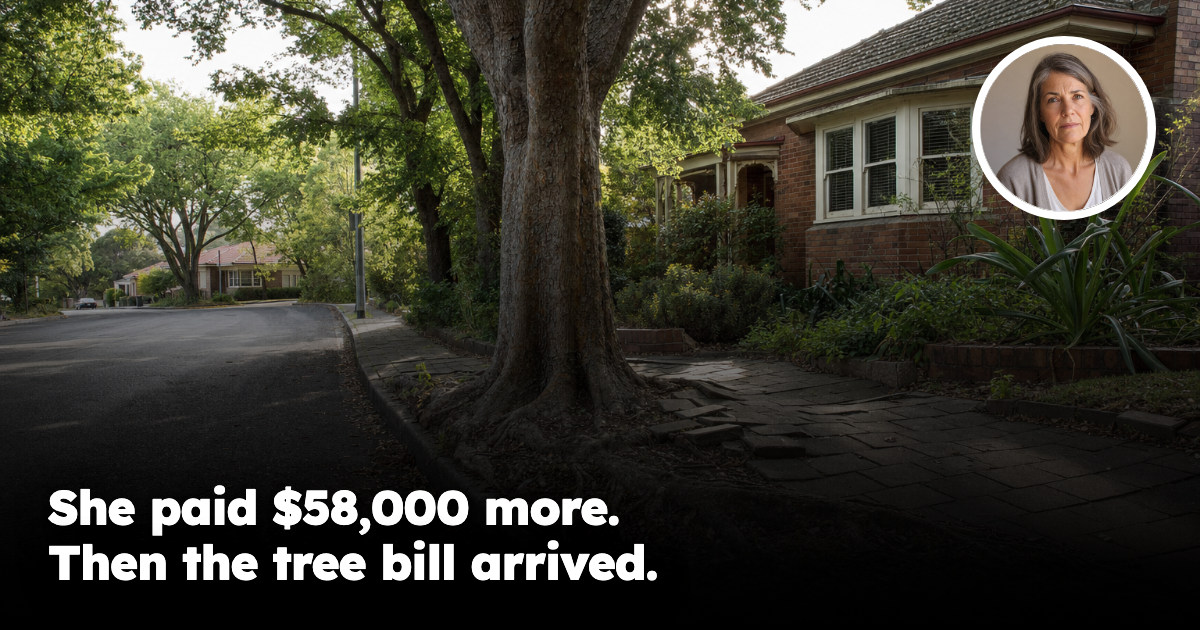
She paid $58,000 more for the leafy street. Then the tree bill arrived.
A 62-year-old woman paid $58,000 more for a leafy street, then faced a tree-related repair estimate.
She paid $58,000 more for the leafy street. Then the tree bill arrived.
At 62, she thought she had finally bought the part of the suburb that everyone wanted: a quiet, leafy street with broad verges, mature canopy and a walking route to the shops.
She paid $58,000 more than a similar house three streets away. The homes had almost the same floor area, land size and suburb-level numbers. The difference was the street.
Six months after settlement, a report linked the roots of the large street-side tree to damaged paving, a leaking section of drainage and movement near the front path. The first estimate was $12,000. The tree was protected. The council had to be involved. The quote did not include every item that might be uncovered once the ground was opened.
Her question to Ripehouse Advisory was simple: had the leafy street premium been a mistake?
The answer is not “trees are good” or “trees are bad”
Both statements are too blunt to help an owner buy well.
Mature canopy can make a street cooler, quieter and more attractive. It can improve the first impression that brings buyers to an inspection and tenants back for a second look. But a tree is not a suburb-wide amenity. Its value and its risk depend on the exact position of the trunk, the root path, the house design, the service connections, the verge and the rules applying to that council.
Two houses can share a postcode, school catchment and median price while having completely different exposure. One has a tree far enough from the building to provide shade without dominating the foundations or drainage. The next has a large canopy over the roof, roots pushing toward old pipes and a narrow access path that makes maintenance expensive.
That is why the $12,000 estimate did not automatically prove that she overpaid. It proved that she had assessed a street-level feature as a picture, rather than as an asset characteristic with a cost profile.
The hidden calculation behind the premium
The $58,000 premium looked emotional until the numbers were separated.
If the leafy street shortened vacancy by two weeks each year, lifted achieved rent by $35 a week and attracted a deeper buyer pool at resale, part of the premium could be supported by income and exit liquidity. If the street merely looked attractive in a listing photo but had recurring tree, drainage and access costs, the premium was harder to defend.
The important comparison is not the suburb’s average rent. It is achieved rent on comparable streets, actual vacancy duration and days on market for similar homes. A suburb median blends together quiet canopy streets, busy collector roads, exposed corners and addresses beside infrastructure. That average can hide the very feature the buyer is paying for.
RHA’s street-level review would test the two locations across five questions:
1. Do homes on the leafy street achieve a measurable rent premium, or do they simply receive more enquiries? 2. Is the vacancy advantage still visible after allowing for condition, parking and floor area? 3. Do comparable homes sell faster, or do they sit longer because buyers worry about upkeep? 4. How many competing properties offer the same combination of shade, quiet and access? 5. What physical risks repeat along the street: tree roots, drainage, overhead lines, flood paths or difficult driveways?
The difference between “more enquiries” and “a shorter vacancy” matters. So does the difference between a high sale price and a clean, quick exit. An investor who only records the suburb median is looking at the wrong resolution.
What should she have checked?
The first check was not a generic building report. It was a walk around the block at different times, followed by questions tied to the exact address.
Look for lifting pavers, repaired sections of path, patched drains, recurring gutter work, exposed roots, branches over the roof and signs that water travels toward the house. Ask who controls the tree, what approvals are needed for pruning or removal, and whether the current owner has records of arborist, drainage or paving work.
Then match the physical inspection against the title, services information and council controls. A protected tree can be a genuine amenity, but it can also limit the owner’s ability to respond quickly when a problem appears. A large tree beside a newer home with flexible drainage is not the same risk as the same tree beside an older house with brittle pipes.
The second check was financial. The buyer should have held a separate contingency for the feature she was paying to acquire. A leafy street premium without a maintenance allowance is incomplete underwriting.
The third check was the exit. Would the next buyer see the canopy as shade and character, or as a future argument about roots, roof damage and council permissions? The answer can change from one end of a street to the other.
So was the purchase a mistake?
Not necessarily. The $12,000 bill was a warning to price the whole street, not a verdict against property investment.
If the location continues to produce stronger achieved rent, lower vacancy and faster resale than the nearby alternatives, the premium may still be doing useful work. If the supposed amenity repeatedly creates costs and narrows the buyer pool, the owner has learned that visual appeal is not the same as scarcity.
The broader lesson is uncomfortable: the best property decisions are often made below suburb level. The right street can outperform a suburb average because it has durable access, buyer depth and tenant appeal. The wrong address can underperform inside the same suburb while looking perfect in a listing photograph.
For another example of why nearby addresses can carry different risk, compare the [street-level easement value gap](/resources/blog/the-118000-easement-gap-hiding-behind-two-similar-homes-2026-09-01) and the [road-plan risk behind a quiet-side premium](/resources/blog/she-paid-86000-for-the-quiet-side-of-the-suburb-then-the-road-plan-changed-2026-09-01).
Property remains a powerful long-term investment when the asset is chosen with evidence. The goal is not to avoid every tree, old pipe or unusual street feature. It is to know which physical detail creates durable demand, which one creates avoidable cost, and what the data says about the exact address before paying the premium. The right property on the right street can turn a headline feature into an advantage; the right research is how an investor tells the difference.
If there's a specific street you're weighing up right now, check its Street Score first — it's free, takes ten seconds, and tells you whether that street is pulling the suburb average up or riding on it.
Frequently asked questions
Why would someone pay more for a leafy street in the first place?
A mature canopy can make a street cooler, quieter and more attractive, which may help with inspections, tenant interest and resale appeal. But the premium only makes sense if those benefits translate into better rent, shorter vacancy or faster sale outcomes at that exact address.
What was the problem with the tree near this house?
A report linked the roots of a large street-side tree to damaged paving, a leaking section of drainage and movement near the front path. Because the tree was protected, the council had to be involved and the initial repair estimate was $12,000.
Why isn’t a suburb median enough when you’re judging a street like this?
A suburb median hides big differences between individual streets and even between neighbouring homes. The article says the real test is achieved rent, vacancy duration and days on market for comparable homes on that specific street, not the suburb average.
What should a buyer check before paying extra for a leafy street in Australia?
They should inspect the block at different times, look for signs of root damage, drainage issues and expensive maintenance, and ask who controls the tree and what council approvals are needed. They should also check title, services information and council controls.
Was the $58,000 premium definitely a mistake?
Not necessarily. The article says the $12,000 estimate shows the need to price in the whole street, not that the purchase was automatically wrong. If the location keeps delivering stronger rent, lower vacancy and faster resale, the premium may still be justified.
General information only. It does not take your objectives, financial situation or needs into account, and nothing here is legal, financial, taxation or investment advice specific to your circumstances.