News · 5 October 2026 · 3 min read
Should she sell her $560,000 rental before migration is cut to 100,000?
She is 37, lives in Perth's northern suburbs with her partner and a toddler, and owns one investment property she has never seen in person.

She is 37, lives in Perth's northern suburbs with her partner and a toddler, and owns one investment property she has never seen in person.
She bought it in 2023. A three-bedroom house in Brisbane's outer south, $560,000, chosen from a shortlist a buyer's agent sent her. The pitch fitted on one slide: record migration, a housing shortage, rents with nowhere to go but up.
For two years the slide was right. The rent rose. The tenant stayed. She stopped checking the app every week.
Then on Monday the Coalition was reported to be planning a cut in net overseas migration to 100,000 in its first year, if it wins the election. By Monday night her investor group chat had decided what that meant. Sell before it bites.
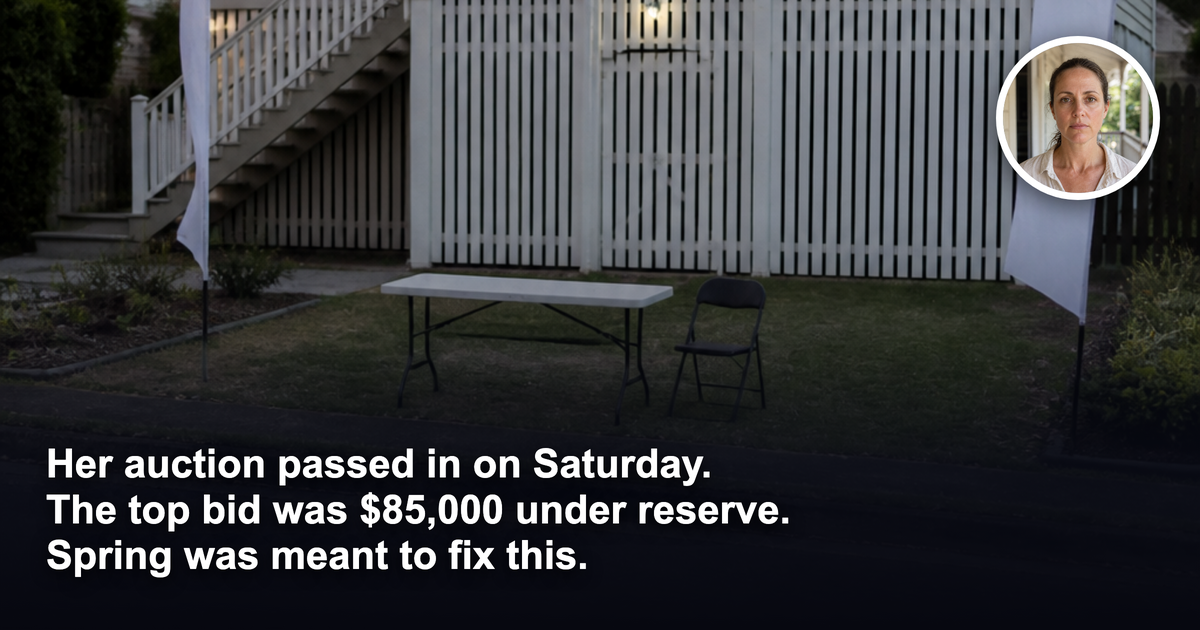
She is a composite illustration, not a real person. The decision she is facing is very real.
The question
"I bought because of migration. If the number gets cut to 100,000, does my property still make sense, or do I get out before everyone else works that out?"
The answer: she bought a national story and owns a local asset
Start with what the headline actually says.
It is an expected policy from the opposition, reported on 6 October. It is conditional on an election result. It is a first-year target, not legislation. Nothing about her loan, her rent or her tenant changed on Monday.
That does not make it irrelevant. If it happened, fewer people would arrive in Australia than otherwise would have. That is real.
But look at what the pitch did to her. It handed her a national figure and asked her to feel it in one house. Migrants do not arrive evenly across the country's suburbs. They arrive where the jobs, the family networks and the rentals they can afford already are. Some streets have been carried by that flow. Others have barely noticed it.
So the question that decides whether her house makes sense is a local one. Who rents her street, and why?
If the answer is people who work at the hospital, the distribution centres and the schools within twenty minutes, a migration cut slows demand. It does not remove it.
If the answer is "I don't know, the slide said migration", she has a problem that existed before Monday. The headline just made it visible.
The expensive mistake
Selling on a policy headline costs money in three places.
Agent commission and marketing on the way out. Stamp duty she already paid and will never see again. And the cost of being out of the market while she waits to find out whether the policy happens, whether it passes, and whether it ever reaches her street.
She would be converting a possible slowdown into a certain bill.
The group chat will not pay that bill. She will.
What it means for you
If you hold a rental because someone told you migration would carry it, do the stress test now, while it costs nothing.
- Pull the last three years of rent on your street, not your suburb.
- Count the listings for rent within a kilometre and how long they sit.
- Find out who your tenant works for and how far they travel to get there.
- Ask what happens to your cash flow if rent is flat for two years.
If those four answers are good, a 100,000 migration target does not change your decision.
If those four answers are bad, the migration number was never the thing holding your property up. Something else was, and you should know what it is before the next headline arrives.
The Ripehouse reframe
Two streets in the same suburb can be having completely different outcomes right now. Same postcode, same migration figure, same interest rate. One has a vacancy problem and the other has a waiting list.
A policy headline cannot tell those two streets apart. Street-level data can.
That is why we do not build portfolios on national stories, in either direction. We do not buy because migration is high and we do not sell because someone says it might be cut. We buy the asset, on the street, where local demand is already provable. Then we measure it, and we publish the results, including the portfolios that underperformed.
Structure, not timing.
Her house might be a very good hold. It might be a slow bleed she has not noticed yet. Nothing in Monday's headline will tell her which. Her street will.
Want to see how we test a decision like this street by street? Join Jacob's free live webinar.
General information only. It does not take your objectives, financial situation or needs into account, and nothing here is legal, financial, taxation or investment advice specific to your circumstances.