News · 5 October 2026 · 4 min read
Her auction passed in $85,000 under reserve. She was told to wait for spring. Spring is already here
She is 38, single, and she is carrying two mortgages she only ever meant to hold for one winter.
She is 38, single, and she is carrying two mortgages she only ever meant to hold for one winter.
Three years ago she moved across Brisbane for a relationship and kept her old place in the inner west as a rental. The rent nearly covered the loan, and everyone told her Brisbane only goes one way. This year the relationship ended, the fixed rate ended, and she decided to sell the rental, clear the debt and start again.
She is a composite illustration, not a real person. The market numbers around her are real and come from Cotality, SQM Research and the ABC's reporting this week.
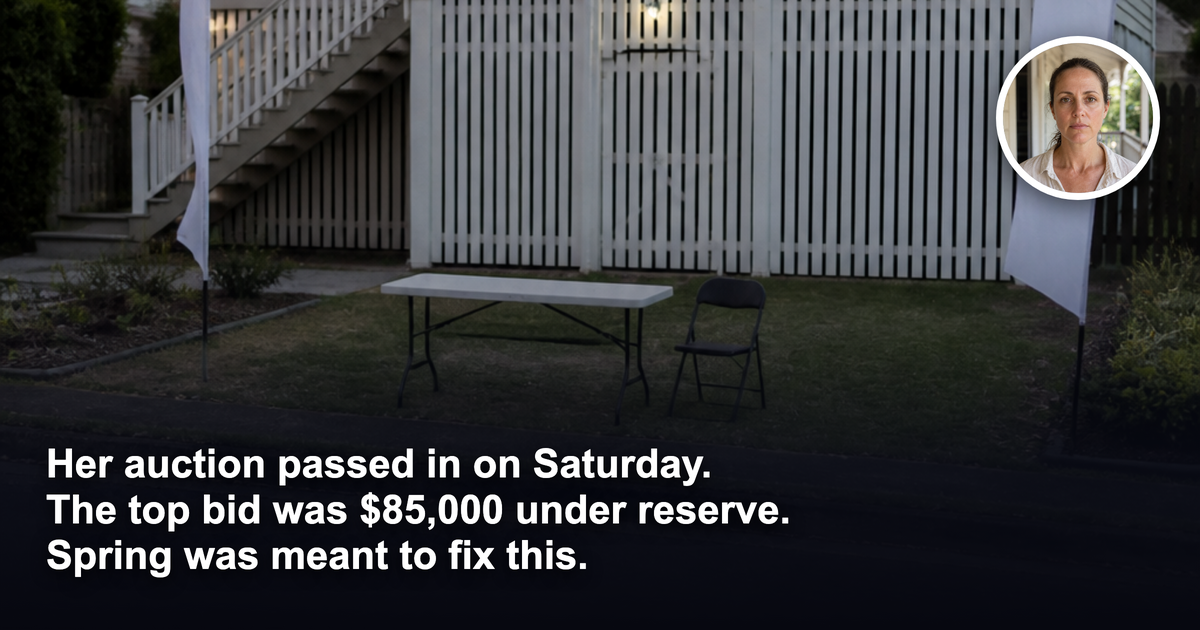
She listed in September because spring is when the buyers come out. The campaign cost about $9,000. Thirty groups through, two registered bidders, one bid, passed in. The top offer was $85,000 under her reserve.
Her agent has rung twice since. Both calls were about the price.
The question
"I did what you are supposed to do. I held, I waited for spring, I went to auction. Now I am told to take $85,000 less or wait for the market to pick up. Which one of those is the mistake?"
The answer: spring already happened
Start with the headline number. Fewer than half of the auctions held across Australia last week ended in a sale. Cotality's preliminary clearance rate came in at 48.2 per cent, a three-month low and the second-lowest reading of the year. It has been sitting at or under 50 per cent for months.
That is the figure everyone is quoting. It is also the least useful one in the story.
A clearance rate tells you what happened to the people who made it to auction day. It says nothing about the queue behind them.
So look at the queue.
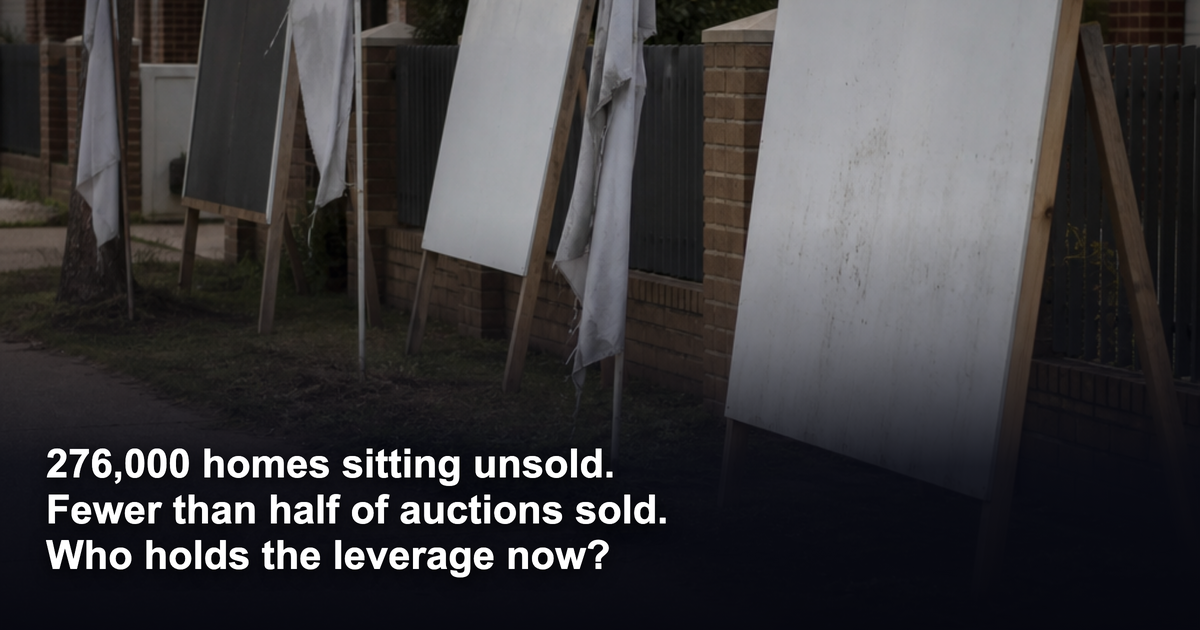
SQM Research counts 276,000 unsold homes across the country, up 21.6 per cent in a year. Listings that have sat for more than 180 days are up 10.5 per cent. In Brisbane, the number of homes for sale is up 43.5 per cent on a year ago. Adelaide is up 39.5 per cent, Melbourne 30.3 per cent, Perth 21.3 per cent, Canberra 17.8 per cent.
Read the Brisbane figure again. She is competing with more than four in ten extra sellers compared with the owner who listed the same kind of house last spring.
Now look at the buyers. Only 1,223 auctions were held across the capitals last week, 47.5 per cent fewer than the same week a year ago. Cotality's Tim Lawless said Sydney and Melbourne "have been a drag on the national result", and pointed to a fourth rate rise this year and the budget's property tax changes as the backdrop. SQM's Louis Christopher noted that in Sydney fewer vendors are listing than a year ago, yet total stock is up almost a fifth, which he called a demand problem.
So the advice to "wait for spring to pick up" has a hole in it. Spring is the pick-up. This is it. The season that was meant to rescue her has, in SQM's words, ground to a halt.
The number nobody puts in the headline
4,872.
That is how many distressed sales SQM recorded across Australia in September, 29 per cent more than September last year.
Every one of those is a seller who has lost the ability to say no. Every one of them is bidding for the same thin pool of buyers she is, with a reserve set by a lender rather than a hope.
That is the real cost of "wait and see" for someone who has already decided to sell. The longer she holds, the more of her neighbours arrive at the same auction with no reserve at all, and every one of their results becomes the comparable sale her next buyer waves in her face.
What it means for you
If you are selling, ask your agent one question: how many comparable homes are for sale in this suburb today compared with a year ago. If the answer is up by a third or more, the price guide from January is a memory.
If you are buying, that same list is your leverage. Thirty groups through, one bidder, passed in. That vendor will take your call on Monday.
If you are holding and never planned to sell, nothing here asks you to. Values have fallen for six straight months according to the ABC's reporting, and the people being hurt are the ones forced to transact into it.
The Ripehouse reframe
National clearance rates and city-wide stock counts are weather. They tell you nothing about whether the street you own on is absorbing turnover or choking on it.
We do not have her street's data in front of us, so we will make the point plainly. Two streets in the same Brisbane suburb can be having completely different springs right now. One has three listings and a school catchment doing the work. The other has eleven, four of them investor stock that came on in the same month, and each passed-in result resets the price for the rest.
Her mistake happened years before the auction. She bought on a slogan about a city, and a slogan is the first thing a downturn takes away.
The right asset on the right street, chosen on data rather than season, does not need spring to show up. That is structure. Timing is what people reach for when the structure was never there.
Want to see how we test a sell-or-hold decision like hers street by street? Join Jacob's free live webinar, If I Were Buying an Investment Property in Australia Today.
General information only. It does not take your objectives, financial situation or needs into account, and nothing here is legal, financial, taxation or investment advice specific to your circumstances.