News · 1 September 2026 · 3 min read
She was hit with a $38,000 renovation bill. Was the property still worth saving?
A $38,000 renovation variation forced one homeowner to ask whether the property was still worth saving. Here are the three tests that matter.
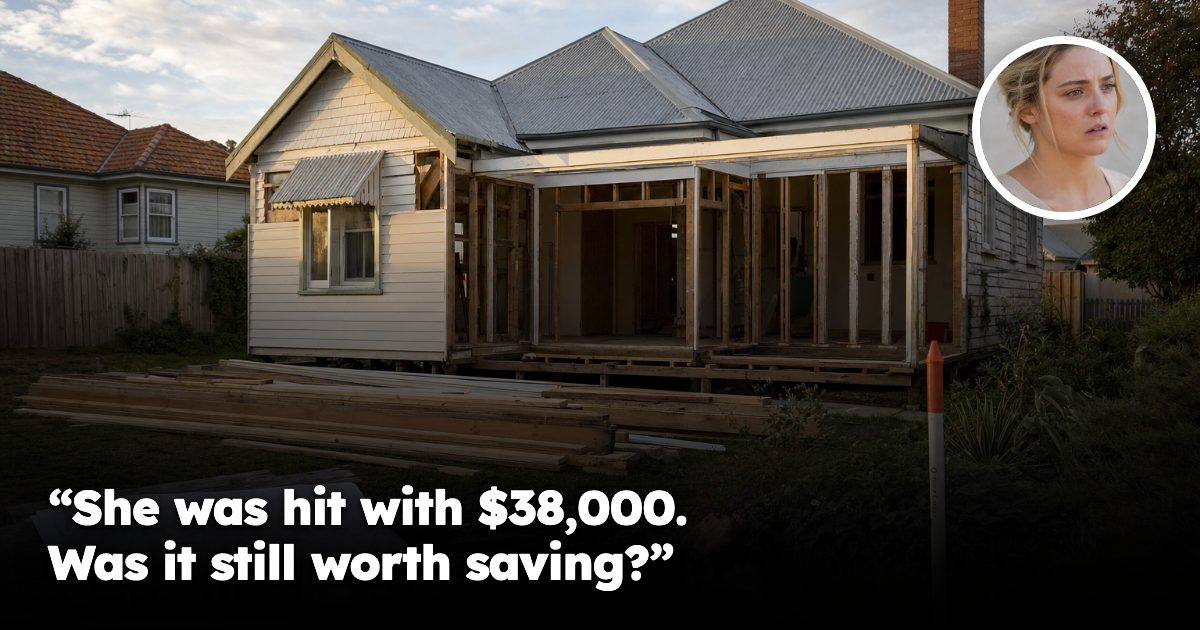
She was hit with a $38,000 renovation bill. Was the property still worth saving?
A recently widowed 26-year-old woman thought the hardest part of buying a modest Australian home was getting the keys. Then the builder stopped turning up, the renovation programme slipped and a $38,000 variation appeared on the kitchen table.
It is the kind of property story that sounds like a warning to stay away from older homes. The better question is narrower: when a renovation goes wrong, how do you decide whether the asset is still worth saving?
The question
She had bought a dated three-bedroom home with a clear plan: repair the wet areas, open the rear living space and create a home that would appeal to both tenants and future buyers. The original scope was $86,000. After demolition, the builder identified electrical work, drainage changes and structural repairs that had not been priced into the first agreement.
The first variation was manageable. The next one took the total extra cost to $38,000. At the same time, the builder’s cash-flow problems meant subcontractors wanted payment before returning to the site.
Should she keep funding the project, sell unfinished, or walk away from the investment thesis altogether?
The answer
Do not make the decision from the variation alone. Separate the project into three tests: the contract, the building outcome and the finished asset.
First, stop treating a variation as a single number. Ask for an itemised scope, evidence of the condition that triggered it, approval records, invoices and a programme showing what is genuinely required to reach a safe, compliant handover. A surprise can be expensive without being invalid; an undocumented surprise is a different risk.
Second, get an independent building professional to inspect the work already completed. The cheapest path on paper can become the most expensive if waterproofing, drainage or structural work is covered before it is checked. Keep every photograph, invoice, message and signed approval in one file. If the builder cannot finish, that record will matter to the next contractor, insurer, lender and eventual buyer.
Third, revalue the property as it will actually exist. Compare three scenarios: finish the essential work only, complete the original improvement plan, or sell in its current state. For each, calculate total cost, realistic rent, holding cost, time to completion and likely resale audience. Use conservative contingencies; a building project with one surprise has demonstrated that its original contingency was not enough.
This is also where broad suburb averages can mislead. RHA’s street-level research compares achieved sales, rent, vacancy, days on market, buyer depth and competing supply at the address level. Two homes in the same suburb can have very different finished values because one sits on a quieter street, has better parking or attracts a deeper tenant pool. A renovation should be judged against the value ceiling of its exact street, not an optimistic suburb median.
What should she cut?
Essential safety, weatherproofing, compliance and durable maintenance come first. Cosmetic upgrades that mainly serve the owner’s taste come last. A second bathroom may help the right tenant market; premium finishes may simply increase the amount of capital trapped in the wrong asset.
The practical test is whether each dollar improves safety, rentability, buyer depth or resale liquidity. If it does none of those things, pause it until the project and cash position are stable. RHA’s guide to buyer depth as a property safety net explains why a deep resale audience matters when a plan changes.
She should also speak with the lender before changing the plan. A delayed project can change interest costs, valuation assumptions and the timing of any refinance. That conversation is about preserving options, not assuming more debt will solve a building problem.
The opportunity
Building failures are frightening because they make a property feel unknowable. But they also expose the difference between buying a story and buying an asset. A disciplined investor can price the remaining work, protect the evidence, test the street-level demand and choose the smallest finished product that the market will reward.
The lesson is not that renovation property is too risky. It is that the right property, on the right street, with the right buffer and the right data can still be a compelling investment—even when the headlines say construction is getting harder. That is the same local-liquidity principle behind one street outperforming the suburb next door.
If there's a specific street you're weighing up right now, check its Street Score first — it's free, takes ten seconds, and tells you whether that street is pulling the suburb average up or riding on it.
Frequently asked questions
If a renovation blows out with a big variation, what should an owner look at first before deciding to keep going?
Do not decide from the variation alone. First check the contract and ask for an itemised scope, evidence of the issue, approval records, invoices and a programme showing what is actually needed to reach a safe, compliant handover.
How can you tell whether unfinished renovation work is still worth finishing in Australia?
Get an independent building professional to inspect what has already been done and then revalue the property as it will actually exist. Compare the cost and likely outcome of finishing only the essentials, completing the original plan, or selling in its current state.
What are the biggest risks when a builder stops turning up partway through a renovation?
The main risks are incomplete compliance work, hidden defects and weak documentation. Keep every photograph, invoice, message and signed approval in one file because that record may matter to the next contractor, insurer, lender and buyer.
Should cosmetic upgrades be finished if a renovation budget is already under pressure?
Usually not until the essential work is secure. Safety, weatherproofing, compliance and durable maintenance come first, while cosmetic upgrades should only proceed if they improve rentability, buyer depth or resale liquidity.
Why can suburb median prices be misleading when deciding whether to save a renovation project?
Because the finished value depends on the exact street, not just the suburb average. The article says two homes in the same suburb can have very different outcomes depending on factors like parking, street quality and buyer or tenant depth.
General information only. It does not take your objectives, financial situation or needs into account, and nothing here is legal, financial, taxation or investment advice specific to your circumstances.