News · 28 September 2026 · 5 min read
She was about to buy her first rental. Then the Budget changed what it costs her to hold it
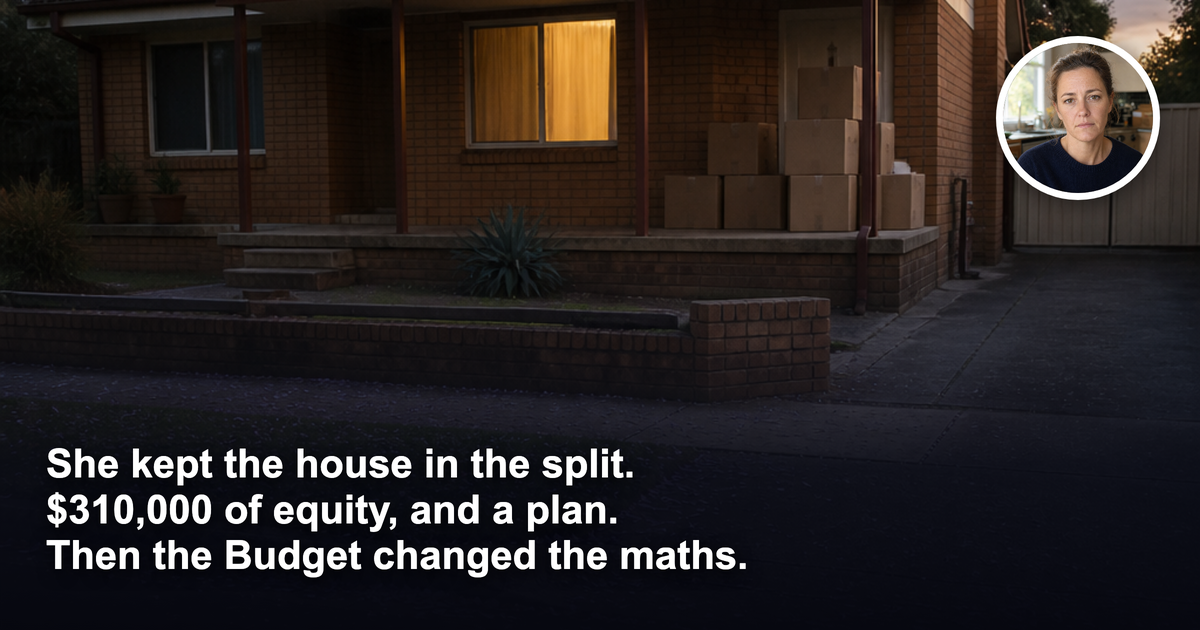
She is 41. She and her husband own their home outright bar a small loan, and after six years of paying it down they have about $140,000 of usable equity sitting in it.

She is 41. She and her husband own their home outright bar a small loan, and after six years of paying it down they have about $140,000 of usable equity sitting in it.
For eighteen months they have been circling their first investment property. An established three-bedroom brick house in a middle-ring suburb, a short walk to a primary school, the kind of place a young family rents for years and leaves reluctantly.
Pre-approval done. Building report done. The contract arrived in her inbox on the Friday.
The Budget arrived first.
*She is a composite, drawn from the questions that have reached us since the Budget. The numbers in her story are typical of what we are seeing, not a single client's file.*
### The question she sent us
*"We were about to buy an established house as our first rental. It would run at a loss of about $9,000 a year before tax, and we had budgeted on getting some of that back through our wages. Now I'm reading that from 2027 we can't. If we buy a brand-new place instead, we can. Do we just switch to a new build? Or has the whole idea stopped making sense?"*
### What actually changed
Here is the version without the noise, as reported by Property Update on 28 September 2026. Check the Budget papers yourself before you act on any of it, and speak to your own adviser about your own position.
From 1 July 2027, negative gearing is generally limited to newly constructed residential property.
If you buy an established home after the Budget announcement, rental losses can no longer be deducted against your salary or other non-property income once the new rules start. The losses are not gone. They are deferred, carried forward and applied against future residential property income or capital gains.
Properties held before the announcement are grandfathered. Existing owners keep the existing rules.
The 50 per cent capital gains tax discount for individuals, trusts and partnerships is replaced with cost-base indexation, plus a minimum 30 per cent tax rate on real capital gains.
Eligible new builds keep negative gearing and get a choice between the old discount and the new indexation.
So for her, the government has put its thumb on the scale. Established house: the $9,000 loss sits in a drawer until the property makes money. New house: the deduction works the way it always has.
### The answer: the deduction was never the investment
Here is the part nobody puts in a headline. **A tax deduction on a loss is a refund on money you have already lost.**
If her house loses $9,000 a year and she gets a portion back at her marginal rate, she is still poorer by the rest. Wealth came from the house going up in value and the rent slowly overtaking the costs. The deduction softened the years in between. That is all it ever did.
Which means the real question is not "where can I still claim the loss?" It is "which asset is worth carrying a loss on at all?"
And that is where the policy gets dangerous, because it points her towards the answer that suits Canberra rather than the answer that suits her.
### The expensive mistake the Budget is quietly encouraging
The source article says it plainly: new property frequently carries a developer's margin and a marketing premium. A lot of it is built where there is a great deal of identical stock, thin land value and weak owner-occupier demand. Buyers face construction delays, builder insolvency, settlement valuation shortfalls and quality problems.
Then there is the part almost nobody has priced in. When she eventually sells that new property, the next buyer is buying an established home. They do not get her tax treatment. That shrinks the pool of people who want it and can change what they will pay.
So the concession that makes the purchase feel cheap on day one can make the exit more expensive on the last day.
Two streets in the same suburb can be having completely different outcomes right now. One is full of new stock competing with itself. The other has not had a new dwelling in thirty years and has three buyers for every listing. No deduction fixes the first street. No deduction is needed on the second.
### The bit that should bother renters too
Australia will deliver roughly 980,000 new dwellings over the five-year Housing Accord period, about 220,000 short of the 1.2 million target, according to the source.
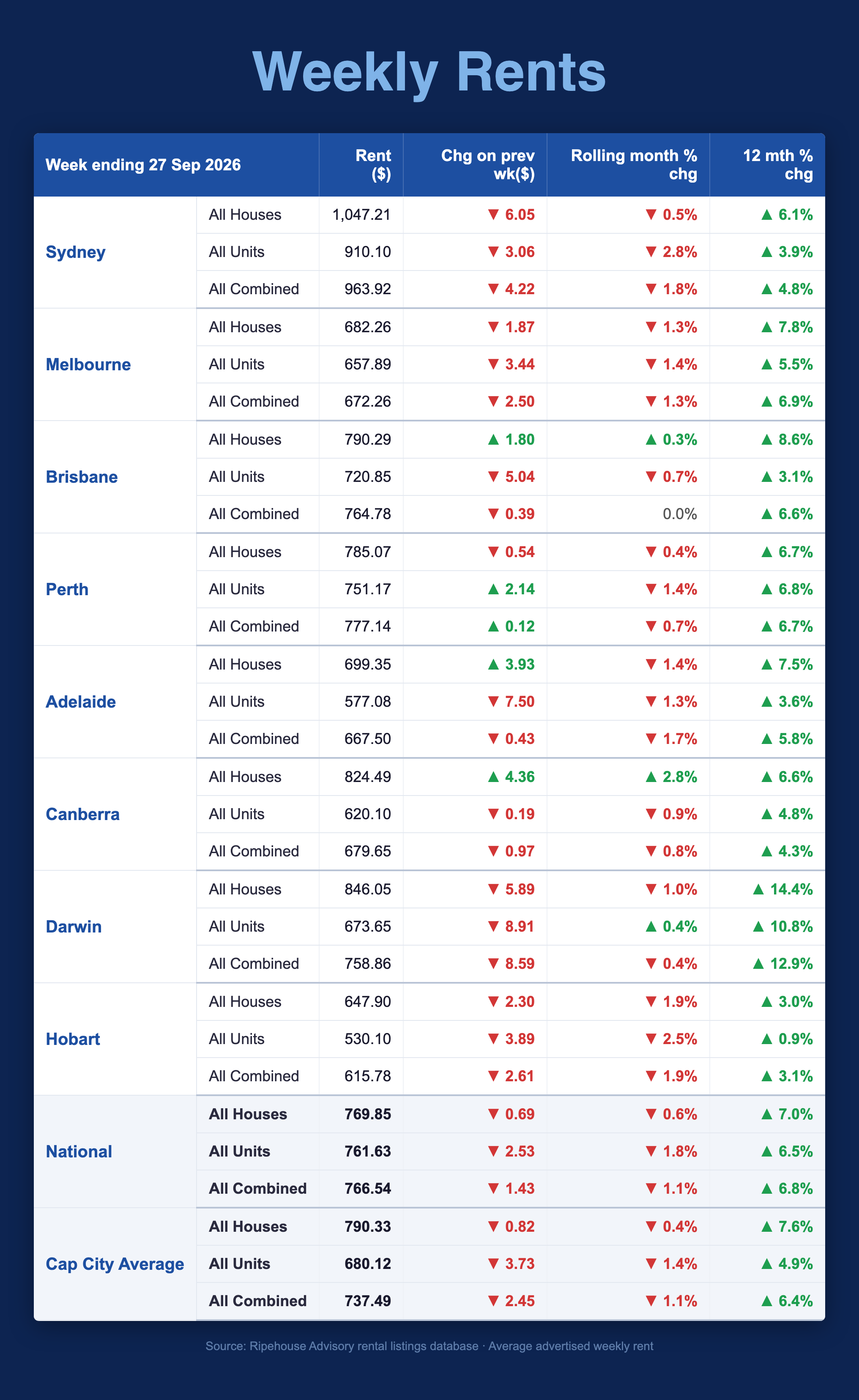
SQM Research puts the national vacancy rate at about 1.3 per cent, with asking rents up more than 7 per cent over the year.
Most tenants in this country live in a home owned by an ordinary Australian with one or two investment properties. The Budget makes providing that kind of home less attractive, in the exact segment where the tenants are.
The government estimates the reforms add less than $2 a week to the median rent. The source article claims most credible analysts expect rents to rise 15 to 30 per cent over the next two years. Those two views cannot both be right, and the honest position is that nobody knows yet. Investors can move their capital. Tenants cannot move so easily.
### What it means for you
If you already hold a rental, the grandfathering means your position has not changed. Selling in a panic converts nothing into something, and the something is agent fees, stamp duty already spent and a loss you did not have to take.
If you were about to buy, the after-tax cost of holding an established home has gone up. That is real. But it is an input, not a verdict. The inputs on a poor asset were never going to save it, and the inputs on a good one rarely decide it.
### The Ripehouse reframe
Policy changes the inputs. Structure decides the outcome.
She does not have a tax problem. She has a selection problem: which asset, on which street, held in what structure, carried for how long. Get that right and the deduction is a rounding error over a decade. Get it wrong and no deduction on earth covers the gap.
Across 997 client portfolios since 2021, our clients' median portfolio growth has been +19.0 per cent a year on a 5-year rolling basis, against roughly 6.3 per cent for the combined capitals.* We publish those results, including the portfolios that underperformed, because a headline number without the full distribution is exactly the kind of thing this week has taught everyone to distrust.
The right asset, the right street and the data beat headlines. Structure, not timing.
If the Budget has left you re-running your own numbers, start here: 15-minute Legacy Sequence Diagnostic: ripe.house/4bV7I8u. No pressure. No obligation. Just a clearer picture than you had before.
*Benchmark: CoreLogic/Cotality combined-capitals. Past performance is not a guarantee of future results. General information only, not personal tax, legal or financial advice.
General information only. It does not take your objectives, financial situation or needs into account, and nothing here is legal, financial, taxation or investment advice specific to your circumstances.