News · 28 September 2026 · 4 min read
She waited two years for rates to fall. Today they may hit a 15-year high. Was waiting the mistake?
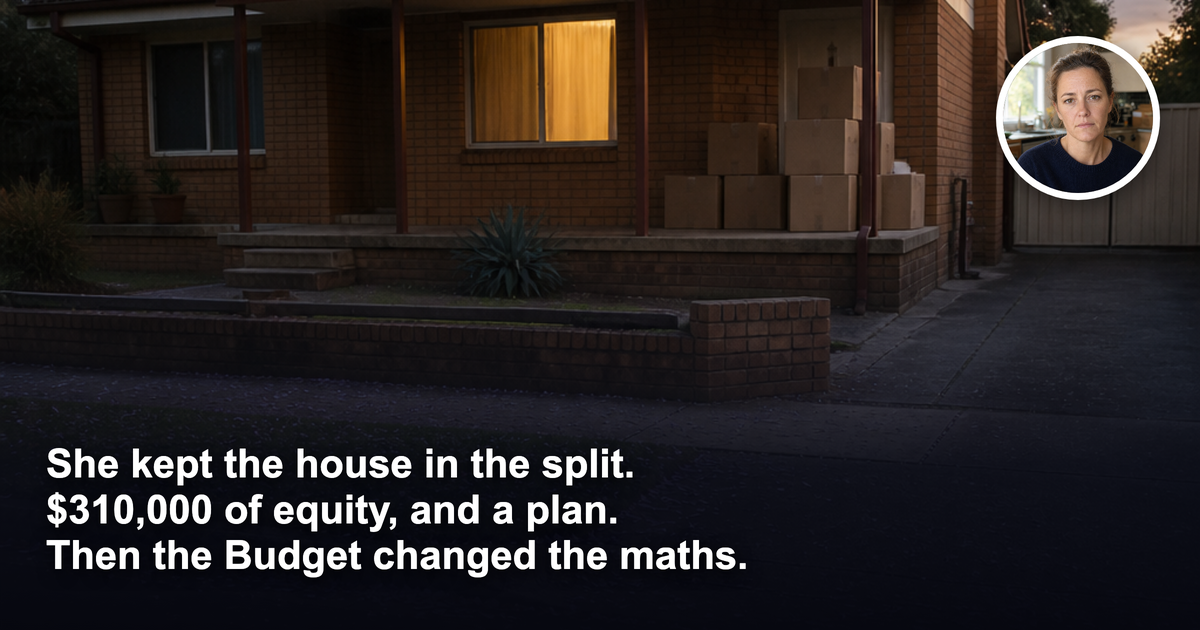
She is 41. She owns her home, has about $400,000 of equity in it, and has done everything the sensible articles told her to do.
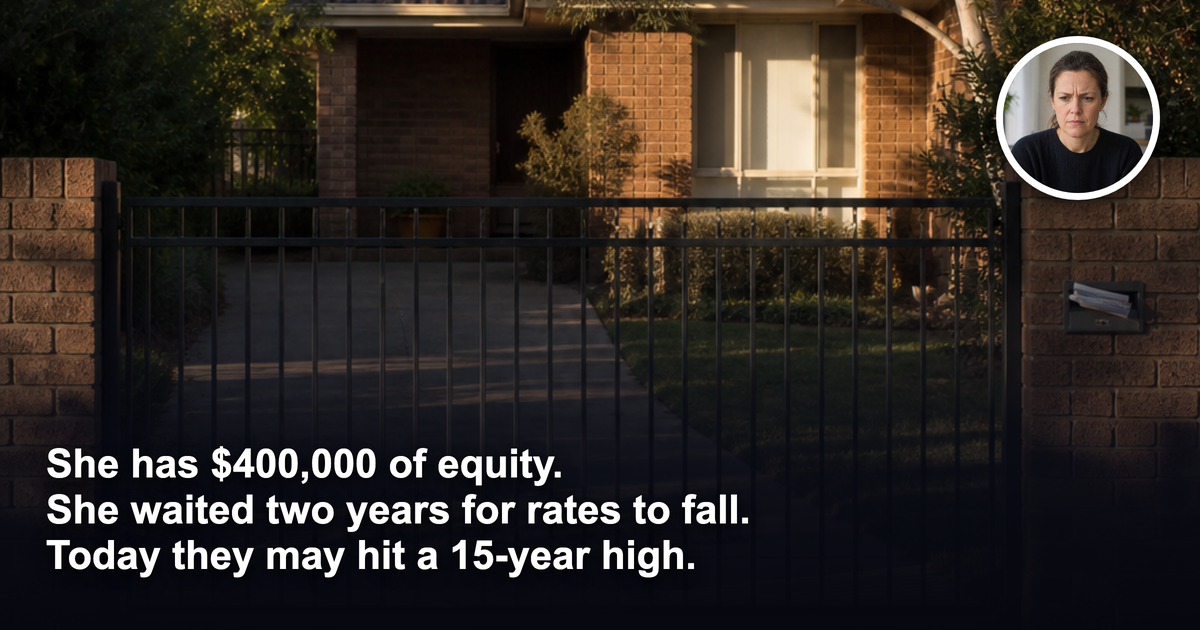
She is 41. She owns her home, has about $400,000 of equity in it, and has done everything the sensible articles told her to do.
She paid down debt. She kept her pre-approval current. And for two years she has waited for interest rates to fall before buying an investment property, because buying into rising rates felt reckless.
Today the Reserve Bank hands down its decision. A hike is widely expected, and if it lands, the cash rate will sit at a 15-year high.
She is a composite, drawn from the questions we receive most weeks. Her numbers are real in the sense that we see them constantly. No name is attached because she is many people.
### The question she sent us
*"I've waited two years for rates to come down before I buy. Now they're going up again and my broker says the bank will lend me less than it would have last year. Prices haven't fallen where I want to buy. Did I get this completely wrong?"*
### The answer: the wait was never free
Here is the thing nobody puts in the headline about rates. The people most punished by a hike are not the ones who already bought. They are the ones who were about to.
An existing borrower's repayment goes up. That hurts. But the loan is already approved and the asset is already in their name.
The person still waiting is assessed fresh, at today's rate, plus the buffer the bank adds on top. Every hike lowers the ceiling on what she can borrow, and it does it before she has bought anything. She has lost nothing on paper and a great deal in capacity.
The Guardian's reporting today carries a warning that further hikes could hit the property market hard without easing unaffordability. Read that slowly. Higher rates do not make a house cheaper for her. They make her weaker as a buyer. If prices soften a little at the same time, the two effects do not cancel. She is still bidding with a smaller loan against sellers who mostly do not have to sell.
That is the unfair twist. Waiting felt like caution. In practice it was a bet that prices would fall faster than her borrowing power. Over the last two years that bet did not pay off.
### The mistake is not the timing. It is the plan.
We will say this plainly. The expensive decision was not "wait" and it would not have been "buy". It was making the whole strategy hinge on a rate call.
Nobody knows where the cash rate goes after today. Not her broker, not the economists quoted this morning, not us. A strategy that only works if you guess that number correctly is not a strategy. It is a coin toss with stamp duty attached.
What she needed two years ago, and still needs today, is a structure that does not care much what the RBA does on a Tuesday.
Borrowing capacity mapped at rates well above today's, so a hike changes the mood, not the plan.
Cash buffers sized in months of holding costs, not in vibes.
An asset chosen because its street holds tenants and value through soft patches, not because a suburb made a list.
If that is in place, today's decision is a line in a spreadsheet. If it is not, every RBA meeting becomes a referendum on your whole financial life. That is exactly how she has felt for two years.
### What this means for you
If you own your home, have equity, and have been sitting on your hands waiting for the "right" rate, the uncomfortable question is not whether to buy today. It is whether you actually know your position at a rate one or two steps higher than this one.
Most people do not. They know their repayment. They do not know their capacity, their buffer or their exit.
Then there is the suburb part. Rates are national. Outcomes are not. Two streets in the same suburb can be having completely different years: one with tenants queuing and days on market falling, the other with listings sitting and rents going backwards. A rate decision does not tell you which street you are on. Data does.
### The Ripehouse reframe
We do not forecast rates, and we are suspicious of anyone who does with confidence.
What we do is build portfolios that have to hold through cycles like this one. On a 5-year rolling basis, client portfolios have recorded +19.0 per cent median growth per year against roughly 4.3 per cent nationally1, a window that already includes rising rates, falling rates and the long months in between. Past performance is not a guarantee of future results.
We don't ask you to take our results on faith. We publish them - including the portfolios that underperformed.
The point is not the number. The point is that the result came from structure and asset selection, not from calling the RBA correctly. Nobody in that window called the RBA correctly.
She did not get it completely wrong. She got one thing wrong. She let the rate decide, when the rate was never the decision.
If today's announcement has you refreshing a news site at 2:30pm, that is a sign you are doing the worrying your structure should be doing for you.
Book a 15-minute Legacy Sequence Diagnostic: ripe.house/4bV7I8u. No pressure. No obligation. Just a clearer picture than you had before.
1 National benchmark per CoreLogic/Cotality.
General information only. It does not take your objectives, financial situation or needs into account, and nothing here is legal, financial, taxation or investment advice specific to your circumstances.