News · 14 October 2026 · 5 min read
She waited four months for a struggling family to pay. Now she has the keys back and holes in every wall.
She is 38. She and her partner have a toddler, a home on the Gold Coast with some equity in it, and one rental: a three-bedroom house in a regional Queensland town they bought for $480,000 in 2022. She is a composite illustration, not a real person, but her position is one a...
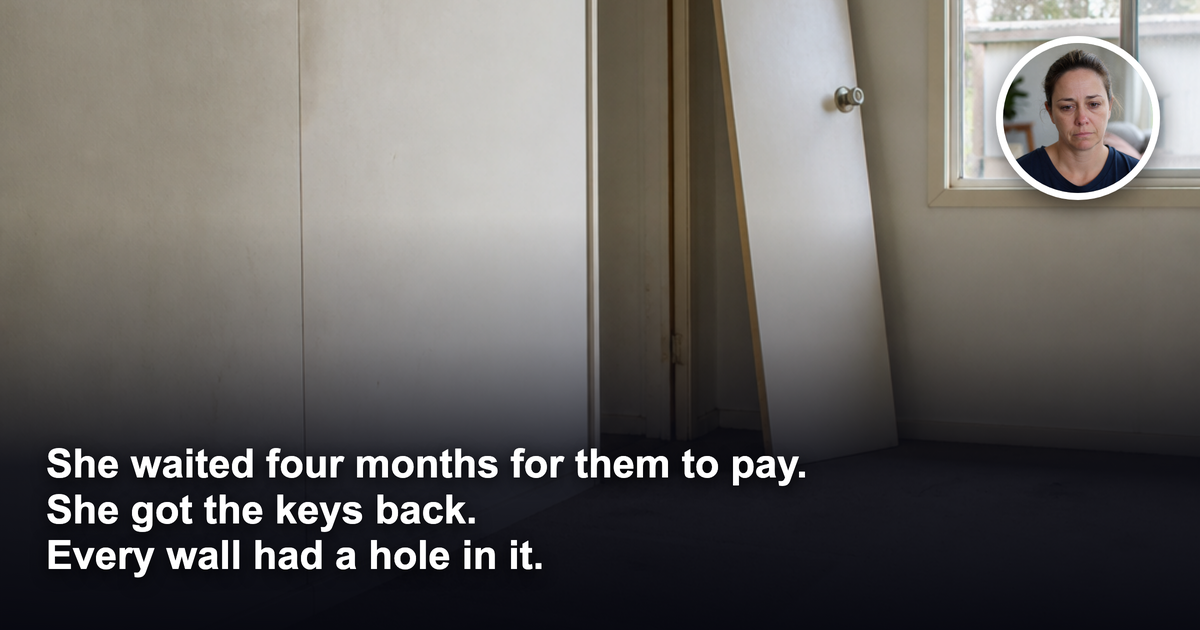
She is 38. She and her partner have a toddler, a home on the Gold Coast with some equity in it, and one rental: a three-bedroom house in a regional Queensland town they bought for $480,000 in 2022. She is a composite illustration, not a real person, but her position is one a lot of owners will recognise this week.
Her tenants were a family with three kids. The rent was $600 a week. In the autumn the payments started arriving late, then short, then not at all.
She did what a decent person does. She waited.
The question
"My tenants are a family. They lost their income and fell behind, and I gave them time because there are children in the house. Now they are four months behind, I have been told to go to the tribunal, and my property manager says the bond will not come close. Should I have been harder, earlier?"
Sixteen weeks at $600 is $9,600. Her bond is four weeks, $2,400. That gap is the price of her patience, and the painful part is that she has not yet seen the inside of the house.
What the Queensland story shows
A Queensland owner put her own version of this on Facebook this week, and realestate.com.au picked it up.
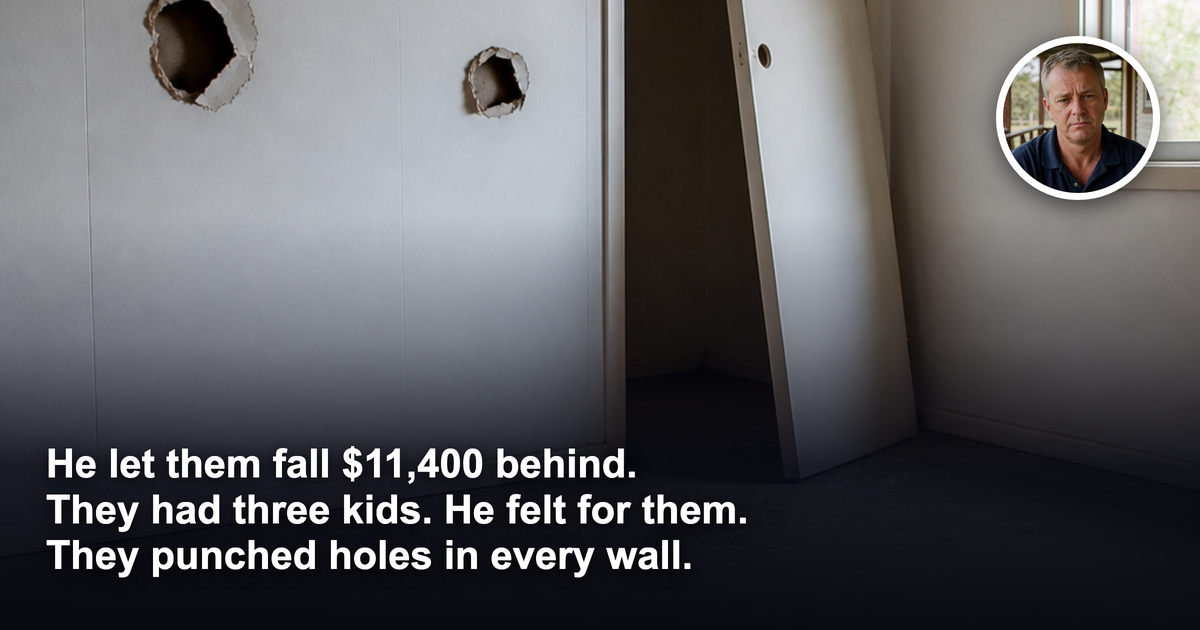
She had a family with three kids renting her house near Gympie. By her account, the household's business failed, the arrears mounted, and she waited too long because she had sympathy for them. The husband offered to do concreting work to catch up. She says she passed on around 90 per cent of the concreting payments to the family. They kept the money and did not pay the rent.
The matter went to the Queensland Civil and Administrative Tribunal. She says it took 202 pages of text messages to prove the arrears and get the eviction order.
Then she got the house back. The photos show fresh holes punched through plasterboard in several rooms, broken glass, and a door pulled off its hinges.
The detail that struck people online was that the children were not blamed. The adults were.
Read the comments under that post and you find the second story, the one that matters more for anyone holding a rental. One owner wrote that this had happened to them twice. They took the bond, never recovered the true cost, found the insurance was not worth the paper it was written on, and sold up out of property altogether.
That is the real cost of this kind of event. The repair bill is the visible part. The exit is the expensive part.
The answer: the mistake was made before the first missed week
Nobody puts this in a headline, so here it is plainly. Goodwill without a process is a loan with no paperwork.
Every week she waited, the composite owner above was lending her tenants $600 at zero interest with no security beyond a four-week bond. By week five the bond was gone. By week sixteen she was unsecured for $7,200 and still had no evidence trail, because nothing had been formally issued.
The Queensland owner's 202 pages of messages won her case. They should not have been needed. A documented arrears process, started on the first day the rent was late, produces the same evidence as a matter of routine. Notices go out on schedule. The tribunal sees a file, not a friendship that soured.
Under Queensland rules an owner can seek compensation for wilful damage, but only with solid evidence: an entry condition report, dated inspection records, photos, and repair quotes. If the bond does not cover it, the claim goes to QCAT. Every one of those documents is created before trouble starts, or it does not exist when you need it.
The uncomfortable position, and the correct one, is that being kind and being structured are two different jobs. You can give a family time. You cannot give them time by switching off the process, because the process is the only thing standing between your sympathy and your mortgage.
What this means for you
If you own a rental, or you are about to, the questions to put to your property manager this month are not about yield.
- On what day does the first arrears notice go out, and who signs off on delaying it?
- When did the last routine inspection happen, and where are the photos?
- Does the landlord insurance cover rent default and wilful damage, with what excess, and what evidence does the insurer require?
- Who decides when a case goes to the tribunal, you or the manager?
If the answer to any of these is a shrug, you are the composite owner above, you just have not had the phone call yet.
The Ripehouse reframe
Owners who get burned like this tend to draw the wrong lesson. They conclude that tenants are the risk, or that property is the risk, and some of them sell. The commenter who sold out after two bad experiences is the clearest example in the whole story.
The asset was not the problem. The street was not the problem. The absence of structure was.
Two houses in the same suburb, let to similar families, can have completely different outcomes depending on how the first late week was handled, how the entry report was written, and whether anyone was actually accountable for the file. The owners we see doing well over years are rarely the toughest people. They are the ones who delegated the hard parts to a process and kept control of the decisions.
That is what we mean when we say portfolios are built on structure and delegation, not on transactions. Buying well matters. Holding well is where most of the money is kept or lost.
Want to see how we stress-test a rental, from the street data to the tenancy process, before the first week of rent goes missing? Join Jacob's free live webinar.
If there's a specific street you're weighing up right now, check its Street Score first — it's free, takes ten seconds, and tells you whether that street is pulling the suburb average up or riding on it.
General information only. It does not take your objectives, financial situation or needs into account, and nothing here is legal, financial, taxation or investment advice specific to your circumstances.