News · 29 September 2026 · 4 min read
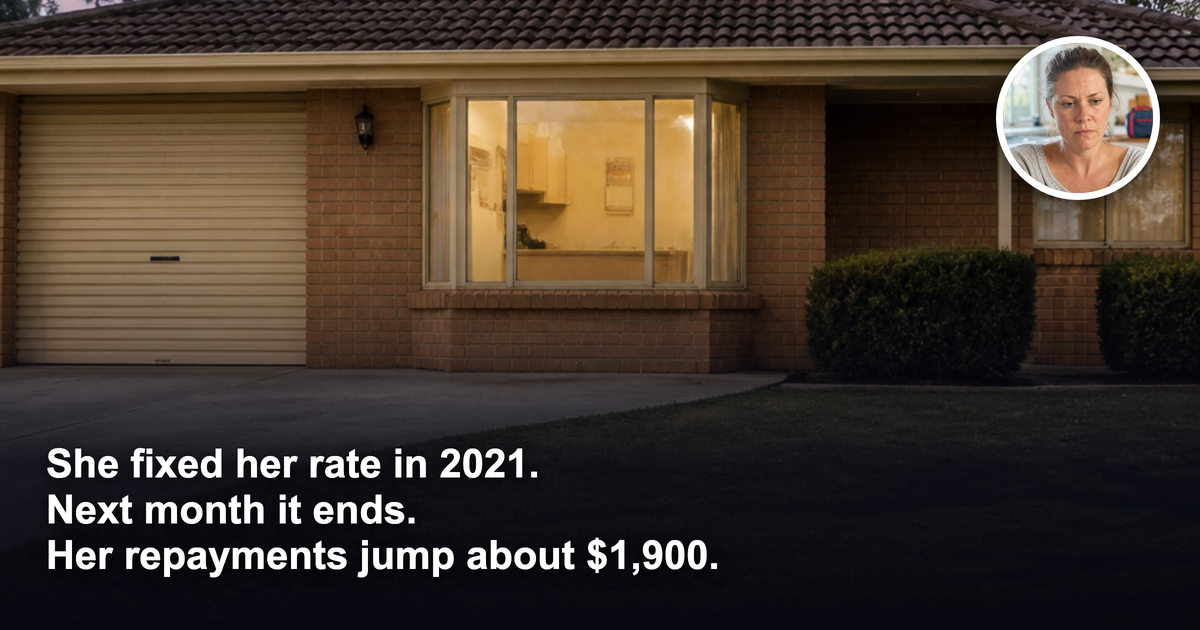
She fixed her rate in 2021. Next month all four of this year's rises land on her at once
She is 37. Two kids at primary school, about $700,000 owing on the house in the suburb she grew up in, and one decision she has been quietly proud of for five years.
She is 37. Two kids at primary school, about $700,000 owing on the house in the suburb she grew up in, and one decision she has been quietly proud of for five years.
In late 2021 she fixed the whole loan for five years. Friends told her she was being paranoid. Rates were on the floor. She wanted to sleep.
She slept. Every neighbour who stayed variable has spent two years rearranging their life around a repayment that kept moving. She hasn't. Not one missed payment. Not one hard conversation at the kitchen table.
Her fixed term ends next month.
*She is a composite, drawn from the questions that landed in our inbox this week. The numbers are hers, not any one person's.*
### The question she sent us
*"I fixed in 2021 because I wanted to be sensible. The fix ends in October. My broker says the new repayment is roughly $1,900 a month more than I pay now. Today the RBA went again. Did I get this completely wrong? Should I have stayed variable and copped it gradually like everyone else?"*
### What happened today
The Reserve Bank lifted the cash rate to 4.6 per cent, according to the ABC. It is the fourth rise this year. It is the highest cash rate in 15 years.
For most households on a variable rate, that is one more increment on a number that has been climbing all year. Uncomfortable. Familiar.
For her it is different. Her repayment has not moved since 2021. Every rise this year has been piling up on the other side of a wall. Next month the wall comes down and she meets all of it on the same day.
That is the part that feels unfair. The people who did nothing got to adjust in steps. The person who planned gets the whole bill in one hit.
### The answer: she did not get it wrong. She got it deferred.
Fixing was a hedge, and the hedge worked. She bought five years of certainty at a rate that no longer exists. Nobody who stayed variable got that.
But a fixed rate is not a shield. It is a timing device. It decides *when* you pay the market rate, not *whether*.
The expensive mistake is not fixing. The expensive mistake is treating the fixed years as normal and the roll-off as an emergency. The roll-off was always the real number. The fixed years were the discount.
So the honest answer to "should I have stayed variable" is: it would have hurt earlier and it would have hurt roughly the same in total. The order changed. The destination did not.
### The rule almost nobody prices in
A fixed rate freezes your repayment. It does not freeze your position.
While her repayment sat still, everything else kept moving. The loan balance. The value of the house. Rents on the street. Her borrowing capacity, which is assessed at a buffer above whatever rate she is actually offered.
She has spent five years looking at one frozen number and assuming the rest of her balance sheet froze with it. It didn't. Some of it moved in her favour. Some of it did not. She has not looked, because the repayment never asked her to.
That is the real cost of the fix. Not the $1,900. The five years of not checking.
### What it means for you
If you have a fixed term ending in the next twelve months, the cash rate is not your number. Your number is the repayment at the rate you will roll onto, minus what you pay today, times twelve. Write it down before the bank writes it for you.
Then ask the harder question. Not "can I afford this" but "what is the loan sitting on top of".
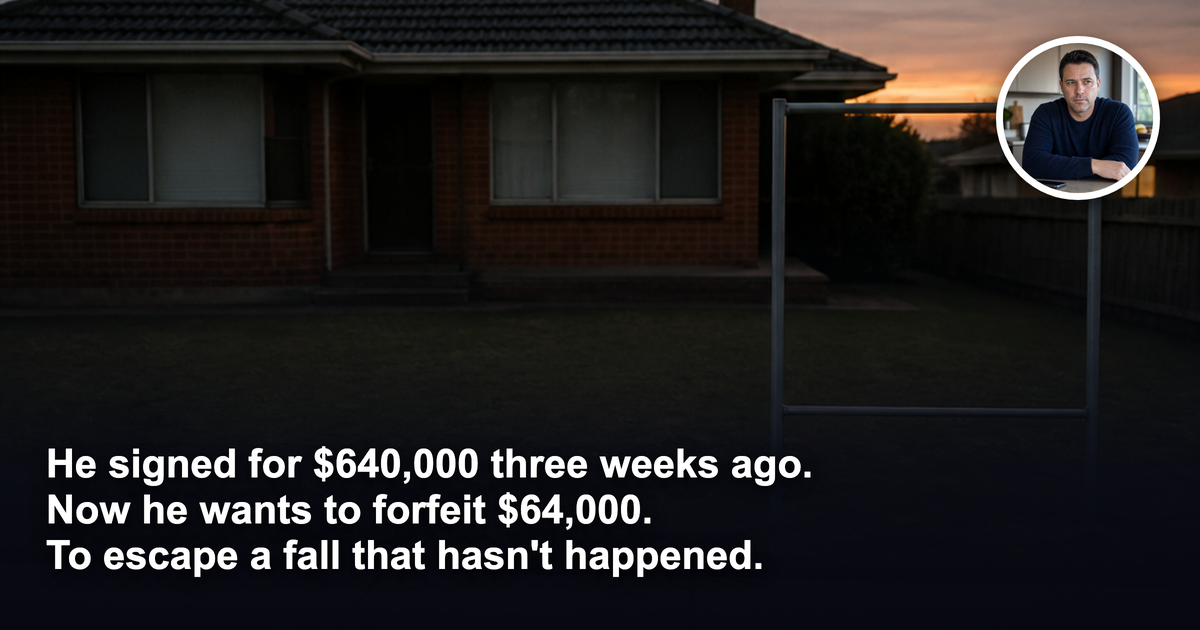
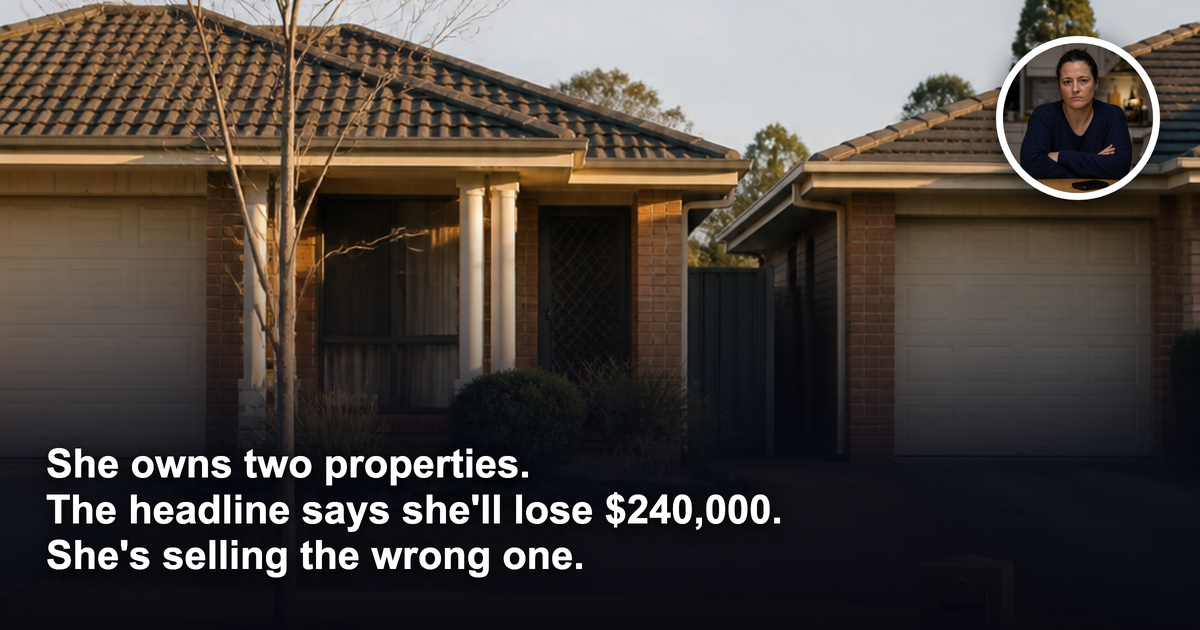
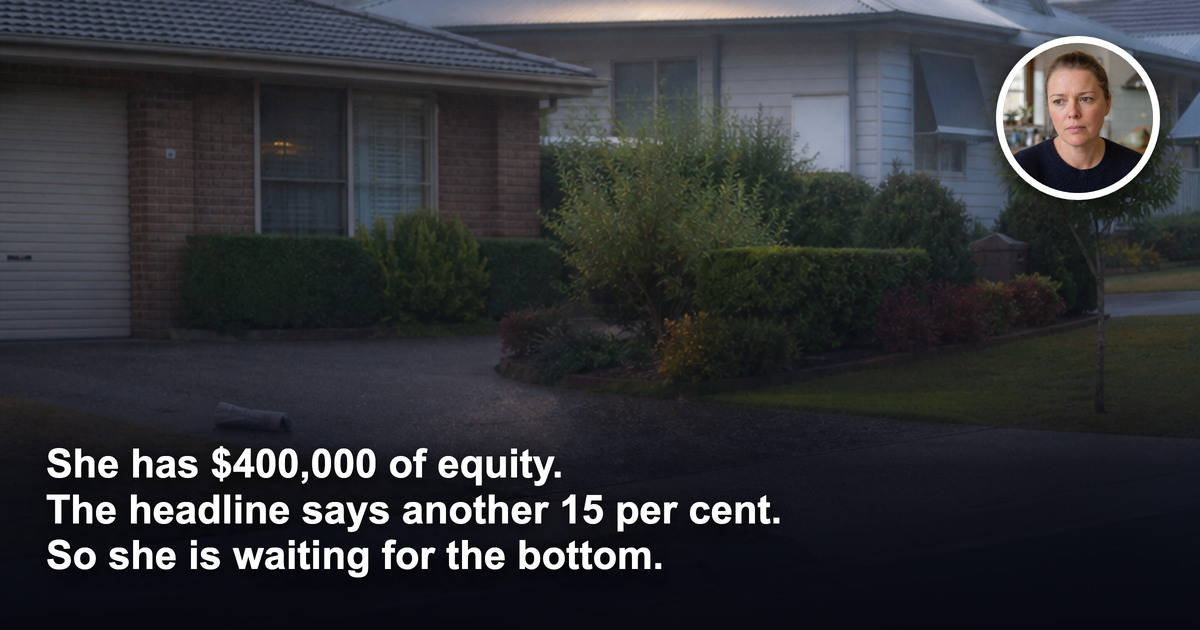
Two households on the same street, with the same loan and the same roll-off, can be in completely different positions this week. One holds an asset whose rent has moved with the market and whose value has held. The other holds the one that hasn't. Two streets in the same suburb are having completely different outcomes right now. The rate is identical. The structure is not.
The rate rise is the headline. The asset underneath it is the story.
### The Ripehouse reframe
The forecasting industry will spend the week arguing about whether 4.6 per cent is the peak. We do not know. Neither do they.
What we do know is that a portfolio built to hold only if rates stay low is not a portfolio. It is a bet with a mortgage attached.
Our clients' portfolios have grown at a median of +19.0 per cent a year on a 5-year rolling basis, against roughly 6.3 per cent for the combined capitals over the same period.1 Those five years included the floor and every rise since. We publish the full distribution, including the portfolios that underperformed. Past performance is not a guarantee of future results.
The point is not the number. The point is that those results were built through rate cycles, not around them. The right asset, on the right street, chosen on data rather than headlines. Structure, not timing.
She did not get it wrong. She bought five years of quiet. What she needs now is not a forecast. It is a clear look at whether the structure underneath the loan holds at 4.6 per cent and above.
If that is your question too, book a 15-minute Legacy Sequence Diagnostic: ripe.house/4bV7I8u. No pressure. No obligation. Just a clearer picture than you had before.
---
1 Benchmark: CoreLogic/Cotality combined-capitals dwelling values. Ripehouse figure is median client portfolio growth, 5-year rolling basis, across 997 client portfolios since 2021. Past performance is not a guarantee of future results.
General information only. It does not take your objectives, financial situation or needs into account, and nothing here is legal, financial, taxation or investment advice specific to your circumstances.