Market Analysis · 9 July 2026 · 4 min read
Record Rents in Every Capital: Why Australia Is in a Landlord’s Market
Australia’s rental market has tipped into a landlord’s market, with record rents in every capital, vacancy under 1% and supply under pressure. Here’s what it means for investors and deposit savers.
▶ Watch the full video on YouTube: Record Rents in Every Capital — The Landlord's Market Is Here
Every capital city in Australia just hit record high rents at the same time, and that is the clearest sign yet that rental conditions have tipped hard in landlords’ favour. With vacancy under 1%, tighter supply and falling borrowing costs, the real story is bigger than one headline — and it matters for investors, renters and anyone trying to save a deposit.
Record rents in every capital city
The national median advertised rent has hit $670 a week, a record. It rose 3.1% in a single quarter and 6.4% over the year.
But the quarterly pace matters. At that rate, rents are annualising at nearly 13%. That gap between the official annual figure and current momentum is the part most headlines miss.
A few of the standouts from the transcript:
- Sydney house rents jumped $50 in one quarter to a record $850 a week
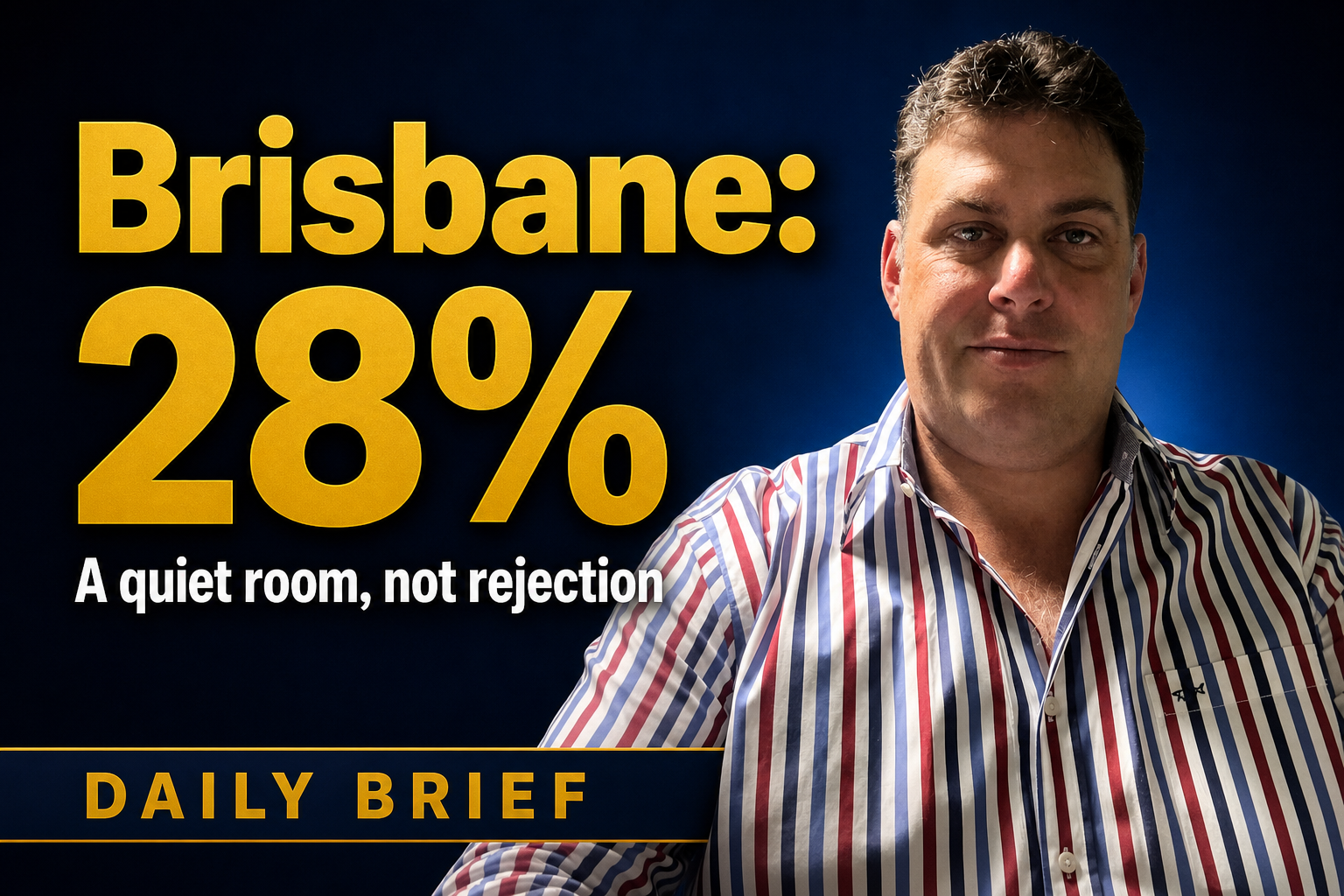
- Brisbane hit a record $700
- Darwin unit rents are up 18.2% in a year
- Darwin has overtaken Perth as the second most expensive city in the country to rent a house
Why the rental market snapped
The supply side is the core problem. The national vacancy rate for houses and units is now under 1%, meaning fewer than one rental in a hundred is available.
Listings are also 16.7% below the five-year average.
That is why the ABC article quoted a real estate agent describing inquiries flooding in the moment a listing goes live, with flatmates, parents and cousins co-applying just to compete. As Domain’s chief economist put it, renters are now operating in a landlord’s market.
The policy problem investors need to understand
The transcript argues this is not just a market cycle. It is also the result of policy pressure colliding with tight supply.
The key changes discussed were:
- From July next year, negative gearing only applying to new builds
- Existing homes losing the tax treatment that underpinned the numbers for decades
- Existing landlords being fully grandfathered
- In June, the Senate banning new SMSF lending for residential property while leaving commercial untouched
The important point is not political rhetoric. It is the mechanism. If policy makes existing stock less attractive to future investors, fewer investors chase that stock. Over time, that reduces rental supply.
Record rents and lower rates: the perfect storm
The transcript also links rental pressure with falling borrowing costs.
It says 18 banks called the RBA’s bluff and cut variable rates after a rate hike, with 40 banks now under 6% and a market floor of 5.69%.
That matters because it creates a split outcome:
- renters face higher advertised rents and tighter choice
- landlords with debt face cheaper finance and record income
- future investors are the ones most likely to be squeezed out
That is why the policy bite lands hardest on the next landlord, not the current one.
What the rent numbers mean for a deposit
The ABC reported that the average renter now pays $12,480 a year more than five years ago.
The transcript uses a simple illustration to show how that affects saving power:
- A 20% deposit on a typical $850,000 house is $170,000
- Five years ago, a renter with $1,500 a month spare could reach it in about 5.5 years
- Today, the same deposit takes 9.4 years
That is almost four extra years added to the ladder before stamp duty and before prices move again.
The official stats understate the pressure
The transcript also makes an important distinction between official rent inflation and the price people actually pay when they need to move.
Official inflation data says rents rose 3.7%. But that average includes sitting tenants whose rent has not yet been reset.
When vacancy is under 1%, the real market price is the advertised rent — and that is where the pressure is showing up.
Nationally, the transcript says gross yields are 3.7% and rising, with Cotality’s head of research expecting yields to keep moving higher across major capitals.
The Ripehouse Advisory take
This is a landlord’s market because supply is tight, borrowing costs are falling and policy is likely to discourage future investment in existing stock.
For investors, that does not mean buying blindly. It means being selective, using data and focusing on markets where demand, vacancy, yield and growth line up properly.
At Ripehouse Advisory, we rank suburbs using our demand-minus-supply framework across 15,286 suburbs every month, then use that research to help clients position ahead of the crowd. The markets that benefit most from this environment are already in our free report.
For investors, that does not mean buying blindly; it means figuring out which suburbs can still balance vacancy, yield and growth as rents keep pushing higher, and the Ripehouse Advisory webinar is a practical place to unpack that trade-off.
Frequently asked questions
Why is Australia’s rental market being described as a landlord’s market?
Because vacancy is under 1%, listings are 16.7% below the five-year average and advertised rents are at record highs in every capital city. That means there are far fewer homes available than renters competing for them.
How high have rents gone in the major Australian capitals?
The national median advertised rent has reached $670 a week, up 3.1% in one quarter and 6.4% over the year. Standout examples include Sydney houses at $850 a week, Brisbane at $700, and Darwin unit rents up 18.2% over the year.
Why are rents rising so fast even though official inflation figures look lower?
The article says official rent inflation includes sitting tenants whose rent has not yet been reset. In a market with vacancy under 1%, the advertised rent for new tenants is the better indicator of current pressure.
What does this rental pressure mean for someone trying to save a deposit in Australia?
It makes saving much harder because renters are paying far more each year while trying to build a deposit. The article says the average renter now pays $12,480 a year more than five years ago, and a 20% deposit on a typical $850,000 house now takes much longer to save.
What is the main risk for future property investors in this market?
The article argues that policy changes could make existing stock less attractive to future investors, which may reduce rental supply over time. It also notes that current landlords may benefit from record rents and lower borrowing costs, while the next investors could be squeezed out.
General information only. It does not take your objectives, financial situation or needs into account, and nothing here is legal, financial, taxation or investment advice specific to your circumstances.