News · 27 August 2026 · 5 min read
The $20 million rescue question: what should an off-the-plan buyer do when the builder runs out of road?
A developer administration story shows why off-the-plan buyers must test completion, finance and exact-address risk before they panic or commit.
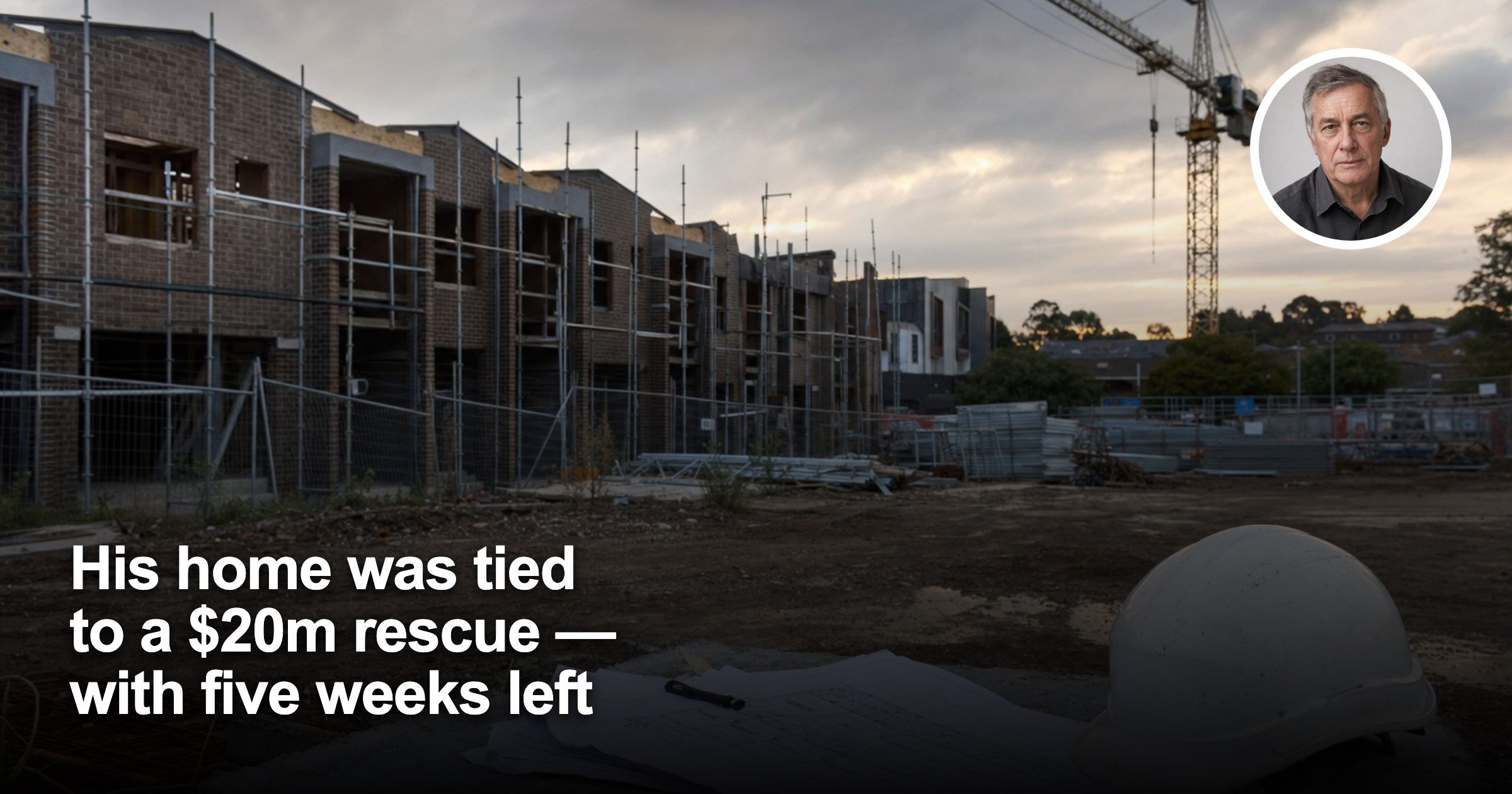
A 68-year-old man had already arranged his next move. The deposit was paid, the furniture list was growing and settlement had been pencilled into his calendar. Then the developer behind the project entered administration, with reports that a $20 million funding request could keep construction moving for only five weeks.
His question was blunt: if a builder or developer is in trouble, should a buyer hold on, walk away or try to sell the contract before the situation gets worse?
It is a question more Australians are asking after the collapse of a major Western Sydney developer, reported to have billions of dollars of projects in the pipeline and buyers facing uncertainty about whether their homes will be completed. The headline is dramatic. The useful answer is more methodical.
The first mistake is treating every delay as the same risk
A delayed handover can come from wet weather, a slow approval, a materials shortage or a contractor dispute. Administration is different. It raises questions about funding, subcontractors, insurance, project entities, existing contracts and whether another party can step in.
That does not automatically mean a buyer loses a deposit or that a project will never finish. It does mean the buyer should stop relying on sales-office reassurance and establish the legal and financial position of the exact contract.
The five-week funding figure matters because it describes runway, not completion. A short funding extension may pay workers and preserve a site while administrators test a sale or replacement-builder pathway. It is not proof that the promised home will be delivered on its original date.
What should the buyer check first?
The contract is the starting point. The buyer needs to know the sunset date, extension clauses, deposit arrangements, termination rights, progress-payment obligations and what happens if the developer entity changes. Those terms differ between projects, states and contracts, so a conveyancer or property solicitor should review the actual document.
The next check is the project, not just the brand on the brochure. A developer may use separate entities for different sites. One company’s financial difficulty does not answer what is happening at a particular project, but it is a strong reason to identify the contracting entity, landowner, builder, lender and current stage of construction.
Finance also needs a fresh test. A pre-approval can expire. Valuations can change. Lending policy can move. If settlement is pushed back, the buyer may face a different interest rate, serviceability assessment or valuation from the one used when the deposit was paid. The uncomfortable possibility is that a buyer can be legally entitled to a home but unable to settle on the original terms.
Why the exact address matters more than the suburb headline
This is where broad market commentary becomes less useful. Two projects in the same suburb can have very different odds of attracting a replacement builder and very different resale outcomes.
Ripehouse Advisory’s street-level review would separate the project’s exact address from the suburb average: achieved sale prices for comparable completed homes, depth of buyers at the likely resale price, days on market, achieved rents, vacancy, competing stock and the supply pipeline within walking distance. It would also examine construction stage, access, easements, road exposure and whether nearby projects are competing for the same trades and buyers. That is the same address-first discipline used in RHA’s street-tree value-gap analysis.
That can reveal why a project that looks ordinary on a suburb dashboard may be unusually exposed. A nearly completed building with settled infrastructure, strong buyer depth and scarce competing stock is a different asset from an early-stage site surrounded by several unfinished developments. The suburb name is the same; the risk at the street is not.
The same data helps a buyer avoid the opposite mistake: assuming that every administration story destroys the underlying location. If the land is well located, the design is practical and completed comparable homes still attract buyers and tenants, a replacement pathway may preserve genuine value even if the original timetable fails. RHA’s micro-location supply analysis explains why nearby competing stock can matter more than a suburb-wide headline.
Should the buyer try to sell the contract?
Usually, that is not a simple escape hatch. Assignment may require consent, a buyer may demand a discount for uncertainty and the contract may restrict resale before completion. Advertising a distressed contract can also create confusion about what is actually being sold: a finished home, a contractual right or an unresolved obligation.
The sensible sequence is to obtain legal advice, confirm the administrator’s process, calculate the holding cost of delay and then compare that with the cost of exiting. Include rent while waiting, finance approval expiry, valuation risk, tax consequences and the opportunity cost of tying up the deposit.
A buyer should keep a written record of notices, calls, dates, invoices and representations. Do not sign a variation or release simply because it arrives with a short deadline. Read it against the original contract and obtain advice before responding.
What about an investor considering the project now?
The lesson is not that property investment or new construction is inherently reckless. The lesson is that a cheap-looking contract can hide concentration risk. A buyer is exposed not only to the dwelling and location, but also to the delivery chain that turns a plan into a title.
For an investor, the underwriting should include a delayed-completion scenario. Test a six- or twelve-month delay, a higher loan rate, a lower valuation, extra rent during the wait and a weaker first leasing campaign. Then compare the result with an established property where the rent, condition and street-level demand can be observed rather than promised. The two-year lease case study shows the value of testing the income assumption against the asset’s real demand.
That comparison can make an established asset the better choice in one location and a well-structured new project the better choice in another. The answer comes from evidence, not from the size of the developer’s billboard or the fear generated by a collapse headline.
The answer for the buyer
The buyer should not panic, abandon a contract or assume a rescue is guaranteed. He should identify the exact contracting entity, have the contract reviewed, verify the project’s construction and funding position, refresh finance and valuation assumptions, and model the cost of waiting versus exiting.
For anyone assessing the next opportunity, the strongest protection is not avoiding property. It is choosing the right asset, the right street and the right evidence: address-level construction and supply data, realistic rent and buyer depth, and a strategy that still works if the handover date moves. Property investment remains powerful when the decision is built on what can be measured rather than what was promised.
If there's a specific street you're weighing up right now, check its Street Score first — it's free, takes ten seconds, and tells you whether that street is pulling the suburb average up or riding on it.
Market data & R-Scores for locations in this article
Drill Down Into the Markets Mentioned Above
Inspect live monthly R-Scores, median prices, rental yields, and street-by-street scores for the cities and council areas referenced in this article:
Frequently asked questions
If an off-the-plan developer goes into administration in Australia, does that automatically mean the buyer loses their deposit?
No. Administration does not automatically mean the deposit is lost or that the project will never be completed. It does mean the buyer should check the exact contract and the project’s legal and financial position instead of relying on sales-office reassurances.
What should an off-the-plan buyer check first when a builder or developer runs into trouble?
The contract comes first. The buyer should review the sunset date, extension clauses, deposit arrangements, termination rights, progress-payment obligations and what happens if the developer entity changes.
Why is it important to look at the exact project address rather than just the suburb?
Two projects in the same suburb can have very different risk and resale outcomes. The article says buyers should look at street-level factors like comparable sale prices, buyer depth, days on market, competing stock, construction stage and nearby supply.
Can a buyer be ready to settle but still unable to complete an off-the-plan purchase?
Yes. The article notes that finance can change if settlement is delayed, because pre-approvals can expire, valuations can move and lending policy can change. A buyer may be legally entitled to the property but still unable to settle on the original terms.
Is selling an off-the-plan contract a simple way to get out if the project is in distress?
Not usually. Assignment may need consent, the contract may restrict resale before completion, and a buyer may still have to discount heavily because of uncertainty. The article says the buyer should first get legal advice and compare the cost of waiting with the cost of exiting.
General information only. It does not take your objectives, financial situation or needs into account, and nothing here is legal, financial, taxation or investment advice specific to your circumstances.