News · 31 August 2026 · 4 min read
She was offered a two-year lease. What happens if life changes?
A proposed two-year lease can offer security, but the real risk sits in the exit terms, household plans and exact street.
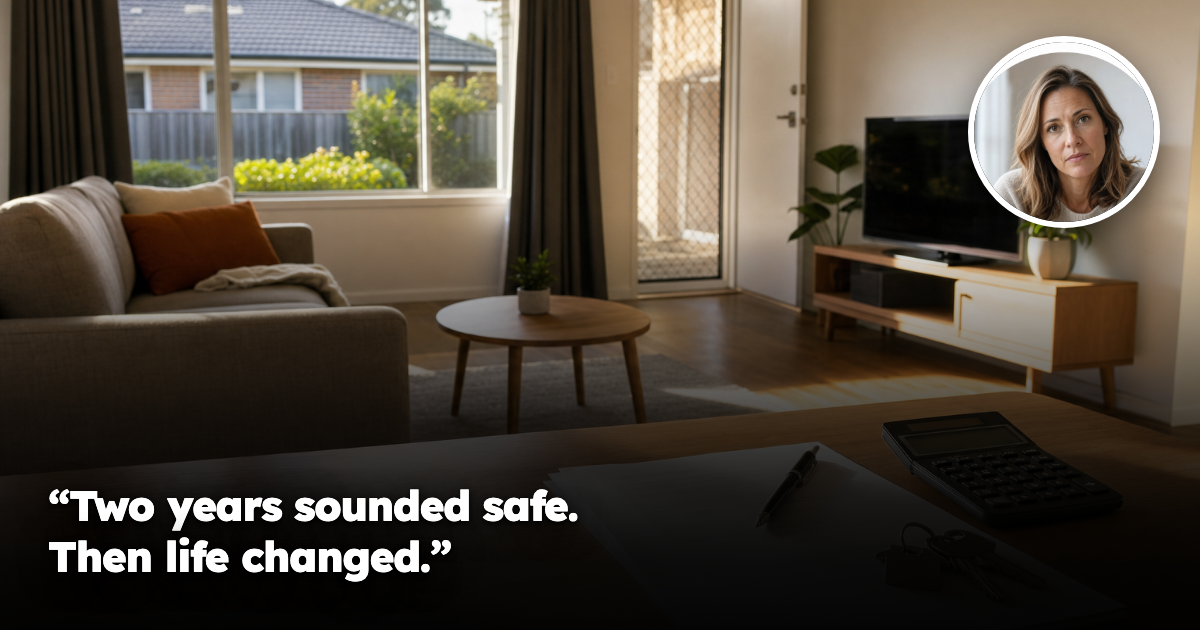
A 38-year-old woman had one number in front of her: $18,720.
That was the rent on a two-year agreement for the three-bedroom home where her blended family had finally settled. The longer lease would mean fewer applications, fewer moving costs and two years without the anxiety of another inspection. It would also mean making a promise that could become expensive if the family's circumstances changed.
She asked Ripehouse Advisory the question many renters are now weighing: is a two-year lease security, or is it a trap?
The question behind the headline
The push for longer rental agreements has turned a routine renewal into a political and financial argument. Supporters say renters deserve a stable home and landlords should plan for a longer horizon. Critics worry that a fixed commitment removes flexibility when interest rates, family needs or property plans change.
The answer is less dramatic than either side suggests. A longer fixed term can be valuable, but only when the home, the household and the exit rules line up.
What a two-year lease really changes
The first change is certainty. During a fixed term, the rent and the end date are generally clearer than they are on a rolling arrangement. That matters to a household budgeting hundreds of dollars every week. It also reduces the risk of being forced to move during a school year or a tight rental market.
The second change is flexibility. A fixed-term agreement is a contract. If a renter needs to leave early, the consequences depend on the agreement and the state or territory rules. There may be costs associated with finding a replacement renter, advertising or covering rent until a new agreement begins. A genuine reason for ending the tenancy may create different rights, but it should never be assumed that a difficult change automatically cancels the contract.
The third change is negotiation power. A renter who is offering two years is offering the owner less vacancy risk and fewer leasing decisions. That may support a request for a clear rent schedule, an agreed review point or written terms around pets, alterations and notice. The mistake is treating the headline length as the whole deal.
Why the exact street matters
Two homes in the same suburb can have completely different rental resilience. One may sit on a quiet street near a bus stop, shops and a reliable school route. Another may share the postcode but face heavy traffic, a difficult walk or a large competing apartment project.
That distinction matters to both sides. A renter needs to know whether the home will remain workable for the household. An investor needs to know whether a longer lease is protecting a durable income stream or simply postponing a vacancy problem.
Ripehouse Advisory tests this at street and address level rather than relying on a suburb-wide median. The review compares achieved rents, vacancy, days on market, nearby supply, buyer depth and the quality of competing homes. On a recent address screen, the two closest streets had similar suburb statistics but very different tenant enquiry patterns because one had a simpler transport route and fewer substitute properties.
That is the part of the two-year-lease debate that gets missed. Stability is not just a legal term. It is also a question of whether the location works for the next tenant, the next buyer and the household signing today.
Five checks before signing
First, price the commitment. Multiply the weekly rent by the full term, then add likely utilities, insurance, moving costs and any fees that would apply if the household needed to leave early. In this case, $720 a week becomes $37,440 over a year and $74,880 over two years; $18,720 is the first six months, not the full exposure.
Second, read the break-lease provisions. Ask who finds the replacement renter, who pays advertising and how the end of the agreement is handled. Get answers in writing.
Third, test the household's next two years. A planned change is different from an unexpected one, but a lease should not be signed on the assumption that nothing will change. Consider school, family support, commuting routes, pets and likely space needs.
Fourth, inspect the property as an investment in daily life. Noise, parking, drainage, heat, storage and the walk to transport can matter more than the suburb label. These are also the features that shape future tenant demand.
Fifth, negotiate the whole package. A longer term may be worth accepting if the rent path, maintenance expectations and exit process are clear. It may be poor value if the tenant gives away flexibility without receiving meaningful certainty.
The investor answer
For investors, a two-year lease is not automatically good or bad. It is a risk-allocation decision. The owner trades some ability to reset rent or sell with vacant possession for lower turnover and a clearer income horizon.
The right test is the asset's exact competitive position. A well-presented home on a street with strong tenant demand can benefit from a longer agreement. A compromised property may need flexibility and active improvement instead. Street-level evidence should decide that, not a broad argument about landlords or renters.
The woman with the $18,720 first-six-month commitment did not need a slogan. She needed the contract, the household plan and the address tested together. Property investment remains compelling when the right asset is bought on the right street and understood through the right data. Headlines change; durable demand at a specific address is what protects the decision.
If there's a specific street you're weighing up right now, check its Street Score first — it's free, takes ten seconds, and tells you whether that street is pulling the suburb average up or riding on it.
Frequently asked questions
What are the main benefits of signing a two-year rental lease in Australia?
A two-year lease can give a renter more certainty around rent and the end date, which can help with budgeting and reduce the risk of moving during a school year or in a tight rental market. It can also reduce the number of applications and inspections.
What is the biggest risk if I need to leave a fixed-term lease early?
The main risk is that a fixed-term lease is a contract, so leaving early can trigger costs depending on the agreement and the state or territory rules. These may include advertising costs, finding a replacement renter, or rent until a new agreement starts.
Why does the article say the exact street matters more than the suburb median?
Because two homes in the same suburb can have very different rental demand, vacancy levels and tenant enquiry patterns. Street-level features like transport access, nearby shops and competing properties can affect whether the home is truly stable for the next two years.
What should a renter check before agreeing to a two-year lease?
They should read the break-lease terms, understand who pays for advertising or a replacement renter, and check how the tenancy ends. They should also test whether their household plans, commuting, school needs and space requirements are likely to change.
For investors, when does a longer lease make sense?
A longer lease can suit a well-positioned home with strong tenant demand, because it lowers turnover and gives a clearer income horizon. It is less useful if the property is compromised and may need flexibility or improvements instead.
General information only. It does not take your objectives, financial situation or needs into account, and nothing here is legal, financial, taxation or investment advice specific to your circumstances.