News · 26 August 2026 · 4 min read
He spent $42,000 opening up the house. Why the renovation could still hurt its value
A man who inherited an Adelaide house discovers why a renovation can improve the presentation while creating approval, insurance and resale questions.
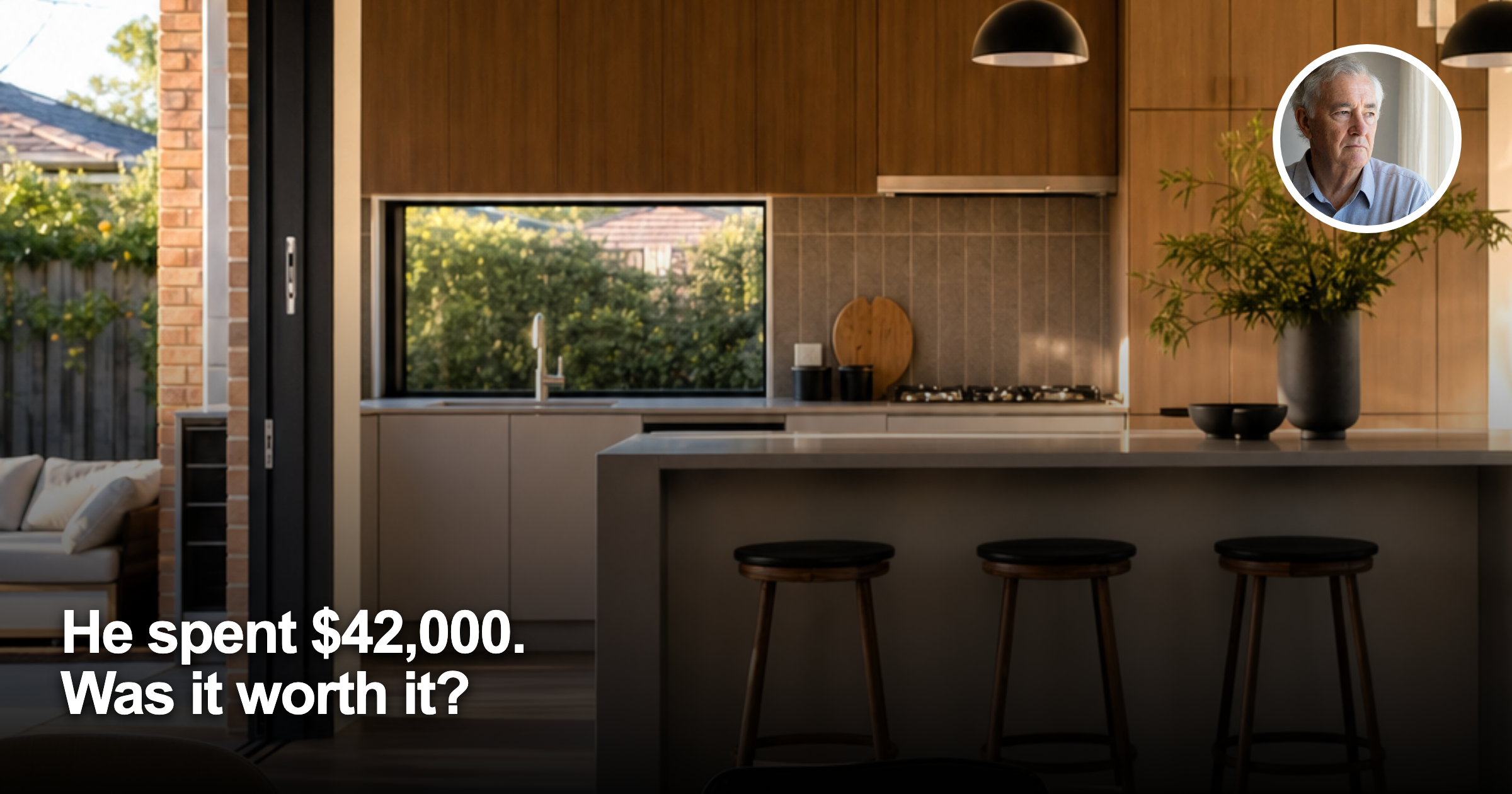
He spent $42,000 opening up the house. Why the renovation could still hurt its value
A 74-year-old Adelaide man inherited his mother’s 1960s house and thought the decision was obvious: remove the wall between the kitchen and dining room, replace the tired flooring and make the home easier for a family to live in.
The renovation cost about $42,000. The rooms looked brighter. The photos looked better. But when he began discussing a sale, one question changed the conversation: could he prove exactly what had been altered, who had done the work and whether the work had the approvals it needed?
That is the renovation trap many owners discover too late. A project can improve the way a property feels while weakening the evidence a buyer, lender, insurer or conveyancer needs before treating the improvement as a dependable part of the asset.
The question: does a better-looking home automatically become a more valuable one?
No. A renovation creates value only when it improves the property’s appeal without creating a larger problem behind the walls.
Removing a non-structural partition, updating a kitchen or replacing worn finishes may be relatively straightforward. But the moment a project affects structure, waterproofing, fire separation, electrical work, plumbing, drainage or the external form of a building, the approval and documentation question becomes part of the investment case.
The rules vary by state and by the work being done. That is why “the contractor said it was fine” is not a reliable record. Neither is a folder of receipts with no plan, certification or inspection evidence.
For an owner preparing to sell, the practical issue is not whether the renovation looks good in a listing photo. It is whether the next buyer can understand the work and be confident that the property is safe, insurable and financeable.
Why the $42,000 did not translate into $42,000 of value
The inherited house had a dated kitchen and a chopped-up layout. Opening the room improved its presentation, but the improvement had three limits.
First, the buyer pool did not value the change equally. Some families preferred the open plan. Others wanted a separate room for working, guests or storage. Second, the cost of the renovation was not the same as the value added. A dollar spent correcting a defect is often defensive spending, not a dollar of new market value. Third, uncertainty attracts a discount.
If a buyer has to investigate whether a wall was load-bearing, whether a professional sign-off exists or whether an insurer will accept the altered risk, the buyer may respond with a lower offer or walk away. The discount is not necessarily the cost of fixing the work. It is the cost of uncertainty, delay and negotiation.
That distinction matters for investors. A polished kitchen may help a property compete for attention, but an undocumented alteration can reduce buyer depth at the exact moment a quick, clean sale matters.
The street-level test most owners skip
Ripehouse Advisory looks beyond the suburb median because renovation decisions are priced by the immediate competition, not by a broad postcode average.
The useful comparison is between the renovated house and the three to five closest properties that a buyer could choose instead. We examine achieved sale prices, days on market, rental evidence, vacancy, buyer depth and the nearby supply pipeline. Then we ask whether the renovation creates a measurable advantage on that street.
For example, an open-plan layout may be valuable on a quiet family street where similar homes sell quickly and larger households dominate the buyer pool. The same work may add little on a street where buyers prize separate rooms, parking or low-maintenance layouts. A renovation that looks premium in isolation can be ordinary against the local competition.
The property’s documentation belongs in that same assessment. A strong street position cannot fully rescue a preventable approval problem, while a well-documented renovation can remove friction and let the location do its work. The same street-level discipline applies when testing a parking and driveway premium or assessing an address-level lending question.
What should an owner check before spending?
Start with the property file, not the mood board. Identify the proposed work and ask the relevant council or building authority what approvals, plans, inspections and certificates apply. Confirm who is responsible for each item and keep the written response.
Get a clear scope of work, itemised quotes and evidence of licences and insurance where required. If structure is involved, use the appropriate qualified professional before demolition. Keep progress photos, certificates, invoices and final documents together. The file should make sense to someone who has never seen the project before.
Then test the likely resale benefit against nearby evidence. What did comparable renovated properties actually sell for? How long did they take? Did they attract multiple buyers, or did they sit until the price moved? Does the work solve a local buyer objection, or is it simply fashionable?
For an inherited property, also separate emotional spending from investment spending. A house may deserve to feel like home, but the best financial outcome usually comes from fixing risk first, improving function second and adding style only where the local evidence supports it.
The answer for the inherited house
The $42,000 renovation was not automatically a mistake. The mistake would have been treating the invoice as proof of value.
After checking the alteration, assembling the records and comparing the house with its immediate competition, the owner could make a much stronger decision: complete the missing evidence, adjust the selling strategy or leave the layout alone until the market showed a clear premium.
Property remains one of the clearest ways to build long-term wealth, but the winning asset is not simply the newest-looking one. It is the right property, on the right street, with the right evidence behind every dollar spent. Street-level data and disciplined renovation records turn a cosmetic decision into an investment decision.
If there's a specific street you're weighing up right now, check its Street Score first — it's free, takes ten seconds, and tells you whether that street is pulling the suburb average up or riding on it.
Market data & R-Scores for locations in this article
Drill Down Into the Markets Mentioned Above
Inspect live monthly R-Scores, median prices, rental yields, and street-by-street scores for the cities and council areas referenced in this article:
Frequently asked questions
Why can a renovation make an Adelaide house look better but still lower its sale value?
A renovation can improve presentation without adding dependable value if it creates approval, insurance or documentation questions. Buyers may discount the property if they cannot see what was altered, who did the work or whether the work was properly approved.
What kind of home improvements are more likely to need approvals or extra documentation?
Once work affects structure, waterproofing, fire separation, electrical work, plumbing, drainage or the building’s external form, the approval and documentation issue becomes important. The article says the rules vary by state and by the work being done.
Why doesn’t spending $42,000 on a renovation mean the home’s value rises by $42,000?
The cost of the work is not the same as the value added. Some buyers may not want an open-plan layout, and uncertainty about the alteration can lead to lower offers or buyers walking away.
What should an owner check before opening up walls or changing a layout?
Start with the property file and ask the relevant council or building authority what approvals, plans, inspections and certificates are needed. Also keep itemised quotes, licence and insurance evidence, progress photos and final documents together.
How should an owner judge whether a renovation will help resale in their local market?
Compare the home with the closest competing properties, not just the suburb median. Look at sale prices, days on market, buyer depth and whether the work solves a real local buyer objection or is just fashionable.
General information only. It does not take your objectives, financial situation or needs into account, and nothing here is legal, financial, taxation or investment advice specific to your circumstances.