News · 9 October 2026 · 4 min read
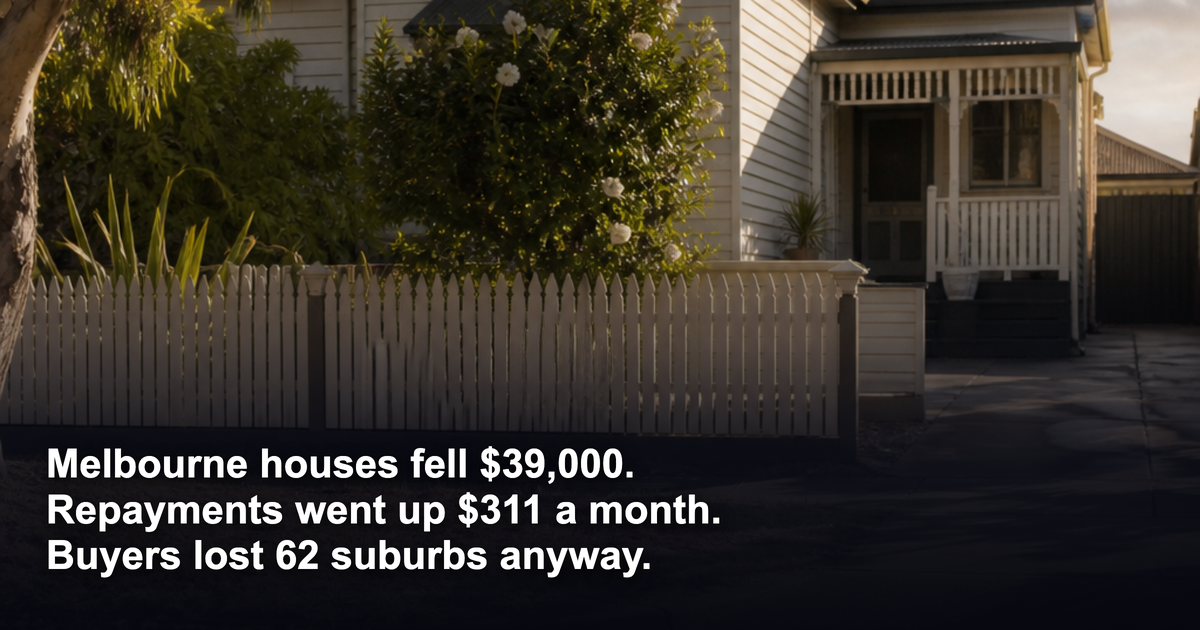
Her Geelong suburb rose 13 per cent in a year. Then it dropped $21,790 in three months. What happened?
She is 43 and paid about $550,000 for a three-bedroom house in Norlane in June.
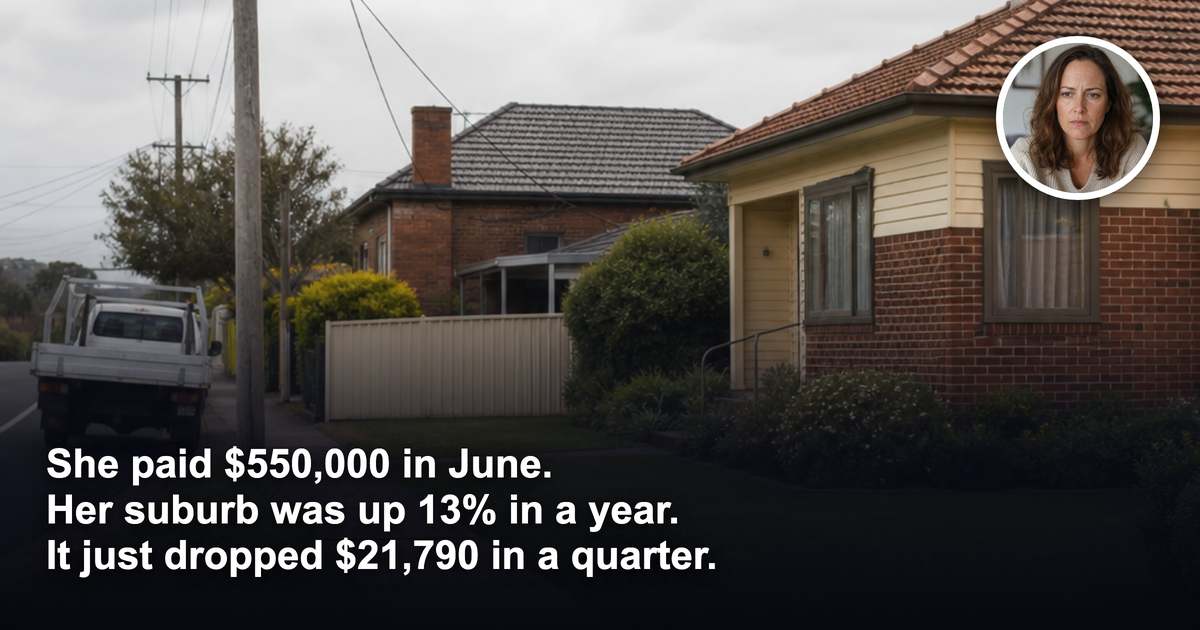
She is 43 and paid about $550,000 for a three-bedroom house in Norlane in June.
She and her partner own their home in Melbourne's outer east, have two teenagers, and had about $130,000 of usable equity sitting in it. They wanted a first investment property that was cheap enough to hold and in a market that was clearly moving. Norlane ticked both boxes. House values there were up 13 per cent in a year. Corio next door was up 14 per cent, more than $70,000 on the median.
She is a composite illustration, not a real person. The numbers around her are real.
This week PropTrack published new quarterly suburb medians for Geelong, reported by realestate.com.au on 9 October. Norlane's median house value fell $21,790 in the three months to September. That is 4 per cent, gone, in one quarter.
The question a buyer like her is asking
"I bought in a suburb that had grown 13 per cent in a year. Three months later the median is down more than $20,000. Did I buy at the top, and should I get out before it falls further?"
The answer: the growth and the fall were the same buyers
Start with who was pushing Norlane up.
The realestate.com.au report quotes Geelong agent Nick Lord, who describes the sub-$700,000 bracket as "typically the investment profile" for these suburbs. He points to a surge of self-managed super fund buyers earlier in the year, followed by reduced borrowing capacity as rates rose. The report says the Reserve Bank has lifted rates four times this year, and that SMSF owners were blocked from borrowing to buy residential property in August.
A Geelong buyers agent in the same piece, John O'Brien, says interstate buyers agents from Sydney, Brisbane and Melbourne had been buying sight unseen and "paying overs". His words: "we're not seeing those buyers any more."
So the 13 per cent was a crowd. The crowd was rate-sensitive, rule-sensitive, and mostly from somewhere else. When rates went up and the SMSF door closed, the crowd left. The median followed it out.
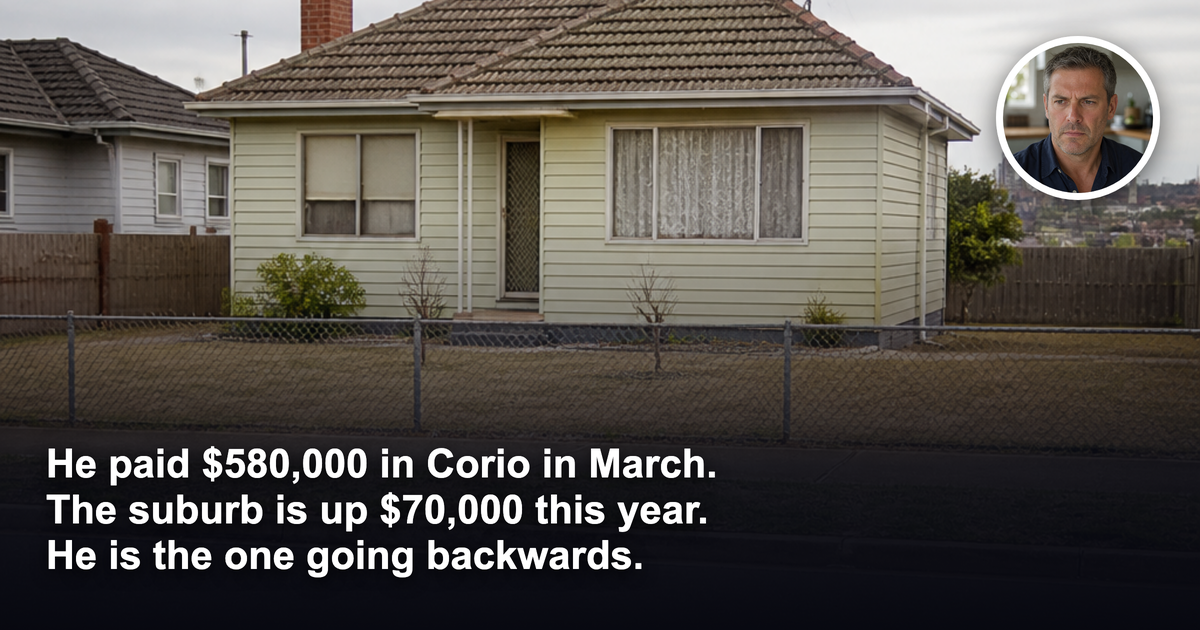
The pattern repeats across the cheap end of the table. Corio, up $70,632 over the year, lost $12,626 in the quarter. St Albans Park and Whittington, both up 10 per cent over 12 months, also went backwards over the last three months.
What the headline leaves out
Parts of Geelong fell. Other parts rose in the same quarter.
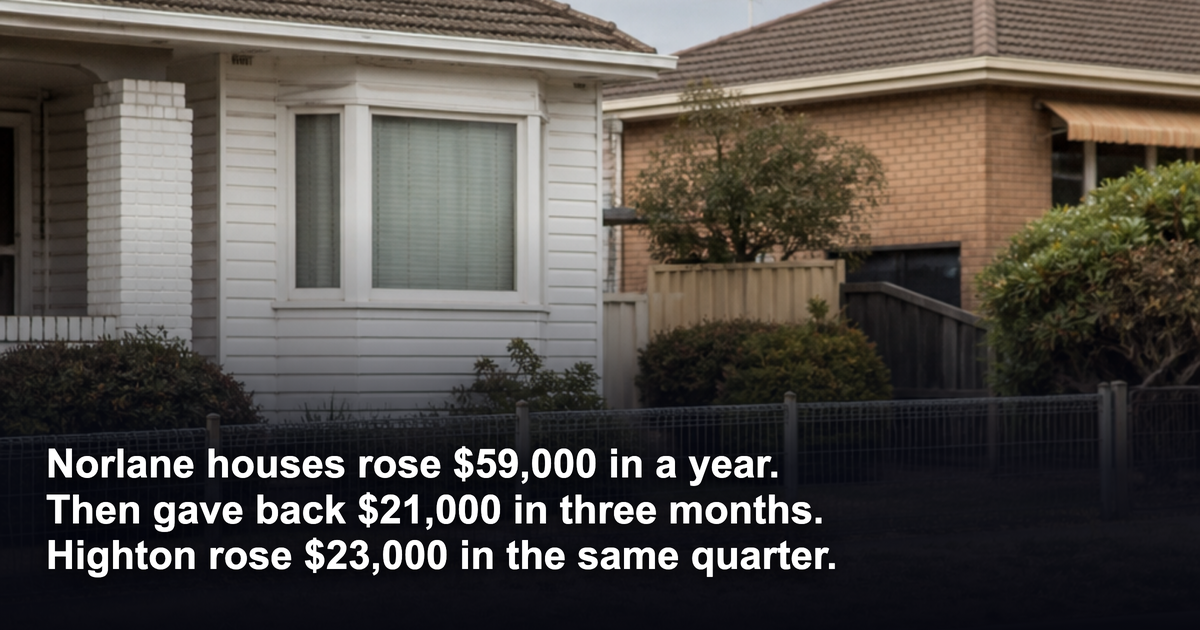
Highton rose 3 per cent, about $23,835. Wandana Heights rose 2 per cent, or $19,424. Grovedale, Lara, Newcomb, Newtown and Leopold were flat. The biggest quarterly falls were at the expensive end: Manifold Heights down 5 per cent, or $46,455, and Geelong itself down 4 per cent, or $34,195. Down the coast, Lorne house values are off 14 per cent over the year, more than $259,000.
One region. Same interest rate. Same quarter. Outcomes ranging from plus 3 per cent to minus 5 per cent.
O'Brien says the buyers he now sees are owner-occupiers heading for family suburbs such as Highton, Belmont and Newtown, often chasing a particular primary school zone. Those are the suburbs that held. Owner-occupiers do not sell because a rate rise spooked their accountant.
What this means for her
She has not lost $21,790. She owns a house with a tenant and a loan, and someone's valuation model has moved the suburb median. A loss happens on settlement day, when you sell, with agent fees and the stamp duty she paid in June on top.
Selling now would turn a model estimate into real money leaving her account, into a market where Lord says listings may not recover until February or March because sellers are holding back in an election year.
Her actual exposure is different. Her plan assumed the 13 per cent would keep going. Her buffer, her rent assumptions and her refinance timing were all built on momentum. The expensive mistake was buying a number instead of a street.
The Ripehouse reframe
Every year a list of "rising stars" gets published, and every year a wave of equity-backed buyers piles into the cheapest suburb on it. The list is a rear-view mirror. It tells you where the crowd was, and the crowd that creates a 13 per cent year is the same crowd that creates a 4 per cent quarter when the rules change.
We would want to know, before the contract, who was buying on that street and why. Investors on borrowed SMSF money, or families chasing a school zone? Interstate buyers agents, or locals who actually inspected? Is vacancy on that particular street tight or loose? Two streets in Norlane can be having completely different years, and the suburb median hides both.
That is why we publish client results across the full spread, the portfolios that underperformed included. Our client portfolios have grown at a median of 19.0 per cent a year on a 5-year rolling basis, against roughly 4.3 per cent nationally (benchmark: CoreLogic/Cotality). Past performance is not a guarantee of future results. A momentum suburb can post 13 per cent and then give nearly a third of it back in a quarter. A 5-year rolling figure cannot hide a quarter like that.
The right asset on the right street, chosen on data rather than headlines, is what survives a rate cycle. Structure, not timing.
Want to see how we test a suburb like Norlane street by street before a contract is signed? Join Jacob's free live webinar.
General information only. It does not take your objectives, financial situation or needs into account, and nothing here is legal, financial, taxation or investment advice specific to your circumstances.