News · 30 August 2026 · 4 min read
Her $84,000 station premium was only 900 metres away
A young buyer discovers why a future transport station can create an address-level property premium — and an address-level trap.
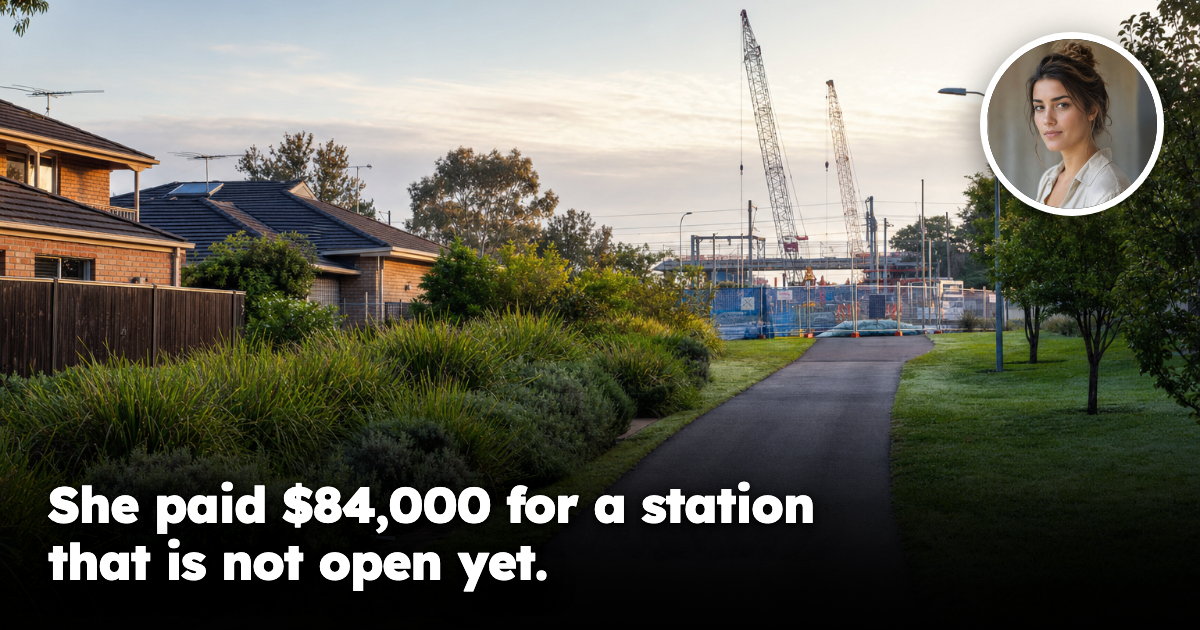
When the 26-year-old buyer compared the two homes, the $84,000 difference looked like a simple calculation.
Both were in the same suburb. Both had three bedrooms, comparable blocks and similar kitchens. One was advertised as being “near the future station”. The other was on the other side of a busy road and took longer to reach on foot.
The question she brought to Ripehouse Advisory was sharper than the sales pitch: was the station premium real, or was she about to pay for a map pin that looked closer than it felt?
The short answer
Transport access can create a genuine property premium, but “900 metres away” is not a valuation method.
The walk may cross a wide road, a railway line, a flood-prone path or an unpleasant industrial edge. The station may be years from opening. Construction can temporarily reduce amenity. And the benefit may be strongest for one buyer group while doing little for another.
That is why a suburb median cannot settle this question. The premium is usually created by a small catchment around the station, and the catchment is shaped by the actual walking route rather than a circle drawn on a listing map.
Why the $84,000 matters
The extra money was not buying more land or a better floor plan. It was buying future convenience and a broader resale audience: people who want a shorter trip, fewer car journeys and a property that sounds “connected” when it comes time to sell.
Those benefits can be real. They can also be overcapitalised before the first train runs.
If the route to the station is unpleasant, the buyer may still drive. If the station is delayed, the future benefit is pushed further away. If construction occupies the most direct path, the home may carry the premium while delivering none of the experience that justified it.
The risk is particularly high when agents describe distance in a straight line. A property can sit 900 metres from a station entrance and be a 17-minute walk away after crossings and detours. Another home 1.2 kilometres away may have a safer, flatter and more direct route.
What street-level data can reveal
Ripehouse Advisory’s address-level review compares achieved sales, achieved rent, days on market, vacancy, buyer depth and competing supply around the individual property. For a transport question, that is paired with the real pedestrian route: crossings, barriers, slope, lighting, station entrances, bus alternatives and the construction footprint.
In the comparison that prompted her question, the homes sat in the same suburb but the observed gap between the connected pocket and the less convenient pocket was about $84,000. The figure was not treated as a universal station premium. It was a test of whether buyers were already rewarding that exact street — and whether tenants showed the same preference.
That distinction matters. A suburb can rise while one pocket underperforms because it is separated from the station by a road, creek, school boundary or industrial strip. The data has to follow the address.
The same method applies to other micro-location differences. A street-level flood-risk decision can split two homes with the same postcode. A driveway and street-parking comparison can change buyer depth without changing the suburb median.
What should a buyer check?
First, walk the route in person. Do it at the time a resident would actually use it, including after dark if the property is being assessed for commuters. Count crossings and note whether the route feels safe with groceries, a pram or a bicycle.
Second, separate “planned” from “funded” and “open”. A future station can be valuable, but each stage has a different probability and timeline. Price today’s property using today’s amenity, then decide how much optionality is worth paying for.
Third, map the construction burden. Hoardings, truck routes, temporary closures and noise may affect one side of a station precinct more than the other. A home facing the works may have a weaker short-term rental proposition even if it ultimately benefits from the project.
Fourth, test actual outcomes rather than asking prices. Compare settled sales, days on market and buyer depth for homes on the station side, across the main road and outside the practical walking catchment. If only marketing language supports the premium, treat it as unproven.
Finally, model the tenant and future buyer separately. A tenant may value a direct bus route more than a station that is not yet open. An owner-occupier may pay for a walkable commute. An investor needs to know whether that preference produces stronger rent, lower vacancy or faster resale — not merely more clicks on a listing.
Did she overpay?
Not necessarily. If the route is direct, safe and likely to remain usable through construction, the premium may reflect a real advantage that will deepen as the station becomes operational. If the route is theoretical, the premium is a bet — and the buyer should negotiate as if it is one.
The broader lesson is useful for every property investor. Infrastructure headlines tell you where to look; they do not tell you what an individual address is worth. The opportunity is often in the street just outside the obvious premium, where the walk is still practical but the market has not fully repriced the benefit.
The right property, on the right street, measured with the right data, can turn a transport announcement into an investment advantage — without paying blindly for a pin on a map.
If there's a specific street you're weighing up right now, check its Street Score first — it's free, takes ten seconds, and tells you whether that street is pulling the suburb average up or riding on it.
Frequently asked questions
Can a future train station really add value to a property in Australia?
Yes, transport access can create a genuine property premium, especially for buyers who want a shorter commute and better connectivity. But the article says the premium is usually small and street-specific, not something you can judge from the suburb median alone.
Why might a property listed as 900 metres from a station not feel close enough to walk?
Because the real walking route can be much longer than the straight-line distance. Crossings, detours, barriers, a busy road, slope or an industrial edge can make a home much less convenient than the map suggests.
What should I check before paying more for a home near a planned station?
Walk the route yourself and check whether it feels safe and practical at the time you would actually use it. Also separate whether the station is planned, funded or already open, because each stage has a different level of certainty and timing.
What risks come with buying near a station before it opens?
The main risks are delay, construction disruption and paying for benefits that have not arrived yet. If the station is years away or the route is unpleasant, you may be paying a premium without getting the convenience that justifies it.
How do you tell if the station premium is real for a particular street?
Compare settled sales, days on market, buyer depth and rental results for homes on the station side and outside the practical walking catchment. If only the advertising claims support the higher price, the premium is still unproven.
General information only. It does not take your objectives, financial situation or needs into account, and nothing here is legal, financial, taxation or investment advice specific to your circumstances.