News · 1 September 2026 · 4 min read
He was promised a cheaper new home. Why did the “saving” disappear?
A buyer was shown an $18,000 saving on a new home, but the cheaper package raised questions about running costs, policy risk and future resale demand.
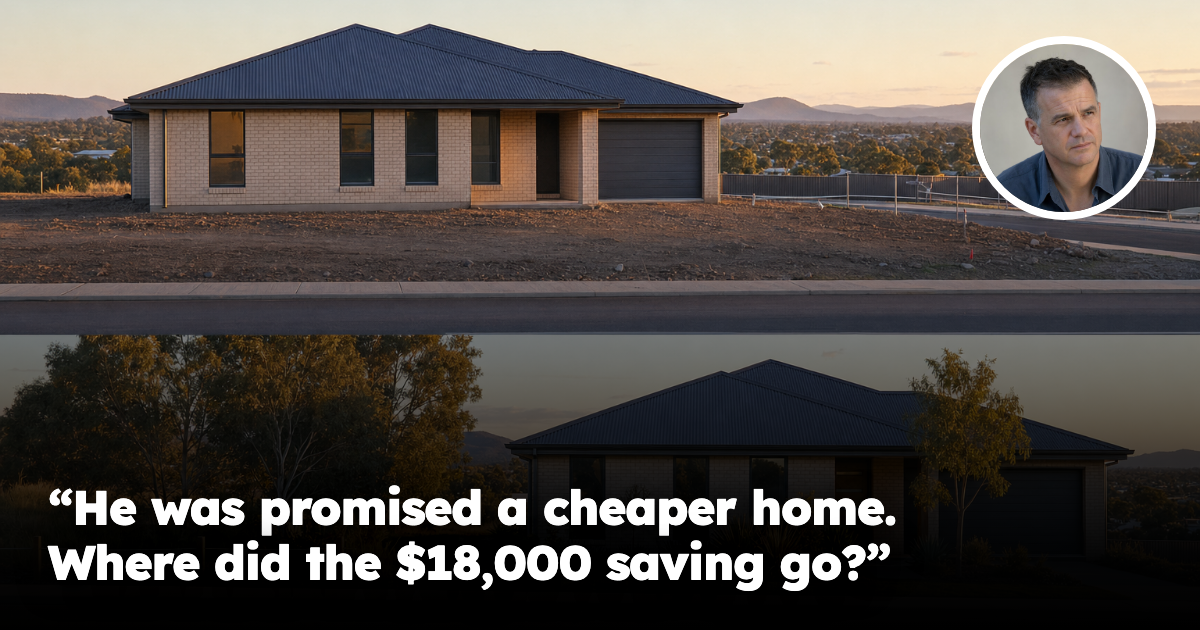
He was promised a cheaper new home. Why did the “saving” disappear?
A 52-year-old man was comparing two new homes on the edge of a growing regional city when the numbers stopped making sense.
The first package looked cheaper by $18,000. It had a smaller floor plan, fewer inclusions and a lower advertised price. The second cost more, but had better insulation, a more efficient orientation and a street with established services already operating nearby.
His question was simple: if governments are debating whether to loosen energy rules for new houses, is the cheaper home about to become the smarter investment?
The answer is uncomfortable. A lower construction price is not automatically a lower-cost property. In some locations, stripping out a performance feature can reduce the upfront bill while increasing the household’s running costs, maintenance exposure and resale risk.
The policy argument is bigger than one building rule
The current argument over energy standards has been presented as a choice between affordability and regulation. That is how the debate becomes so heated. Buyers want a house they can afford today. Governments want to reduce costs and speed up supply. Builders want rules that can be priced and delivered reliably.
But an investor or owner lives with the result for years. The relevant number is not just the contract price. It is the total cost of owning the asset: repayments, heating and cooling, repairs, insurance, vacancy risk and the price future buyers are willing to pay.
A buyer who saves $18,000 at the start could give some of that back through higher power use. The exact result depends on design, climate, energy prices and how the house is occupied. That is why sweeping claims that one rule will fix housing affordability should be treated cautiously. A rule can be expensive, poorly designed or badly delivered. Removing it can also create a cheaper-looking asset with a weaker long-term proposition.
Why two new homes can be worth different amounts
This is where suburb-level commentary misses the real decision. Two properties can sit in the same postcode and still have very different investment quality.
Ripehouse Advisory’s street-level approach looks beyond the headline suburb median. It tests achieved sales, rents, vacancy, days on market, buyer depth and competing supply at the address level. For a new estate, that means asking whether the particular street has usable transport, retail access, school demand, noise exposure, a flood or heat concern, and enough resale evidence to support the price.
The more expensive house may be on the better street, with a broader future buyer pool. The cheaper house may be beside a future stage of construction, a busy access road or a large run of near-identical stock. A modest construction saving can be overwhelmed by a discount at resale if buyers see the property as hotter, noisier, less efficient or harder to finance.
That is not an argument for paying more for every “green” feature. It is an argument for measuring the outcome rather than buying a label.
The question buyers should ask before signing
The 52-year-old man was initially asking, “Which builder is cheaper?” The better question was, “Which asset remains desirable when the market is no longer excited by the estate’s launch?”
Before comparing packages, an investor should request the inclusions schedule, expected energy performance, orientation, estimated running costs and the likely maintenance items that have been excluded. Then compare the address with settled sales, current rents, vacancy and competing listings within the same micro-market.
Ask what happens if the property takes longer to sell or lease. Ask whether the street will still be attractive when the next 200 homes are completed. Ask whether the valuation evidence supports the contract price without relying on a developer’s forecast.
This matters even when the policy debate changes. A property selected only because it was the cheapest may have little protection if construction costs, rates or buyer preferences move against it. A property with a defensible location, useful design and measurable demand has more ways to hold its ground.
The answer for property investors
Housing policy can change the upfront arithmetic, but it cannot remove the need to assess the asset. The winning decision is rarely “maximum regulation” or “minimum regulation”. It is the house whose total cost, street position and future audience have been tested honestly.
The opportunity remains in property investment because markets are uneven. The right investor does not need every suburb to rise. They need the right asset, on the right street, with demand that can be seen in the data. When a cheaper new home is genuinely better value, street-level evidence should prove it. When the saving is only an advertising number, the same evidence should expose that too.
If there's a specific street you're weighing up right now, check its Street Score first — it's free, takes ten seconds, and tells you whether that street is pulling the suburb average up or riding on it.
Frequently asked questions
Why can a cheaper new home end up costing more overall?
A lower contract price is not always a lower-cost property. If the cheaper home has poorer insulation, worse orientation or fewer inclusions, it can lead to higher heating and cooling bills, more maintenance and weaker resale demand.
What should buyers compare instead of just the advertised price of a new house?
They should look at the total cost of owning the asset, not just the purchase price. That includes repayments, running costs, repairs, insurance, vacancy risk and what future buyers may be willing to pay.
How can two new homes in the same area be worth different amounts?
They can differ because of street-level factors such as transport access, retail nearby, school demand, noise, flood or heat exposure, and competing supply. A better street can give a property a broader future buyer pool and stronger resale support.
What practical information should an investor ask for before choosing between new home packages?
The article says to request the inclusions schedule, expected energy performance, orientation, estimated running costs and likely maintenance items excluded from the build. Then compare those details with settled sales, rents, vacancy and competing listings in the same micro-market.
What is the main risk if a buyer picks the cheapest new home without checking the location and design?
The risk is that the property may be harder to sell or lease later, especially if the estate becomes crowded with similar stock or the street is less attractive. A small upfront saving can be outweighed by a resale discount if buyers see the home as less efficient or less desirable.
General information only. It does not take your objectives, financial situation or needs into account, and nothing here is legal, financial, taxation or investment advice specific to your circumstances.