News · 25 August 2026 · 5 min read
“She wanted a home, not another move. The two-year lease fight changed the question.”
A renter’s dilemma shows why longer leases could reshape security, flexibility and the value investors place on a rental property.
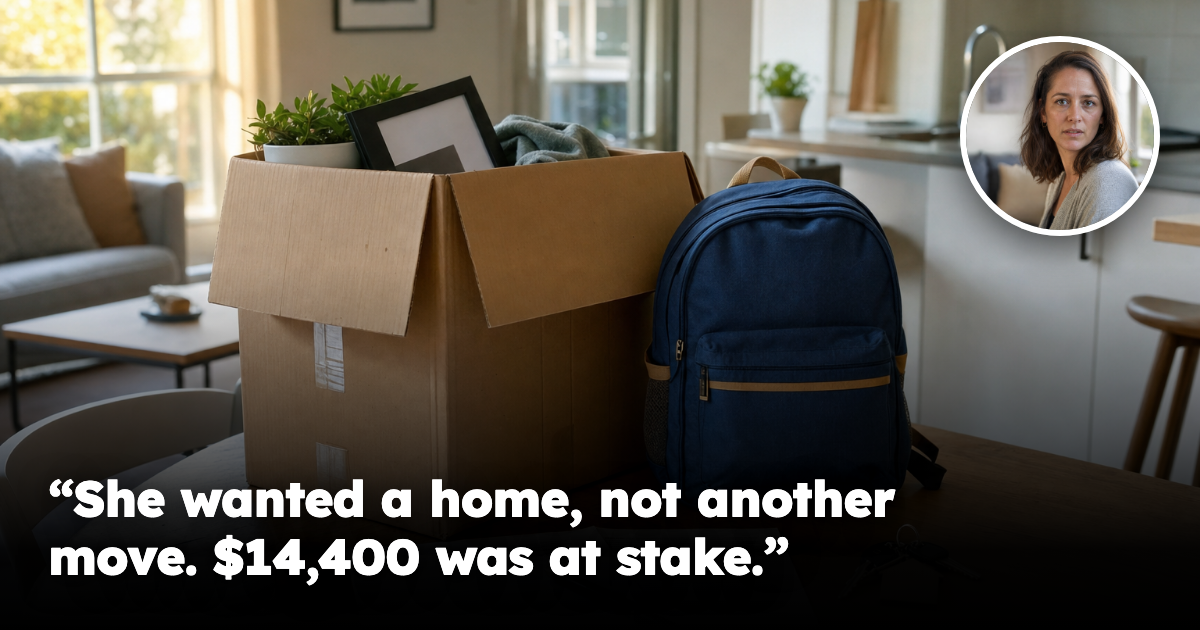
She wanted a home, not another move. The two-year lease fight changed the question.
The number on the application was $14,400.
That was what a 24-month lease would have saved a 34-year-old woman in moving costs, storage, connection fees and the quiet damage of uprooting a child twice. She had spent four years moving whenever a fixed term ended. Now a proposed push for longer leases had made her ask the question many renters avoid: if a landlord offers two years, is security worth giving up flexibility?
The answer is not as simple as “renters want stability” or “landlords need flexibility”. A longer lease changes the risk on both sides. It can protect a household from a forced move, but it can also make a property less flexible if the owner needs to sell, renovate or respond to a genuine change in circumstances.
What is actually being proposed?
The recent debate is about making a two-year lease an offer renters should receive, rather than assuming every tenancy should roll through short fixed terms. That is a policy proposal, not a magic switch that makes every renter entitled to remain for two years immediately.
The distinction matters. A long lease can be offered, negotiated and accepted under existing arrangements. Whether governments should require that offer, limit the reasons for ending a tenancy, or create exceptions for sale and major works is the political fight. Those details determine whether the reform creates real security or merely adds another form to the process. It sits alongside the practical questions raised in the recent pet-approval story, where a deadline changed the balance between tenant and owner.
For her, the practical issue was immediate. Her current agreement had six months left. The home suited her daughter’s school route and the rent was $600 a week. Another move would likely mean a new bond, removal costs, time away from family and the risk of competing against dozens of applications. Her $14,400 was not a forecast of rent. It was her estimate of the cost of two more years without another forced relocation.
Why landlords are uneasy
A landlord who owns one property may not know what life will require in 18 months. A relationship can end. A parent can move back. A sale may become necessary. A major repair may make the premises uninhabitable. If a long lease removes every exit, the owner carries a risk that was never reflected in the starting rent.
That concern does not mean every landlord needs a short lease. It means the contract and the rules need to distinguish between convenience and necessity. Ending a tenancy because an owner simply wants a new occupant is a different event from ending it because the building needs substantial work or the property genuinely has to be sold vacant.
Good policy has to protect the first household without making small-scale rental ownership so rigid that owners leave the market. Fewer rental homes do not help tenants, even when the intention behind the reform is fairness.
The part the suburb median cannot answer
The property itself is not an abstract landlord-versus-tenant argument. Two otherwise similar investment properties can carry very different tenant and owner risks.
One may have a layout that attracts long-term households, stable achieved rent and low vacancy. The other may rely on short-term demand, have a narrow tenant pool or sit on a street where comparable homes take much longer to lease. A two-year arrangement may be a competitive advantage for the first and a serious liquidity constraint for the second.
At Ripehouse Advisory, the useful question is not just whether a suburb has strong rental demand. Street-level data tests achieved rents, vacancy duration, days on market, tenant turnover and the spread between the best and worst streets in one suburb. That effective-yield gap can reach 20–30% even where the suburb median makes the properties look interchangeable. It is the same property-level discipline needed when assessing repeated landlord-entry risk, rather than relying on a suburb-wide assumption.
A suburb average cannot tell an investor whether a long-term tenant is likely to renew, whether the home’s floor plan suits a stable household, or whether a vacancy after a sale will be expensive. Those are property-level and street-level questions.
What should a renter ask?
Before signing a longer term, she should ask what happens if circumstances change. Can the agreement be transferred? What costs apply to an early exit? Is there a break-fee formula, and is it clear? What happens if the owner needs major works? What notice process applies if the home is sold?
The policy headline may promise security, but the actual agreement determines the friction. A renter should value the two years only after pricing the flexibility she is giving up. For her, the school route and $14,400 moving-cost estimate made the choice attractive. Someone expecting a relationship change, a new child or a move interstate might value an exit path more highly.
What should an investor measure?
The answer is not to reject every longer lease. It is to underwrite it honestly. Model the rent over the full term, test the likely maintenance schedule, allow for insurance and rates, and ask whether the property remains saleable with a tenant in place. Compare the result with nearby assets that have similar tenant demand, not just the same postcode.
The strongest investment property is often the one that gives both sides a reason to stay. A practical layout, reliable maintenance, fair rent and a street with deep tenant demand can turn a longer lease from a restriction into an income advantage. The best result still depends on reading the agreement and the asset together, just as the transfer and sublet question shows.
Her question began as a fight over who should carry uncertainty. It ended somewhere more useful: uncertainty should be measured before the lease is signed. For renters, that means pricing security against flexibility. For investors, it means choosing the right asset and street before arguing about the headline reform.
Property investment still rewards people who understand the underlying asset. The right home, in the right micro-location, with rental demand and lease risk measured properly, is stronger than any generic suburb story. The data does not remove the policy debate. It tells you which property can withstand it.
If there's a specific street you're weighing up right now, check its Street Score first — it's free, takes ten seconds, and tells you whether that street is pulling the suburb average up or riding on it.
Frequently asked questions
What is the two-year lease proposal actually trying to change for renters in Australia?
The proposal is about making a two-year lease an offer renters should receive, rather than assuming every tenancy stays on short fixed terms. It is not an automatic right to stay for two years; the details would depend on the rules governments choose.
Why might a longer lease be worth it for a renter who wants more stability?
A longer lease can reduce the chance of being forced to move and avoid costs like a new bond, removal expenses, storage and connection fees. In the article’s example, the renter estimated a 24-month lease would save $14,400 in moving-related costs.
What risks do landlords see with longer residential leases?
Landlords worry a long lease can reduce flexibility if they need to sell, renovate, deal with major repairs or respond to a genuine change in circumstances. The article says the rules should distinguish between convenience and necessity, rather than making every exit equally difficult.
Why can’t a suburb median tell an investor whether a two-year lease will work well?
A suburb average can hide big differences between streets and individual properties. The article says investors should look at property-level and street-level factors such as achieved rents, vacancy duration, days on market and tenant turnover.
What should a renter check before agreeing to a longer lease?
The renter should ask what happens if circumstances change, including early-exit costs, break-fee formulas, whether the lease can be transferred, and what happens if the owner needs major works or sells the home. The article says the agreement matters more than the policy headline.
General information only. It does not take your objectives, financial situation or needs into account, and nothing here is legal, financial, taxation or investment advice specific to your circumstances.