News · 12 August 2026 · 5 min read
'We put one home on the block and it was fine. We asked to put a second one on and were told we'd created an estate'
They owned the land, met the setbacks and had the space. The second home was refused because of what it was called, not what it was. Here's how definitional planning traps work — and why they never show up in suburb-level data.
A question we were asked recently that is worth far more than the odd situation that prompted it.
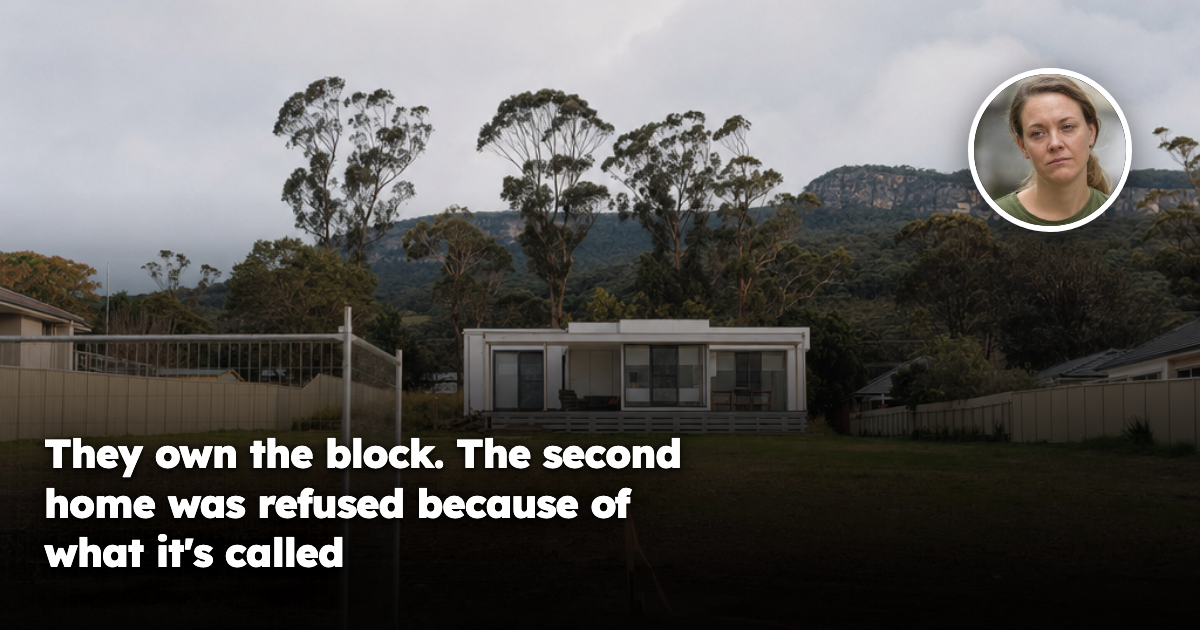
Two sisters bought a large block together — a bit over 1,840 square metres — with a straightforward plan. One family's home at the rear, the other's at the front. Two households, one piece of land, shared cost, kids growing up next door to each other. In a market where many are priced out of the suburb they grew up in, it is exactly the sort of arrangement you would expect to see more of.
The first home went on the block without drama. It was a modular home — built in a factory, delivered, assembled on site.
When they applied to put the second one on, they were refused. Not because of the size of the block, the setbacks, the height, the overshadowing, the traffic, the drainage or the neighbours. They were refused because two of these homes on one lot met the local definition of a manufactured housing estate — a land use that was simply not permissible in that zone.
They engaged a town planner, subdivided the block and applied again. Refused again, same reason. Two years on, they are paying rent and a mortgage at once, with two small children, waiting.
The question
"We own the land. We are not over-developing it. Why does it matter what the house is made of, or where it was assembled?"
The answer
It matters because Australian planning systems do not primarily regulate buildings. They regulate land uses — and a land use is a category with a name.
Every council's planning instrument contains defined terms, and against each zone sits a list of what is permitted, permitted with consent, and prohibited. A council has no discretion to approve something in the prohibited column. Once the assessment concluded that two factory-built dwellings on one lot constituted a manufactured housing estate, and that use was prohibited in that zone, the outcome was determined. No amount of good design, community benefit, or the fact that it plainly is not a caravan park could change it. The merits were never the question.
That is the uncomfortable structural point. A definitional refusal is not a judgement about your proposal. It is a judgement about which box your proposal falls into, and it can be reached without anyone forming a view about whether the thing you want to build is any good.
Two details make this particular case sting.
The first is that the same builder had delivered comparable dual-occupancy projects in other council areas in the same state. Same product, same construction method, different local planning instrument — permitted there, prohibited here. What stopped this project was not engineering or amenity. It was a council boundary.
The second is that this is happening while governments actively promote exactly this kind of construction. The national productivity body has estimated modern construction methods could cut building costs by up to twenty per cent and halve build times. Reforms have been proposed in that state so a house is treated as a house regardless of how it was built, and the council involved has itself asked for clearer definitions. But proposed reform is not law. Until a bill passes, the definition in force governs your application — and "the rules are about to change" has never been an approval.
What this actually tells buyers and investors
Here is the part that generalises, and it is the reason this story matters well beyond one unusual block.
Most buyers assess development potential using two numbers: land size and zone. Both are easy to find, both appear in every listing and every suburb report, and both feel authoritative. On those two numbers, this block was outstanding — 1,840 square metres and residentially zoned.
Neither number told them what they were allowed to do.
Development potential is not a property of a suburb. It is a property of a specific lot, governed by a specific instrument, filtered through definitions that vary between councils and change over time. Two blocks can share a postcode, a median, a zone, a school catchment and an identical census profile, and have completely different permissible uses. Two blocks on the same street can differ once you factor in overlays, lot geometry, frontage, easements and — as here — how a dwelling is classified.
That gap is worth real money and is easy to size. Residential land in the major capitals now transacts at roughly $2,019 a square metre in new estates, against about $1,000 a decade ago. When a definition removes an entire second dwelling from a large holding, it is not removing paperwork. It is removing the capacity of that land to carry a second income stream and a second exit — permanently, until the instrument changes.
This is the same structural point we make about rent. Two streets inside one suburb routinely show a 20–30% spread in effective yield once you use achieved rents, real vacancy duration and real days on market instead of advertised figures. Development rights behave identically: enormous variation, invisible at suburb level, decisive at lot level. If you have followed our pieces on restrictive covenants quietly blocking a subdivision or the square metres you own but cannot build on, this is the third face of the same problem — a third party's classification, not your intention, sets the ceiling.
What to do before you buy the plan
Confirm the use, not just the zone. Ask precisely what land use your proposal constitutes under that council's instrument, and whether that use is permissible in that zone. The word matters more than the drawing.
Get it in writing from the council, early. A written planning enquiry before you apply costs a fraction of a design package and is the cheapest insurance in property development.
Never assume a precedent travels. An approval one council away proves the product works, not that it is permitted where you are buying.
Treat pending reform as a bonus, not a plan. If your feasibility only works after a bill passes, you do not have a feasibility — you have a hope with a deposit attached.
The wider point
None of this is an argument against buying land, building modular, or pooling resources with family to get into a market that has become genuinely hard to enter. Those are sensible responses to real conditions, and the direction of policy is slowly moving to accommodate them.
It is an argument for one thing only: the value of a block is set by what you are permitted to do with it, and that is knowable in advance, at lot level, for a very small cost — while land size and zoning, the two numbers everybody actually uses, will happily tell you a block is perfect right up until the moment a definition tells you it is not.
They researched the land. Nobody researched the definition. Almost everyone does it in that order.
If there's a specific street you're weighing up right now, check its Street Score first — it's free, takes ten seconds, and tells you whether that street is pulling the suburb average up or riding on it.
Frequently asked questions
Why was the second modular home refused even though the block was large enough and met the setbacks?
It was refused because two factory-built homes on one lot were assessed as a manufactured housing estate, and that land use was prohibited in that zone. The refusal was about the legal classification of the use, not the design, amenity or engineering.
What is a definitional planning refusal in Australian planning terms?
It is a refusal based on which land-use category a proposal falls into under a council’s planning instrument. In this case, the merits were never the issue because once the use was classified as prohibited, the council had no discretion to approve it.
Why can two similar blocks in the same area have different development outcomes?
Because development rights are determined at lot level by the specific council instrument, definitions, overlays and other site details. Two blocks can share a postcode and zone but still allow different uses depending on how they are classified.
Does an approval in one council area mean the same project will be approved somewhere else?
No. The article says a similar dual-occupancy project was allowed in other council areas, but that only showed the product worked elsewhere. It did not prove it was permitted on this particular lot under this council’s rules.
What should buyers check before relying on a subdivision or dual-occupancy plan?
They should confirm the exact land use the proposal creates, not just the zone, and check whether that use is permitted in the relevant council area. The article also says a written planning enquiry early on is the cheapest way to reduce risk.
General information only. It does not take your objectives, financial situation or needs into account, and nothing here is legal, financial, taxation or investment advice specific to your circumstances.