
News · 27 August 2026 · 4 min read
She accused the builder online. Why the $673,000 renovation dispute became a warning for every owner
A renovation dispute shows how a public warning can become a major legal and property risk when the building evidence is not controlled.
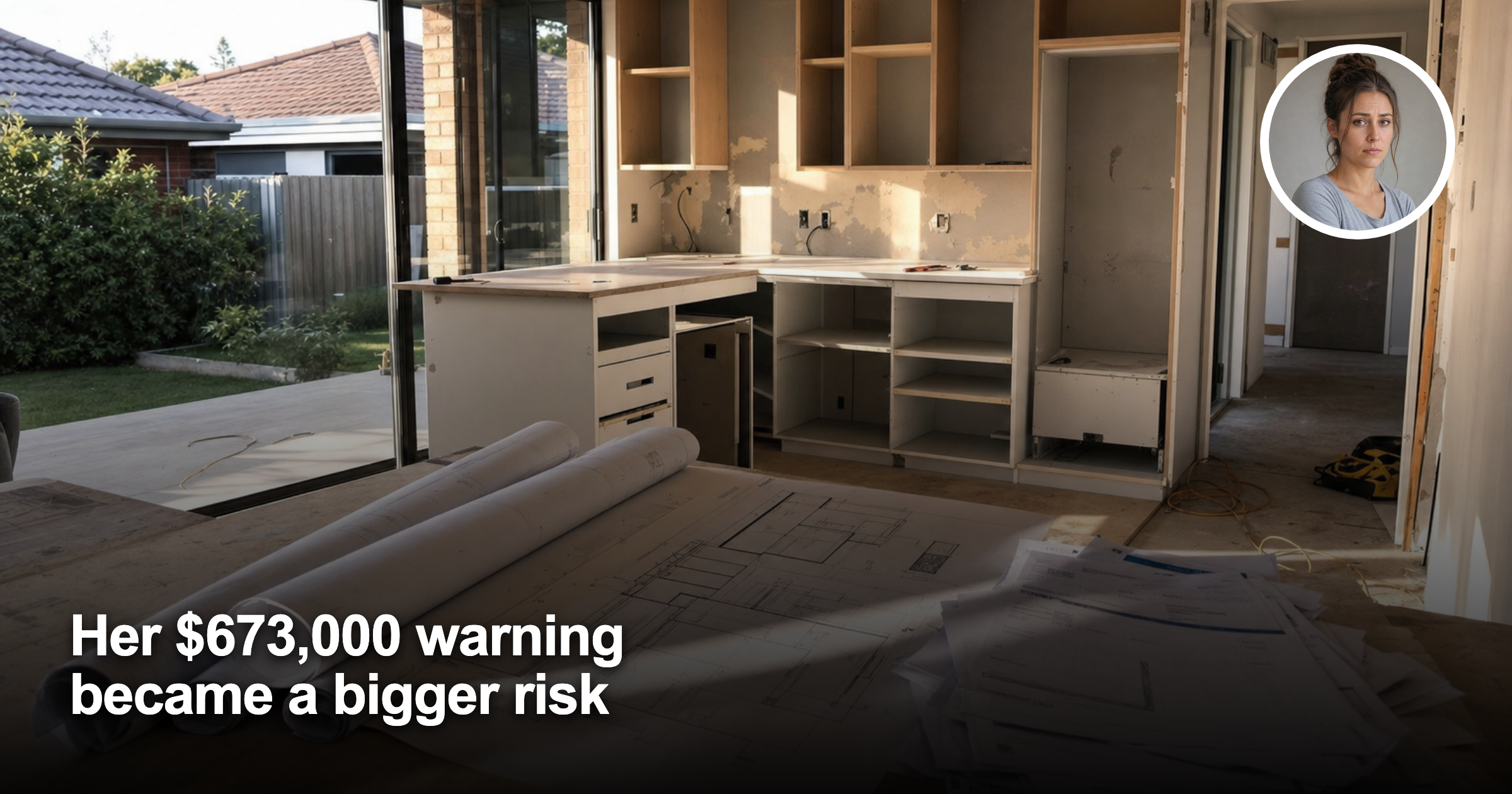
A 26-year-old homeowner thought the hardest part of renovating would be living with dust, delays and decisions about tiles. The project had already become a financial strain when the dispute moved online. She described the work as defective and warned other people away from the builder.
The story then took a turn that stunned her. Instead of recovering the money she believed she had lost, she faced a claim worth $673,000 after the builder argued that the public allegations had caused serious damage.
It is an uncomfortable question for anyone improving a home: if the work is genuinely poor, why can speaking publicly about it create an even larger property risk?
The answer is more complicated than “the builder was right” or “the owner was right”
A renovation dispute has two separate tracks. The first is the quality and delivery of the building work. Was the agreed scope completed? Were defects documented? Were changes approved? Were payments tied to completed stages? The second is what each side says publicly while the dispute is alive.
Those tracks can collide. A frustrated owner may believe a warning is fair comment. A builder may argue that statements went beyond a private complaint and caused measurable commercial harm. A court or tribunal then has to examine the exact words, the evidence behind them, who saw them and what loss followed.
The practical lesson is not to stay silent. It is to create a disciplined evidence trail before frustration becomes a public campaign. Keep the signed contract, plans, invoices, photographs, dates, inspection reports and messages in one file. Record defects factually. Ask for responses in writing. Separate what can be demonstrated from what is suspected.
That discipline matters because renovation money disappears in stages. A $40,000 deposit, a $28,000 demolition phase and a $35,000 kitchen payment can feel like separate decisions. Together they may represent most of the owner's available equity before the finished property has produced one dollar of additional value.
Why investors should care about a dispute in an owner-occupied house
Renovation risk is often treated as a construction problem. For a property investor, it is also a timing, valuation and liquidity problem.
Suppose a project is expected to cost $180,000 and finish in six months. If it runs nine months, the owner may carry three extra months of interest, rates, rent elsewhere, insurance and storage. If the work is paused during a dispute, the holding cost keeps moving while the asset cannot be fully marketed or refinanced.
The finished value is not guaranteed to rise by the amount spent. Buyers pay for the features that are scarce and useful on that particular street, not for every receipt in a renovation folder. An extra bathroom may matter in one pocket with deep family-buyer demand and add far less on a nearby street dominated by smaller households and investor stock.
This is where street-level analysis changes the decision. Ripehouse Advisory compares achieved sales, buyer depth, days on market, achieved rents, vacancy and the local supply pipeline at the address and immediate-street level. Two houses in the same suburb can have different resale audiences because one sits beside a busy access road, has a difficult slope or competes with a wave of similar renovations.
Before approving a $673,000 dream outcome in a spreadsheet, an owner needs to know what the best comparable renovated homes actually achieved, how long they took to sell and whether the street has enough buyers to absorb another premium listing. Renovation design should follow that evidence.
What should happen before the first payment?
First, define the scope in plain language. “Renovate the kitchen” is not a scope. Cabinet layout, appliances, finishes, electrical work, waterproofing, demolition, rubbish removal, approvals and handover standards should be identifiable.
Second, test the payment schedule against observable progress. Large payments ahead of work completion increase exposure if the relationship breaks down. Keep a contingency, but do not let a contingency become an excuse for undocumented variations.
Third, check the approval and insurance position. A visually attractive alteration can still create a resale problem if records are missing, required approvals were not obtained or future buyers cannot establish what was changed.
Finally, decide how complaints will be handled. Use the contract's notice and dispute process. Get an independent inspection where appropriate. Obtain legal advice before publishing accusations that identify a business or individual. Public pressure may feel satisfying, but it can also change the size and character of the dispute.
The property opportunity hidden inside the warning
The lesson is not that renovation is too dangerous. Well-controlled renovation can create a better, more durable asset and improve rental appeal, buyer competition and long-term income. The lesson is that the margin has to be designed before the demolition starts.
The strongest projects pair a tightly documented build with street-level evidence: what buyers pay for, what tenants value, what comparable properties actually achieved and how much competing supply is coming. The right property, on the right street, improved for the right audience, can still be one of the most effective ways to build a property portfolio. Headlines create fear; disciplined data creates the opportunity.
If there's a specific street you're weighing up right now, check its Street Score first — it's free, takes ten seconds, and tells you whether that street is pulling the suburb average up or riding on it.
Frequently asked questions
Why did the homeowner’s online complaint about the builder turn into a much bigger legal problem?
Because the dispute did not stay private. The builder argued that the public allegations caused serious commercial harm, and the matter became a separate legal issue from the quality of the renovation work itself.
What should an owner keep if they are unhappy with renovation work in Australia?
Keep the signed contract, plans, invoices, photographs, dates, inspection reports and messages in one file. The article says defects should be recorded factually, with requests and responses kept in writing.
Why is renovation risk a property issue as well as a building issue for investors?
Because delays and disputes affect timing, valuation and liquidity. If a project runs over time or stops altogether, holding costs keep rising while the property may not be ready to sell or refinance.
Does spending more on a renovation guarantee the property will be worth more?
No. The article says finished value is not guaranteed to rise by the amount spent, because buyers pay for features that are valuable on that specific street, not for every receipt in the renovation folder.
What should be checked before making the first renovation payment?
The scope should be clear, the payment schedule should match observable progress, and the approval and insurance position should be checked. The article also says disputes should be handled through the contract process before publishing accusations.
General information only. It does not take your objectives, financial situation or needs into account, and nothing here is legal, financial, taxation or investment advice specific to your circumstances.