News · 1 September 2026 · 5 min read
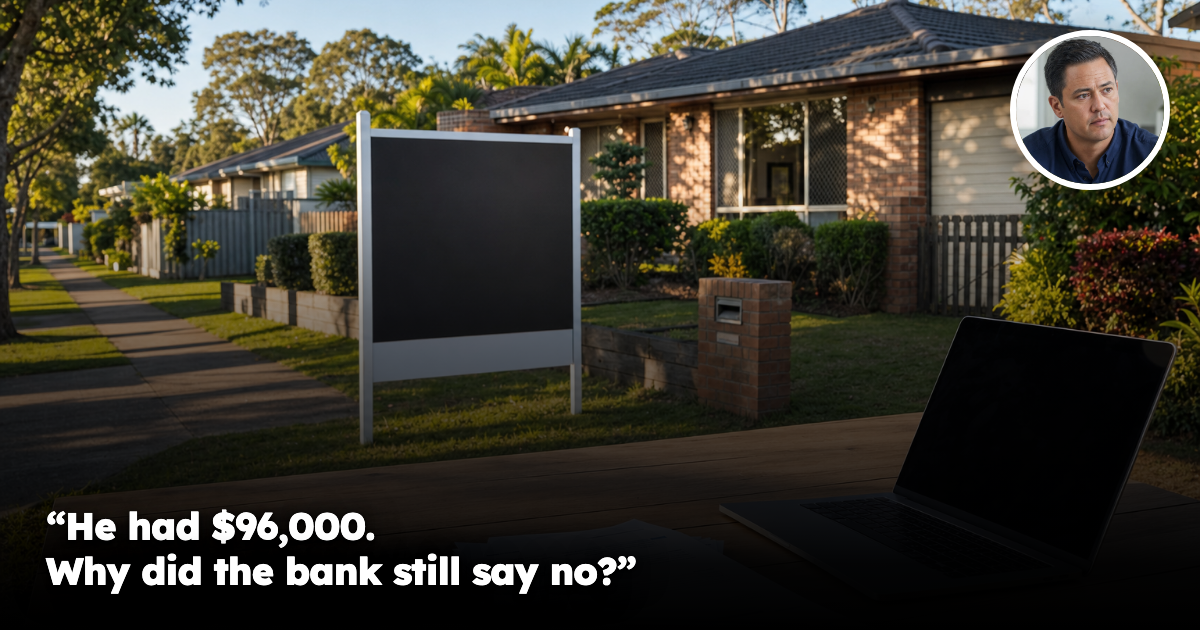
He had a $96,000 deposit. Why did the bank still say no?
He had a $96,000 deposit, but the bank still said no. The answer reveals what lending rules and exact-street evidence can miss.
He had a $96,000 deposit. Why did the bank still say no?
The question
He had spent years building a $96,000 deposit. The property he wanted was within the broad price range he had been modelling, the rent looked capable of supporting the loan and the suburb appeared to have the ingredients investors usually chase.
Then the bank said no.
The reason was not that he had no savings. It was that the application sat in a part of the lending market banks are now treating more cautiously: a high-debt loan, assessed against stricter serviceability settings and a lender’s own appetite for investor risk.
His question to Ripehouse Advisory was direct: if another lender is still willing to look at the deal, does a bank rejection mean the property is bad—or that the borrowing structure no longer fits?
The answer
A bank rejection is a warning, but it is not automatically a verdict on the asset. It can reflect the borrower’s income, existing debts, living expenses, loan size, property type, valuation or the bank’s concentration limits. It can also reflect a change in how lenders are managing high-risk lending as household debt and property prices rise.
That distinction matters because the same application can be treated differently by different lenders. Non-bank lenders have been gaining ground in new home lending as the major banks become more selective. That does not make a non-bank loan a shortcut, and it does not turn an unaffordable deal into an affordable one. It does mean “the bank said no” should lead to a diagnosis before it leads to a rushed sale or a more expensive loan.
The first test is the source of the refusal. Was the problem serviceability? A lender may apply a buffer to the interest rate and assess whether repayments remain manageable if rates rise. Was it the debt-to-income ratio? Was the rent discounted in the lender’s calculation? Was the valuation below the contract price? Or did the property fall outside a policy box because it was a small unit, a specialised dwelling or in a pocket with thin comparable sales?
Each answer creates a different risk. Replacing a lender because one policy is restrictive can be rational. Replacing a lender without understanding the repayment risk can simply move the problem to a more expensive part of the system.
Why the exact address still matters
The property in this story looked ordinary from a suburb-level view. The suburb had a reasonable median, a familiar rental range and enough recent sales to make the spreadsheet feel comfortable.
But broad suburb numbers can hide the evidence a lender, buyer or future tenant will actually see. Ripehouse Advisory’s street-level research separates achieved prices, advertised rents, vacancy, days on market, buyer depth and competing supply down to the address and nearby street pattern.
Two homes can share a postcode and still have different security. One may sit near a reliable transport route, a school catchment edge or a cluster of amenities that supports a deeper tenant and buyer pool. Another may be separated by a busy road, a flood-prone access point or a large pipeline of near-identical stock. The suburb median will not tell you which one a valuer or the next buyer is likely to prefer.
That is why a finance problem can be partly a location problem. If the cheaper property has weak achieved rents, longer selling periods and a shallow pool of comparable buyers, the lender may be seeing more than a spreadsheet sees. If the address has resilient demand and genuinely comparable sales, there may be a case to challenge the valuation or find a lender whose policy fits the asset.
The useful comparison is not simply “bank versus non-bank”. It is loan structure, total cost, exit options and the quality of the underlying property.
What should a borrower check next?
First, ask for the exact reason for the decline or conditional approval failure. “Policy” is not enough. The borrower needs to know whether the constraint is income, debt, rent, valuation, property type or lender exposure.
Second, recalculate the deal without optimistic assumptions. Use a conservative rent, include vacancy and management costs, allow for maintenance and test what happens if the interest rate remains high. A property that only works at the maximum borrowing limit is fragile, regardless of who approves it.
Third, compare the property with the right evidence. Recent sales on similar streets, not just a suburb median, can show whether the contract price is supported. Achieved rents and days on market can show whether the income is durable. Nearby competing stock can show whether a refinance or sale will have an audience.
Fourth, price the alternative lender properly. Compare the interest rate, fees, loan term, valuation rules, repayment type, early-exit cost and refinance pathway. The question is not whether the loan can settle. It is whether the asset and the borrower can carry it through the next decision point.
Ripehouse’s analysis of buyer depth as a property safety net and why one street can outperform the suburb next door points to the same conclusion: liquidity is local. A deep buyer pool can make a difficult market more forgiving. A thin one can turn a small valuation or lending shock into a much larger problem.
So was the bank wrong?
Not necessarily. The bank may have identified a real debt risk, or it may have applied a policy that does not fit a sound property and a strong borrower. The only useful response is to separate those possibilities.
For investors, tighter lending is not a reason to abandon property. It is a reason to be more selective about leverage and more demanding about evidence. The right asset on the right street, supported by durable rent and real buyer depth, gives a borrower more options when lender policy changes.
The $96,000 deposit was not the whole story. In property investment, capital opens the door—but exact-address data, disciplined borrowing and a resilient asset determine whether you can keep walking through it.
If there's a specific street you're weighing up right now, check its Street Score first — it's free, takes ten seconds, and tells you whether that street is pulling the suburb average up or riding on it.
Frequently asked questions
Why would a bank reject a borrower who already has a $96,000 deposit?
A deposit alone is not enough if the lender thinks the loan is too risky. The refusal can come down to serviceability, existing debts, income, the property type, valuation, or the bank’s investor lending settings.
Does a bank saying no mean the property itself is a bad investment?
Not automatically. The article says a rejection may reflect the borrower’s position or the lender’s policy rather than the asset, so the first step is to diagnose the reason for the decline.
What should a borrower check after a lending application is declined in Australia?
They should ask for the exact reason for the decline, then test the deal conservatively with realistic rent, vacancy, management costs and interest rates. They should also compare the property against recent sales and rental evidence on similar streets, not just the suburb median.
Why does the exact street or address matter when a bank is assessing a property?
Broad suburb data can hide local differences in demand, buyer depth, comparable sales and rental strength. A property on one street may have far better security than another nearby street, even within the same postcode.
What is the main risk in switching to a non-bank lender after a bank rejection?
A non-bank lender may be willing to look at the deal, but that does not make the loan cheaper or the property safer. The key risk is replacing one lending problem with a more expensive loan without fixing the underlying repayment or asset risk.
General information only. It does not take your objectives, financial situation or needs into account, and nothing here is legal, financial, taxation or investment advice specific to your circumstances.