News · 31 August 2026 · 4 min read
The $118,000 easement gap hiding behind two similar homes
A carer finds an $118,000 gap between two similar homes and discovers the cheaper block carries an easement. The exact title, usable land and future buyer pool tell the real story.
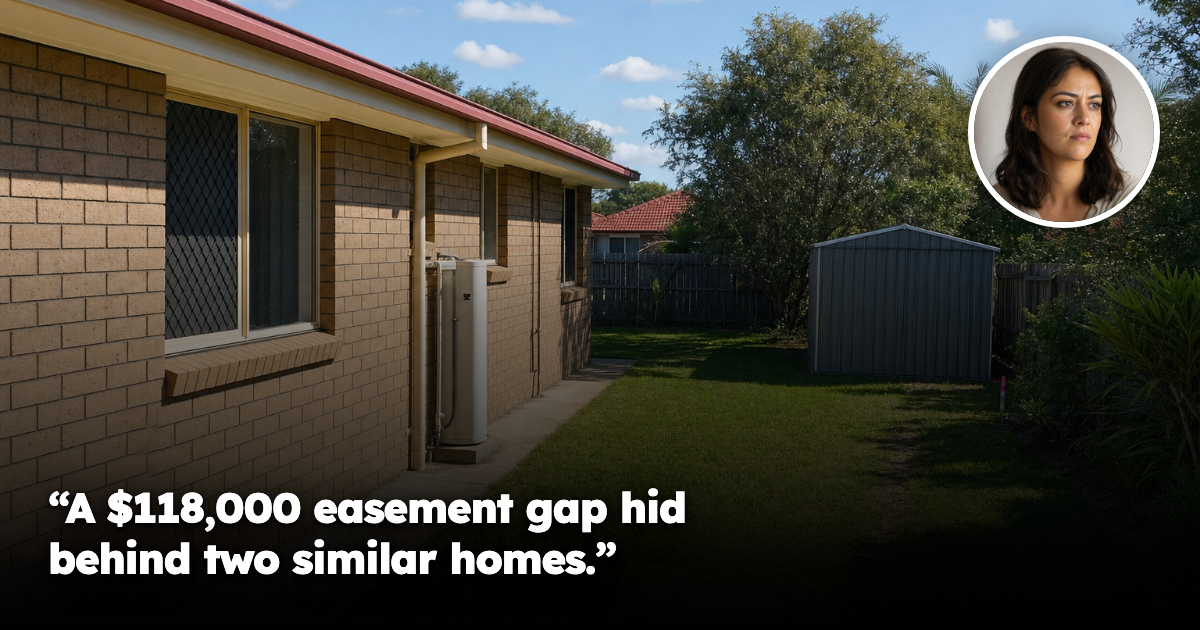
A 29-year-old carer thought she had found the obvious bargain: two houses in the same outer-Brisbane suburb, on similarly sized blocks, with nearly identical asking prices — except one was $118,000 cheaper.
The cheaper home had the better kitchen, a newer roof and a wider driveway. The expensive one looked unremarkable. Then a title search showed a sewer easement running through the rear third of the cheaper block.
Her question was simple: was the discount a buying opportunity, or was the block carrying a problem that would follow it through every future sale?
The answer: an easement is not automatically a bad investment
An easement is a legal right allowing another party to use part of a property for a defined purpose. It may protect sewer, drainage, access, electricity or other infrastructure. The owner can still own the land, but the rights attached to the easement can restrict what is built, planted or changed there.
That distinction matters. A home with an easement is not necessarily defective. A narrow service easement along a side boundary can have little practical effect. A wide sewer easement running beneath a planned extension, pool or second dwelling can change the property's highest and best use completely.
The mistake is treating the word on a listing as the valuation. The valuation question is what the easement does at this exact address.
In this case, the cheaper home had enough rear-yard space for a future extension on the marketing plan. But the proposed footprint crossed the easement corridor. The owner could still use the yard, subject to the relevant authority's requirements; the dream addition was no longer a straightforward assumption.
That explains why the $118,000 gap was not a simple bargain. Some buyers saw a comfortable three-bedroom home with a large yard. Others saw a narrower future buyer pool, extra due diligence and a project that could be delayed or refused.
Why suburb statistics missed the problem
At suburb level, the two addresses looked interchangeable. Median price, vacancy, advertised rent and days on market were close enough to support the same spreadsheet. The difference appeared only when the properties were mapped against title, service and development constraints.
Ripehouse Advisory's street-level review looks for that second layer: achieved sales around the address, the depth of the buyer pool, comparable rental demand, competing listings and the physical constraints that make one block behave differently from the next.
The useful comparison is not “what is the suburb worth?” It is “which nearby properties actually compete with this one, and which buyers can still use this block?” If the easement removes a rear extension, granny-flat or pool pathway, the relevant comparables are homes with the same usable land — not every three-bedroom dwelling within the postcode.
That can produce a much more honest estimate of both upside and exit risk. A property may sell at a discount today because buyers are uncertain. If the constraint is understood, documented and already reflected in the price, the discount may be an opportunity. If the seller's price assumes a development outcome the easement makes unlikely, the discount may be nowhere near large enough.
The checks that decide whether the discount is real
First, obtain the current title and deposited plan. Do not rely on a listing description or a seller's recollection. Confirm the easement's location, width, beneficiary and stated purpose.
Second, draw the easement onto the actual site plan. A line that looks minor on a title document may sit directly beneath the only practical building zone. Measure the remaining usable yard rather than relying on total land size.
Third, test the intended use before assigning it value. If the plan is a renovation, pool, garage, subdivision or secondary dwelling, ask the relevant authority and a qualified professional what approvals, access rights and engineering conditions apply. Do this before making the future project part of the offer price.
Fourth, compare the address with properties carrying the same constraint. A clean title nearby is not always a useful comparable. Look at achieved prices, time to sell and buyer depth for constrained blocks, then check whether the rental market treats the property differently.
Finally, price the exit. An investor needs to know not only the likely rent today but who will buy the asset later. A family wanting a backyard project may discount it heavily. A renter who values the existing house may not care. The spread between those audiences is part of the asset's risk.
What happened to her $118,000 “bargain”
The carer did not reject the property automatically. She changed the question. Instead of paying for a future extension that the easement might complicate, she valued the existing home, checked the rental evidence and negotiated against constrained-block comparables.
That is the productive way to handle a micro-location defect. The right response is not fear, and it is not blind optimism. It is to identify the exact restriction, quantify the lost or retained use, and make sure the purchase price leaves room for the narrower resale audience.
Property investment still rewards buyers who do this work. Two houses can share a suburb, a postcode and a school catchment while behaving like different assets because one has a usable rear yard and the other has a legal corridor through it. Street-level evidence turns that hidden difference into a decision.
The best opportunities are rarely the properties with no complications. They are the properties where the complication is understood, the price is honest and the right buyer or tenant still exists. Right asset, right street, right data beats a suburb headline every time.
If there's a specific street you're weighing up right now, check its Street Score first — it's free, takes ten seconds, and tells you whether that street is pulling the suburb average up or riding on it.
Market data & R-Scores for locations in this article
Drill Down Into the Markets Mentioned Above
Inspect live monthly R-Scores, median prices, rental yields, and street-by-street scores for the cities and council areas referenced in this article:
Frequently asked questions
What is an easement, and why did it matter in this Brisbane property example?
An easement is a legal right allowing another party to use part of a property for a specific purpose, such as sewer or access. In this case, a sewer easement ran through the rear third of the cheaper block, which could limit what could be built or changed on the land.
Does a property with an easement automatically mean it is a bad buy?
No. The article says an easement is not automatically a bad investment, because some easements have little practical effect. The key is whether the easement affects the property’s usable land and intended use at that exact address.
Why was the $118,000 price gap not necessarily a real bargain?
The cheaper home looked attractive on the surface, but the easement reduced the block’s future flexibility. Buyers may discount it because it could narrow the buyer pool and complicate plans for an extension, pool or secondary dwelling.
What should you check before deciding whether an easement changes the value of a property?
Get the current title and deposited plan, then confirm the easement’s location, width, beneficiary and purpose. You should also map it onto the site plan and measure the remaining usable land, not just the total block size.
How should buyers compare a property with an easement to other homes nearby?
Compare it with properties that have the same constraint, not just any similar home in the suburb. The article says the best comparables are blocks with the same usable land, because the easement can change both resale appeal and the likely buyer pool.
General information only. It does not take your objectives, financial situation or needs into account, and nothing here is legal, financial, taxation or investment advice specific to your circumstances.