News · 24 September 2026 · 2 min read
Half of young Australian adults now live with their parents
HILDA's 2026 survey shows half of Australians aged 18 to 29 still live at home, up from 39 per cent in 2001. Why the ladder moved, and what a first property decision looks like when rent is the thing keeping you stuck.
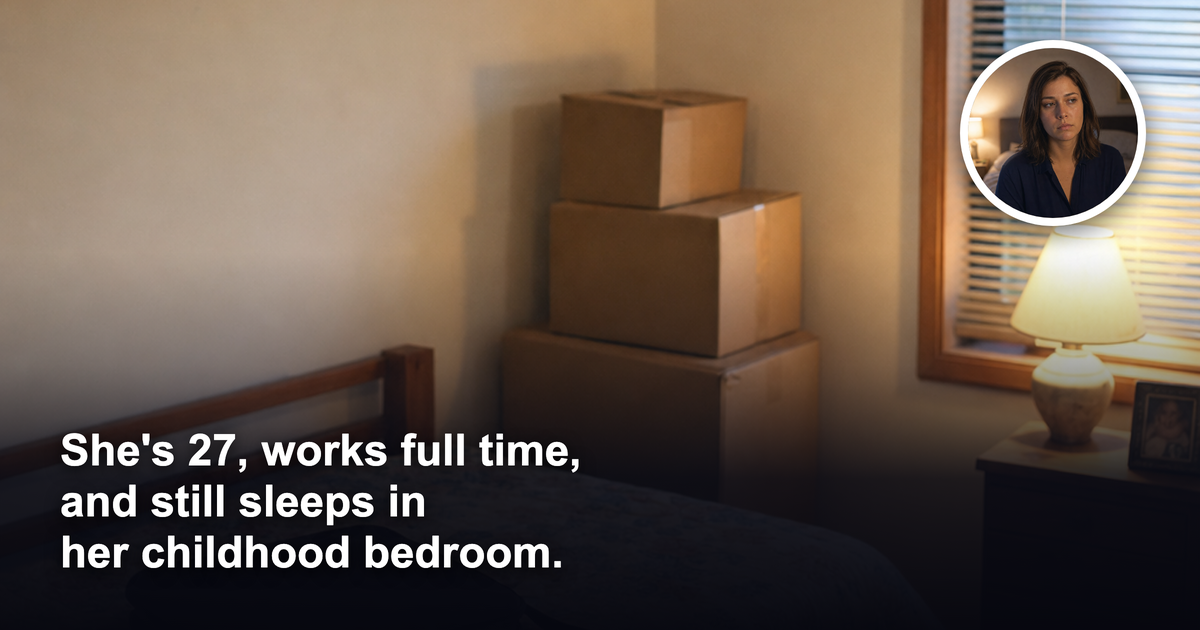
She is 27. She works full time. She pays her parents $200 a week to sleep in the bedroom she grew up in, with her work bag on the bed and the moving boxes she packed two years ago still unopened in the corner.
She is a composite illustration used to show how the numbers work. She is not a real person, and the dollar figure attached to her is illustrative only. Every statistic below comes from the published HILDA survey findings as reported by the ABC.
Half a generation, still at home
The 2026 Household, Income and Labour Dynamics in Australia (HILDA) report, which follows the same 17,000 people every year, found that half of young adults aged 18 to 29 were living with their parents in 2024. In 2001 it was 39 per cent.
That is not a lifestyle trend. It is roughly one in nine young adults who, a generation ago, would have been out of home and are now not. And of the young adults who have left, two-thirds are renting privately, where the survey found rates of housing stress running higher than for the rest of the population.
The job did not fail her. The ladder moved.
The same report found employment is high and far more young women hold degrees than in 2001. On paper this generation did everything asked of it. What changed is the price of the first rung. When rent absorbs the income that used to become a deposit, "save for a home" stops being a plan and becomes a treadmill.
Staying at home is often the rational response, not a failure: it is the only way many young Australians can build any savings at all. The injustice is that it has become the default path rather than a choice.
What actually gets you off the bottom rung
The mistake most first buyers make is to wait until they can afford the home they want to live in, in the suburb they want to live in. For many, that day keeps moving away. The alternative is to separate the two decisions: buy the asset you can afford where the numbers work, and live where you need to.
- Buy on evidence, not postcode. Look at achieved rent on the exact street, not advertised rent across the suburb, and at how long that stock type actually takes to sell.
- Check the supply pipeline. Approved-but-unbuilt dwellings within walking distance can flatten both rent and growth for years.
- Know the exit before the entry. Who buys this property from you in five or ten years, and how deep is that buyer pool?
Those are the same street-level measures Ripehouse Advisory ties together in its R-Score. They will not fix the national shortage. They can stop a first purchase from being the wrong one.
The limitation
HILDA describes what has happened, not what any one person should do. Living at home, renting or buying all carry risk, and borrowing for an investment property while renting or living with family has its own tax, cash-flow and lending consequences. This article is general information only and is not personal financial advice.
Source: ABC News, "Half of young Australian adults now living with parents, HILDA survey shows", Gareth Hutchens, published 23 September 2026 (UTC).
General information only. It does not take your objectives, financial situation or needs into account, and nothing here is legal, financial, taxation or investment advice specific to your circumstances.