News · 30 August 2026 · 3 min read
His $120,000 deposit was meant to buy a home. Then the developer collapsed
A $120,000 deposit was meant to secure a family home until the developer collapsed. Here is what buyers need to test before a project becomes a queue of creditors.
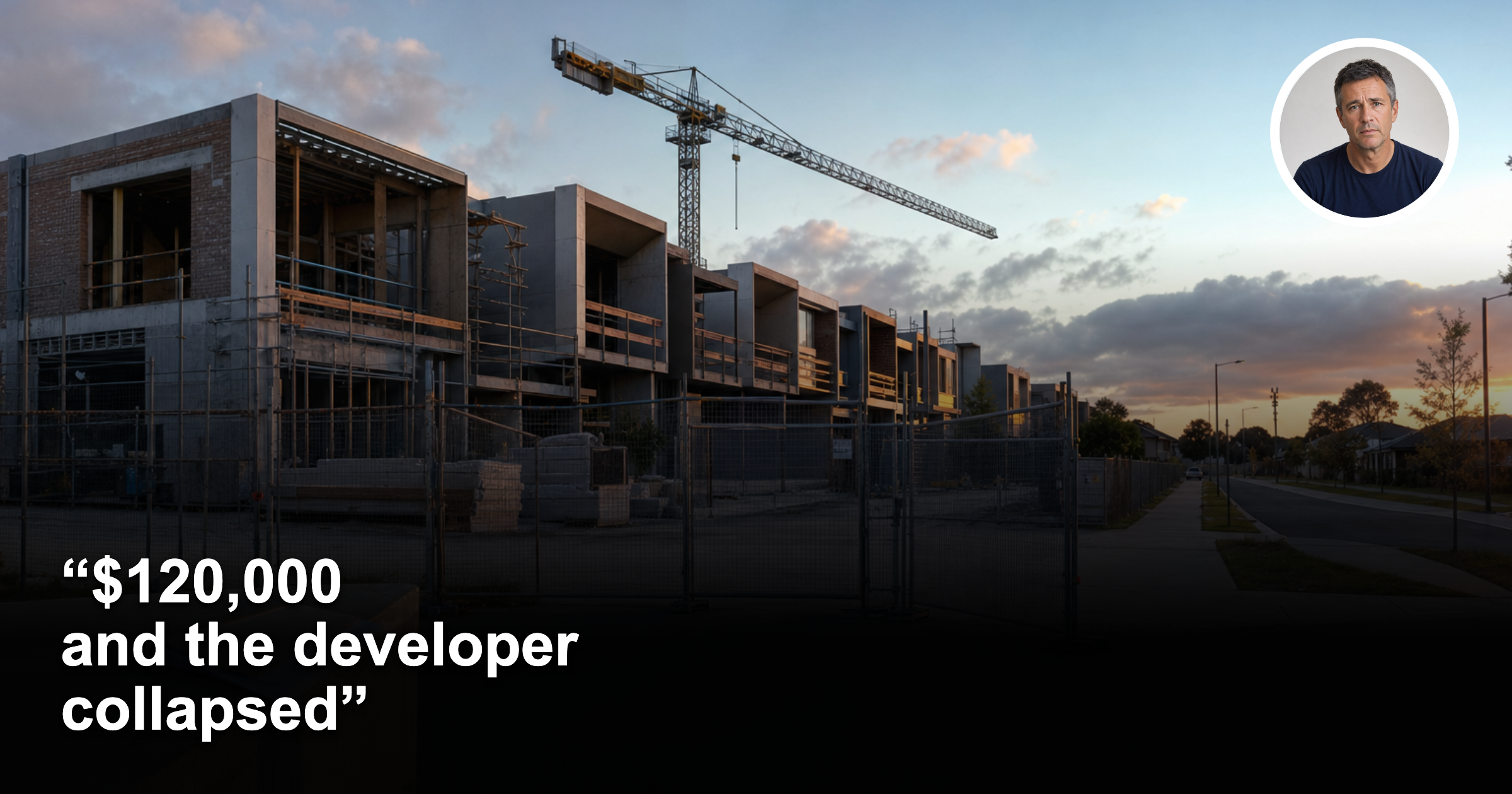
A recently divorced father had done what the property advice books tell buyers to do. He had saved a $120,000 deposit, checked the contract and planned his next move around a new home that was supposed to be finished before his children needed more space.
Then the developer behind the project entered administration.
His question was blunt: if a major builder or developer fails, does a signed contract still protect the buyer—or can a family end up paying for a home that never arrives?
The answer is uncomfortably conditional
A signed contract gives a buyer rights, but it does not make construction risk disappear. When a company enters administration, the project may pause, change hands, seek emergency funding or be wound up. Each path can affect construction timing, finance approval, settlement and the buyer’s ability to recover money.
That is why the headline figure is not always the biggest risk. A $120,000 deposit can be trapped for months while the buyer pays rent, valuation conditions can change, and the original loan approval can expire. A family may also discover that the completed home is worth less—or costs more—than the price agreed before the project stalled.
The first practical step is to identify exactly where the money sits and what protections apply. That means having the contract reviewed, confirming whether the deposit is held in trust, checking any bank guarantee or statutory protection, and asking the administrator for a written update on construction, funding and likely next steps. Buyers should also speak with their lender early rather than waiting for a settlement notice.
Why a developer collapse becomes a local property problem
Large projects are often discussed as if every buyer is exposed in the same way. They are not. The value of a stalled apartment or house-and-land package depends heavily on its exact address and the alternatives available nearby.
Ripehouse Advisory’s street-level approach tests the property against achieved sales rather than asking prices. It also compares achieved rent, vacancy, days on market, buyer depth and the competing supply pipeline. Those measures can reveal whether a project is sitting on a street where completed homes attract genuine demand—or in a pocket where dozens of similar dwellings will compete for the same buyers and tenants.
Two projects in the same suburb can have very different recovery prospects. One may be close to transport, established services and a street with consistent resale depth. Another may have a more difficult access road, a large pipeline of nearly identical stock or weaker rental demand. The suburb label hides that difference; the address data does not.
For a buyer already committed, this evidence helps answer a crucial question: is the project worth fighting to complete, or is the contract exposing the family to too much timing and valuation risk? For an investor considering a distressed resale, it helps separate a genuine discount from a project that remains cheap for a reason.
What should buyers ask now?
They should ask who controls the project, whether construction is insured and funded, what happens to the deposit, whether the contract contains sunset or termination provisions, and whether a replacement builder can realistically finish the work. They should ask their lender how long approval remains valid and what happens if the final valuation changes.
They should also price the holding period honestly. Add rent, temporary accommodation, interest, strata or holding costs, legal fees and the cost of replacing a school or commuting arrangement. A project that appears to be $40,000 below comparable completed homes may not be cheaper after a year of delay.
Most importantly, do not let a dramatic collapse headline replace property research. Construction failure is a serious risk, but the outcome still turns on the asset, the contract and the street.
The property-investment lesson
The unfair part is obvious: an ordinary buyer can make careful decisions and still be caught in a corporate failure. But property remains a powerful long-term investment when the risk is measured before the deposit is committed. The right asset on the right street, tested with achieved evidence and supply data, can offer far more resilience than a glossy project promise. For buyers and investors, the goal is not to avoid property—it is to choose the home whose location, demand and numbers still work when the headlines turn hostile.
If there's a specific street you're weighing up right now, check its Street Score first — it's free, takes ten seconds, and tells you whether that street is pulling the suburb average up or riding on it.
Frequently asked questions
If a developer in Australia goes into administration, does a signed home contract still protect the buyer?
A signed contract gives a buyer rights, but it does not remove construction risk. The project may pause, change hands, seek funding or be wound up, and each outcome can affect timing, finance approval and settlement.
What should a buyer check first if their off-the-plan project is suddenly in trouble?
The first step is to work out exactly where the money sits and what protections apply. Buyers should review the contract, confirm whether the deposit is held in trust, check for any bank guarantee or statutory protection, and ask the administrator for a written update.
Can a stalled development affect a buyer’s loan approval in Australia?
Yes. The article says delays can mean the original loan approval expires, and buyers should speak to their lender early rather than waiting for a settlement notice. A change in the final valuation can also affect the outcome.
Why does the article say a developer collapse is a local property issue, not just a big headline?
Because the recovery prospects depend on the specific address, not just the suburb name. Street-level demand, achieved sales, rent, vacancy, days on market and nearby competing supply can all change whether a project is worth completing or a risky commitment.
What practical costs should buyers include before deciding whether to wait out a stalled project?
They should price the holding period honestly and include rent, temporary accommodation, interest, strata or holding costs, legal fees and any extra commuting or schooling costs. A property that looks cheaper on paper may not be cheaper after a long delay.
General information only. It does not take your objectives, financial situation or needs into account, and nothing here is legal, financial, taxation or investment advice specific to your circumstances.