Market Intel · 5 October 2026 · 4 min read
Adelaide Auction Clearance Rate Falls 35 Points to 39%
Adelaide’s auction clearance rate fell 35 points to 39%. The latest five-capital data reveals a buyer-seller pricing gap, high passed-in rates and why suburb-level research matters.
▶ Watch the full video on YouTube: Adelaide Down 35 Points as Brisbane Clears 21%
Adelaide’s auction clearance rate fell 35 points in a year to 39%, while Brisbane cleared just 21% as the cash rate target moved to 4.6%. The result points to a widening gap between buyer confidence and seller expectations — but it is not a verdict on the quality of the homes being offered.
Adelaide auction clearance rate signals a negotiation window
Across five capitals, 509 properties sold from 1,025 reported, producing a combined clearance rate of 49.7%. The figures are based on Domain’s preliminary results, last updated Saturday the 3rd.
Adelaide recorded 29 sales from 75 reported, compared with a year-ago comparison figure of 74%. Its 35-point decline was the largest of the five capitals. Brisbane fell 26 points, Canberra 25, Sydney 19 and Melbourne 10.
Current clearance rates were:
- Melbourne: 56%
- Sydney: 53%
- Adelaide: 39%
- Canberra: 39%
- Brisbane: 21%
The Reserve Bank’s cash rate table read 4.35% on 29 September and 4.6% from 30 September, a rise of a quarter of a point. The higher rate therefore applied for only part of the clearance week, from Wednesday to Saturday.
When borrowing costs rise, bidders often pull back first. Sellers may take longer to adjust their reserve expectations. That creates a pricing gap between buyers and sellers — and potentially a more useful negotiating environment for prepared buyers.
Passed-in homes are where negotiation starts
A pass-in means the bidding did not reach the seller’s reserve. It does not mean the property is unsuitable or that the opportunity has disappeared.
In Adelaide, 39 of 75 reported properties were passed in, representing 52%. Brisbane recorded 69 passed-in results from 103, or 67%. By comparison, Canberra recorded 33%, Melbourne 29% and Sydney 19%.
Withdrawals tell a different story. Sydney withdrew 87 properties, about 28%, while Adelaide withdrew just 7, or about 9%.
That distinction matters. Most of Adelaide’s unsold results were passed in rather than withdrawn — 39 compared with 7. A property passed in last week may still be available for negotiation, particularly where the buyer has completed the research and understands the evidence beneath the headline rate.
Preliminary data needs context
Clearance rates can look precise while still being based on incomplete reporting. Canberra reported 33 of 40 scheduled results, or about 83%. Adelaide reported 75 of 95, about 79%. Sydney reported only 307 of 521, about 59%.
Across the five capitals, 490 scheduled results were not included in the reported count. Sample size matters as much as the rate itself.
Adelaide’s reported median was $845,000, compared with $1.21 million in Brisbane. But a 39% clearance rate across 75 results describes the tone of the auction room; it is not a price index for the entire market.
This is why one week of preliminary auction data should be treated as one input, not the whole investment thesis. Professional property research needs to test the local demand, supply, vacancy, yield and resale evidence as well.
Acton Park and Allensford show why suburb detail matters
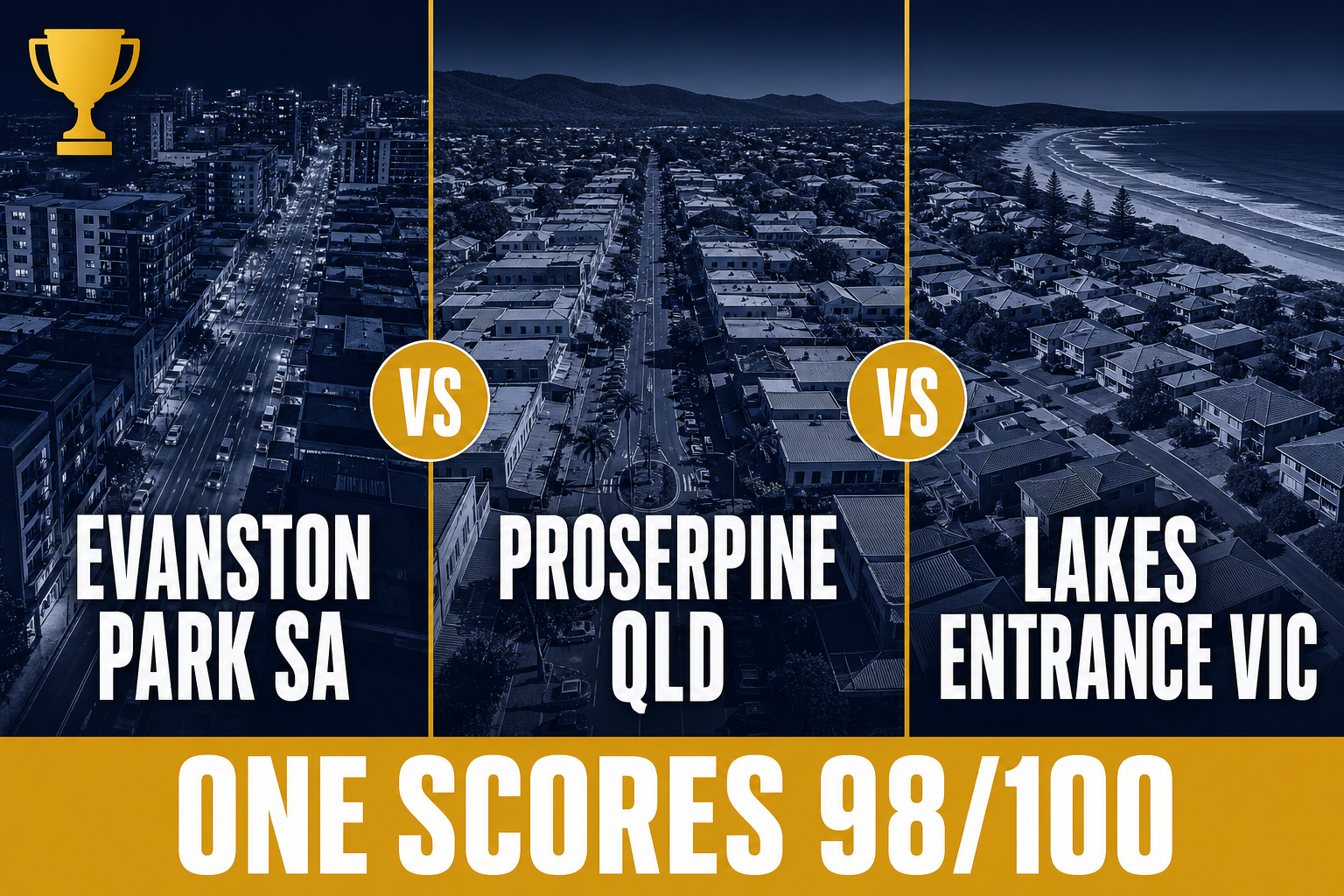
Two suburbs in the 30 September snapshot sit at the 98th percentile nationally, but their underlying signals point in opposite directions.
Acton Park, in Tasmania’s city of Clarence, recorded a 5.2% yield and 4.8% vacancy, with nearly 98% of homes owner occupied. Turnover was thin, with 13 sales in 12 months, every one above $950,000.
The suburb has 932 addresses across 41 streets and a 90-day rolling sold price of $1.2 million. Ripehouse Advisory’s engine shows its sold-price signal pointing up.
Allensford, in Victoria’s city of Warrnambool, recorded a 5.41% yield and vacancy of just 1.2%, with almost 82% of homes owner occupied. Turnover was thinner still, with 9 sales in 12 months, the latest recorded in March.
Allensford has 1,066 addresses across 59 streets, with a rolling sold price of $625,000. Its 12-month sales ranged from $237,000 to $1.66 million, while the sold-price signal points down.
Neither suburb registers public housing in the suburb profile, but buyers should still check the exact street and individual lot. A top-percentile suburb can remain thinly traded, and the suburb-wide result may not describe every pocket.
The Ripehouse Advisory take
The Adelaide auction clearance rate is a useful signal of market conditions, not a final judgement on whether to buy. The current data shows a cautious room, a high proportion of passed-in properties and a potential window for patient, well-researched buyers to negotiate.
The right response is to stress-test borrowing costs at 4.6%, assess the property rather than just the clearance rate, and examine the evidence beneath the suburb headline. Buyers seeking resale depth may favour stronger owner-occupier participation, while those carrying more expensive debt may place greater weight on rent, yield and vacancy.
Ripehouse Advisory’s suburb data, street-level mapping and internal research help turn a broad market headline into a property-specific decision.
Download our no-cost Top Five Markets Report 2026 → https://ripe.house/brief-adelaide
General information only. It does not take your objectives, financial situation or needs into account, and nothing here is legal, financial, taxation or investment advice specific to your circumstances.